Best No-KYC DEX Swaps in 2026: A Practical Guide to Token Swapping
Spot DEXs are often the first stop in DeFi and the most common way to trade on-chain without KYC. You do not need to register an account or upload ID documents. In most cases, you only need a self-custody wallet and enough native token to pay gas fees.
This guide reviews the main no-KYC spot DEX options in 2026 and explains how to choose between them based on liquidity, fees, supported chains, and execution quality.
Key comparison table
1. How Spot DEXs Work
Most spot DEX trading happens through two models: automated market makers and DEX aggregators.
1.1 Automated Market Makers, or AMMs
AMMs replace the traditional order book with liquidity pools. Liquidity providers deposit two tokens into a pool, and the swap price is calculated automatically based on the ratio of assets in that pool. A common model is the constant product formula: x · y = k.
Pros:
- You can trade at any time without waiting for a specific counterparty.
- Any token can be listed as long as someone creates and funds a liquidity pool.
Cons:
- Large trades can suffer from slippage.
- Liquidity providers may face impermanent loss.
1.2 DEX Aggregators
A DEX aggregator is not usually a DEX in the strict sense. Instead, it scans liquidity across multiple DEXs and routes your trade through the path that offers the best available execution.
For medium and large swaps, aggregators can often produce a better final price than using a single DEX directly, because the trade may be split across multiple pools or venues.
2. DEX Ecosystems by Chain
2.1 Ethereum Mainnet
Ethereum mainnet still has some of the deepest on-chain liquidity, but gas fees can be high. It is best suited for larger trades where deeper liquidity can offset the transaction cost.
Key platforms include:
- Uniswap v3/v4: One of the largest DEX ecosystems on Ethereum. Concentrated liquidity improves capital efficiency and can support tighter pricing for active pools.
- Curve: Focused on stablecoins and similar assets, with low-slippage swaps for supported pairs.
2.2 Arbitrum and Optimism
Ethereum Layer 2 networks offer much lower transaction fees while inheriting important security properties from Ethereum.
- Uniswap on Arbitrum: Provides strong liquidity with much lower gas costs than Ethereum mainnet.
- GMX on Arbitrum: Known primarily for perpetuals, but its ecosystem also supports spot-related liquidity and trading workflows.
The ERC-20 token standard helps keep token interactions consistent across Ethereum and EVM-compatible Layer 2 networks.
2.3 Solana
Solana is known for low fees and fast execution. Its DEX ecosystem is active and widely used by traders who prioritize speed.
- Raydium: A major AMM on Solana.
- Jupiter: The leading Solana aggregator, known for sophisticated routing and efficient execution.
2.4 BNB Chain
BNB Chain is popular for low transaction costs and broad retail token activity.
- PancakeSwap: The largest AMM on BNB Chain, with deep liquidity across many trading pairs.
3. Key Criteria for Comparing No-KYC DEXs
When choosing a DEX, do not look only at the quoted price. The actual outcome depends on several factors:
- Liquidity depth: Deeper pools usually mean lower slippage.
- Price impact: If the interface shows high price impact, the pool may not be deep enough for your trade size.
- Gas fees: Ethereum mainnet can be expensive, while L2s, Solana, and BNB Chain are usually cheaper.
- Supported assets: New or long-tail tokens often appear first on specific ecosystems.
- Routing quality: Aggregators can improve execution by splitting trades across multiple pools.
- Wallet compatibility: A smooth wallet connection and readable signing flow reduce operational risk.
- Contract risk: DEXs, routers, tokens, and liquidity pools can all carry smart contract risk.
4. Major Platform Comparison
Uniswap
Uniswap remains the default choice for many Ethereum and EVM traders. It is especially useful for major ERC-20 assets and new token discovery. On Ethereum mainnet, gas can be expensive, but liquidity is often strong. On Arbitrum and other L2s, the experience is cheaper and faster.
Best for: ETH ecosystem tokens, major pairs, new ERC-20 listings.
Curve
Curve is designed for stablecoins and similar assets. For USDC, USDT, DAI, and comparable pairs, Curve often provides low slippage when liquidity is available.
Best for: Stablecoin swaps and like-asset swaps.
Jupiter
Jupiter is the main swap aggregator on Solana. It is especially useful when you want fast execution and competitive routing across Solana liquidity venues.
Best for: Solana token swaps, low-cost trading, active on-chain users.
PancakeSwap
PancakeSwap is the leading DEX on BNB Chain. It supports many tokens and is often where BNB Chain long-tail assets first gain liquidity.
Best for: BNB Chain assets, low gas fees, retail token discovery.
1inch and Other Aggregators
Aggregators can be useful when you care about final execution rather than a specific venue. They compare available routes and may split orders to reduce slippage.
Best for: Medium to large swaps, comparing execution across multiple DEXs.
5. How to Choose Based on Your Use Case
Scenario 1: Large BTC or ETH-Related Swaps
For large swaps involving major assets, Ethereum mainnet liquidity through Uniswap plus an aggregator such as 1inch is often worth considering. Gas fees may be higher, but deeper liquidity can reduce slippage on larger trades.
Scenario 2: Fast Stablecoin Swaps, Such as USDC and USDT
Curve is usually the first venue to check for supported stablecoin pairs. Its design is optimized for stable assets and can keep slippage low when liquidity is strong.
Scenario 3: Fast, Low-Cost Trading
For smaller trades, Uniswap on Arbitrum or Jupiter on Solana may offer a better experience than Ethereum mainnet because fees are lower and execution is faster.
Scenario 4: Long-Tail Token Discovery
New tokens often appear first on Uniswap, PancakeSwap, or Solana DEX routes before they reach centralized exchanges. Aggregators can help you find whether a token already has available liquidity and which route offers the best execution.
Always check the contract address carefully. Token impersonation is common, especially around trending tickers.
6. OneKey Wallet: A Practical Gateway to Spot DEXs
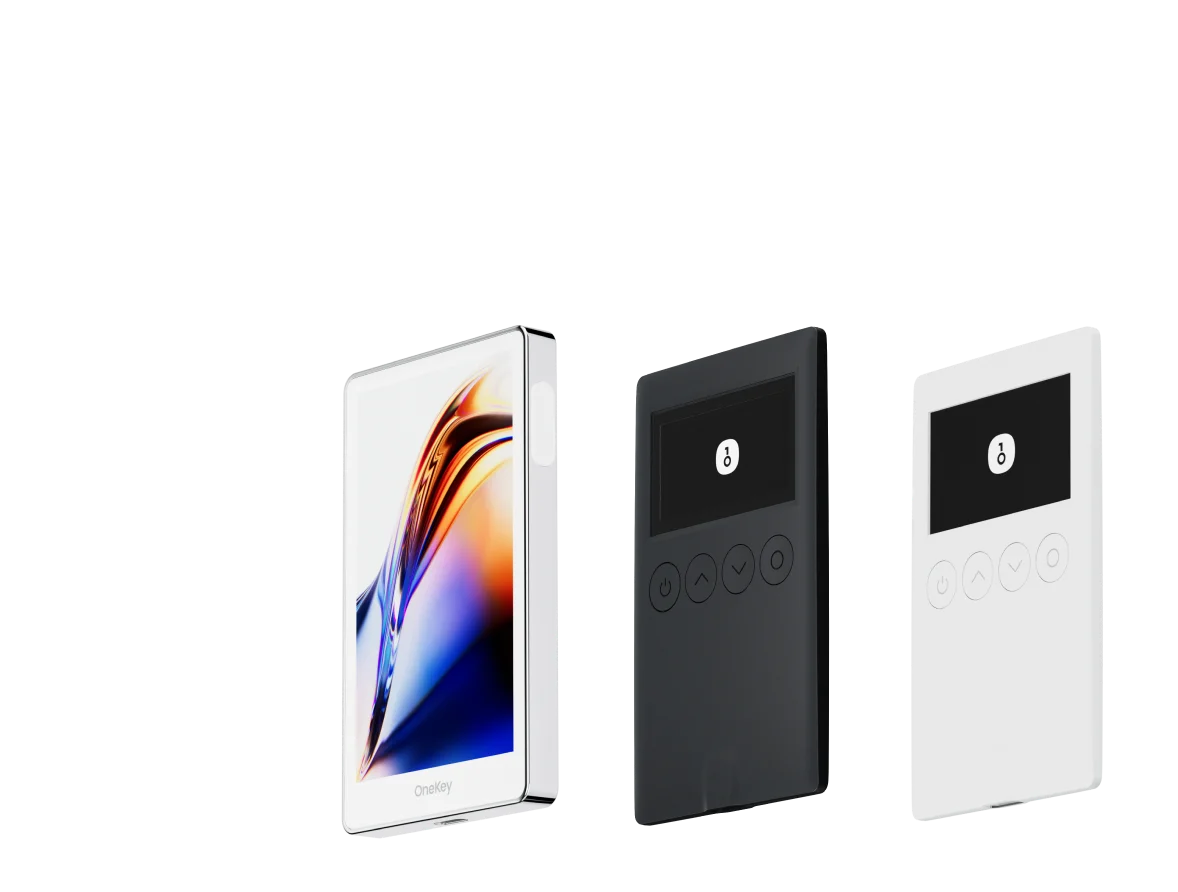
To use any spot DEX, you need a self-custody wallet. OneKey is a practical no-KYC access point for on-chain swaps because it supports multiple chains and keeps the workflow simple.
OneKey provides:
- Native support for EVM chains such as Ethereum, Arbitrum, and BNB Chain, plus Solana.
- A browser extension that connects directly to DApps without extra QR-code steps.
- A mobile app with a built-in DApp browser for accessing DEXs on the go.
- Open-source transparency through GitHub.
- No account requirement for wallet usage.
- EIP-712 structured signing support, helping make approvals and signatures easier to read.
OneKey is available on iOS, Android, and as a browser extension. If you regularly use no-KYC DEXs, it can serve as your main self-custody interface across chains.
If your workflow goes beyond spot swaps into perpetual contracts, OneKey Perps is also worth considering. It gives traders a practical route to perps trading from the same self-custody environment, while keeping wallet control separate from centralized account custody. As always, perps involve additional risks such as leverage, liquidation, funding-rate changes, and market volatility.
For spot DEX usage, it is also good practice to periodically review and revoke unnecessary token approvals with tools such as Revoke.cash. This can reduce the risk of old approvals being abused by malicious contracts.
7. Safety Tips for Using Spot DEXs
Common DEX risks include:
- Fake tokens: Always verify the token contract address from reliable sources.
- High price impact: If price impact is above 1%, liquidity may be thin. Be careful with large swaps.
- Unlimited approvals: Avoid approving unlimited spending unless you trust the contract and understand the risk.
- Malicious DApps: Use official links and be cautious with search ads, social media links, and copied URLs.
- MEV and sandwich attacks: Large on-chain swaps can be targeted. Consider using limit settings, private transaction routes where available, or splitting large trades.
- Smart contract risk: Even well-known protocols can carry technical risk.
- Bridge risk: Moving assets between chains introduces extra assumptions and potential attack surfaces.
Chainalysis has documented major sources of on-chain asset losses in its reports, which can be useful background reading for understanding common risk patterns.
FAQ
Q1: Do spot DEXs require registration?
No. Most major spot DEXs only require you to connect a self-custody wallet such as OneKey. You do not need to create an account, bind an email address, or submit personal documents.
Q2: Are DEX prices much worse than centralized exchange prices?
For major assets, DEX prices are often close to centralized exchange prices, but you still need to account for slippage and gas fees. For small trades, DEXs on L2 networks such as Arbitrum can be quite competitive.
Q3: How do I know whether a token has enough liquidity?
Check the price impact shown before confirming the swap. If price impact is above 1%, liquidity may be limited for your trade size. Consider reducing the order size or using an aggregator to compare routes.
Q4: Can I use spot DEXs on mobile?
Yes. The OneKey App includes a DApp browser, allowing you to access major DEXs such as Uniswap and PancakeSwap directly from your phone.
Q5: Does the EU MiCA text framework affect DEX usage?
MiCA mainly targets centralized service providers. How it applies to fully decentralized protocols without a clear service provider remains an evolving regulatory question. Users should monitor the rules that apply in their own jurisdiction.
Conclusion: Liquidity Matters, but the Wallet Defines the Experience
By 2026, the spot DEX ecosystem is mature enough that on-chain swaps for major assets can feel much closer to centralized exchange trading than in earlier market cycles. The basic decision framework is simple: use deep liquidity for large major-asset swaps, use L2s or Solana for smaller low-cost trades, and use aggregators when you want to compare routes across venues.
OneKey is a practical self-custody wallet for no-KYC DEX access across major chains. It is open source, multi-platform, account-free, and compatible with leading DEXs. For traders who also use perpetuals, OneKey Perps offers a convenient way to access perps workflows from the same broader self-custody setup.
Try OneKey by downloading the app or browser extension, connect to your preferred DEX, and use OneKey Perps if perpetual trading fits your risk profile and workflow.
Risk warning: This article is for informational purposes only and is not investment, legal, or financial advice. DEX trading involves smart contract risk, liquidity risk, token fraud risk, market volatility, and other potential losses. Always do your own research and trade carefully.