Coinbase Enables Wrapped Ronin (WRON) Spot Trading
Coinbase Enables Wrapped Ronin (WRON) Spot Trading
Coinbase has expanded access to Wrapped Ronin (WRON) by enabling spot trading for the WRON-USD market, a move that further connects the Ronin ecosystem with broader Ethereum liquidity and U.S.-centric exchange rails.
For traders, the practical takeaway is simple: WRON is now positioned for easier price discovery on a top-tier venue—while users must be extra careful about network selection and token contract verification to avoid irreversible transfer mistakes.
What Coinbase Actually Launched (and Where)
According to Coinbase’s own market status update, spot trading support for Wrapped Ronin is rolling out across Coinbase’s retail and advanced interfaces, with institutional connectivity available via the exchange platform:
- WRON-USD spot trading is expected to open once liquidity conditions are met, and availability will expand by region over time.
- WRON access spans Coinbase.com, the Coinbase app, and Coinbase Advanced.
- Institutions can connect via Coinbase Exchange.
Reference: Coinbase Exchange Status — WRON-USD Markets Open
Date clarity (important): Coinbase’s published launch window for WRON spot trading was tied to April 30, 2026 (PT), based on the official status notice posted April 29, 2026. If you’re reading this on May 18, 2026, that means the market may already be live in your region—your best signal is whether the WRON-USD order book is visible and trade-enabled in your Coinbase interface.
See: WRON-USD Markets Open notice
What Is Wrapped Ronin (WRON)?
WRON is an ERC-20 token on Ethereum that represents value associated with Ronin’s ecosystem, designed to make Ronin-adjacent assets more compatible with Ethereum’s DeFi and tooling.
This matters because Ethereum remains the deepest “financial layer” in crypto: the majority of wallets, exchanges, liquidity venues, and on-chain primitives are built to understand the ERC-20 interface by default. If you need a refresher on what ERC-20 implies (transfers, approvals, balances), the most canonical overview is here: ERC-20 Token Standard (ethereum.org)
If your goal is to use WRON beyond centralized exchange trading—such as bridging, ecosystem apps, or interacting with Ronin-native products—Ronin’s official documentation is the best starting point: Ronin chain documentation
The Most Important Detail: Verify the ERC-20 Contract Address
Coinbase explicitly published the Ethereum (ERC-20) contract address for WRON and warned users not to transfer WRON through unsupported networks.
- WRON ERC-20 contract (Ethereum):
0x09B6a9E1DD102bD95B3DD5025bCa3540eBf77982
Verify on: Etherscan — Wrapped Ronin (WRON)
This is not a minor footnote. In 2025–2026, as more assets exist on multiple chains / multiple representations (native, wrapped, bridged), the #1 cause of “missing deposits” for everyday users is choosing the wrong network during a transfer.
Coinbase’s own support documentation repeatedly emphasizes that sending assets via an incorrect network can lead to loss that is not recoverable in many cases:
A Practical Safety Checklist for WRON Transfers
If you plan to move WRON between Coinbase and a self-custody wallet, treat this as a pre-flight checklist:
-
Match the network exactly
- If Coinbase specifies Ethereum (ERC-20) for WRON deposits/withdrawals, do not “guess” alternatives.
- EVM compatibility does not automatically mean an exchange will credit the deposit correctly.
-
Confirm the contract address
- Compare what you see in your wallet/token list against the official contract on Etherscan.
- Be cautious with lookalike tokens that copy names and logos.
-
Send a small test transaction first
- Especially if you’re moving funds for the first time between Coinbase and a new address.
-
Account for Ethereum gas
- ERC-20 transfers require ETH for fees on Ethereum mainnet.
-
Avoid copy-paste traps
- Clipboard malware and spoofed addresses are still common. Always verify the first/last characters of the destination address on a trusted screen.
Why This Listing Matters in the 2025–2026 Market
Coin listings are rarely “just listings” anymore—they’re distribution events. In the current cycle, a few themes have defined why spot market access changes behavior:
- Wrapped assets are becoming the default “bridge language” across ecosystems. As liquidity fragments across chains, ERC-20 representations remain a key interoperability layer.
- On-chain gaming and consumer crypto continue to search for sustainable liquidity and compliant fiat access. Ronin’s history in gaming makes WRON’s availability on major USD rails notable from a market-structure perspective.
- Institutions increasingly require familiar venues (auditable order books, standardized custody workflows, prime connectivity). Coinbase highlighting institutional access via its exchange aligns with broader market demand for operational simplicity.
Official reference: WRON-USD Markets Open notice
That said, users should also expect typical listing-era dynamics: wider spreads early on, higher short-term volatility, and regional rollout differences that can create temporary pricing dislocations between venues.
Self-Custody Consideration: Trading vs. Holding
If you’re actively trading WRON, leaving funds on an exchange can be practical. But if you’re holding WRON longer-term—or moving it on-chain to interact with DeFi or ecosystem apps—self-custody becomes the more resilient security model.
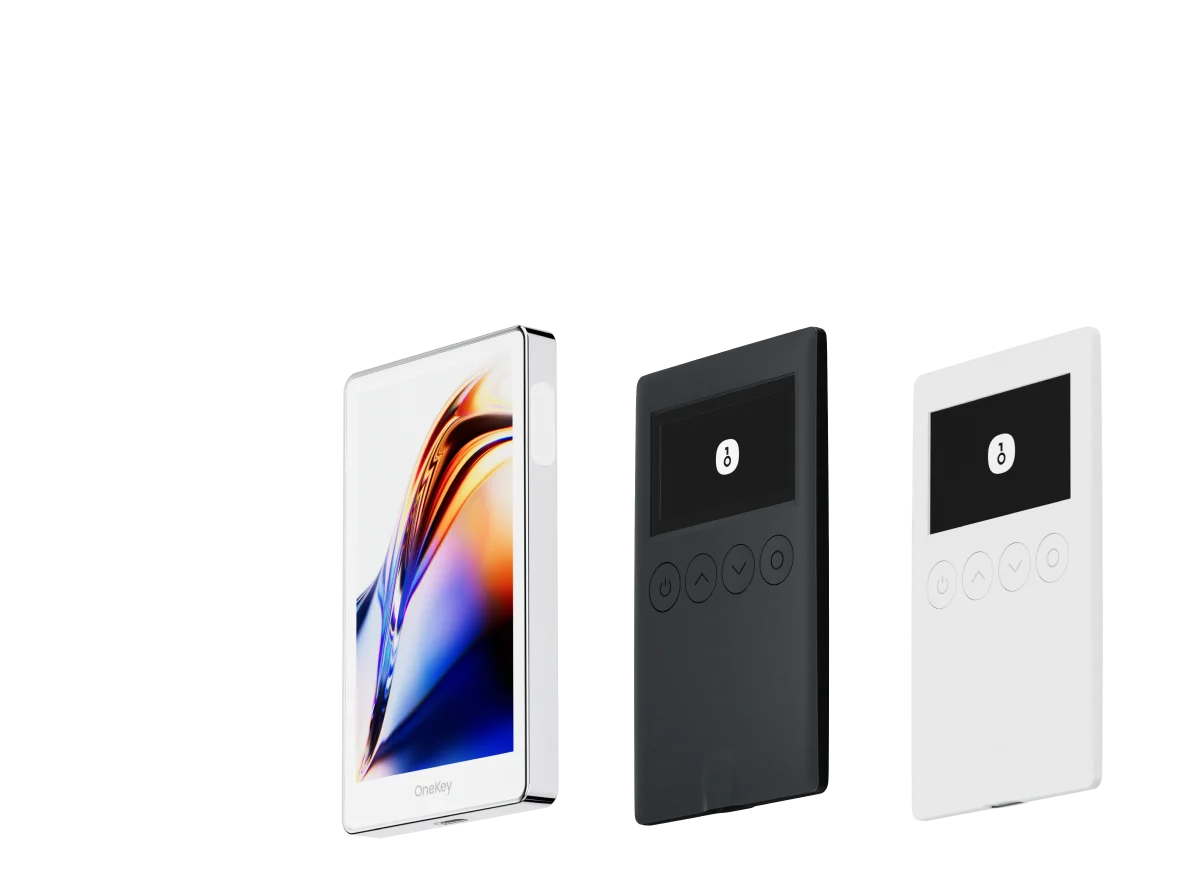
A hardware wallet like OneKey can help reduce exposure to exchange account risk by keeping private keys offline and enabling on-device transaction verification—particularly useful when interacting with ERC-20 tokens and smart contract approvals in the Ethereum ecosystem.
Before moving funds, the same rule applies: use the correct network, and verify WRON via the official ERC-20 contract on Etherscan.
Disclaimer: This article is for informational purposes only and does not constitute investment advice. Crypto assets are volatile, and network/transfer errors can be irreversible.