Custodial vs Non-Custodial: The Real Difference Behind KYC
Why do you need to upload a passport to use Binance, but can start using MetaMask docs in about a minute?
The answer comes down to the fundamental difference between custodial and non-custodial crypto products. Once you understand how these two models work, it becomes much clearer when KYC is required, when it usually is not, and how to make better decisions about where you keep and trade your assets.
Custodial model: why KYC is required
The platform holds your private keys
In a custodial setup, the platform holds crypto assets on your behalf.
When you deposit 1 BTC into a centralized exchange, your account balance increases, but the actual BTC sits in an exchange-controlled wallet. What you hold is effectively a claim against the platform, not direct control over the bitcoin itself.
This is similar to how a bank deposit works: the money in your bank account is legally the bank’s liability to you, not physical cash that you directly hold.
Custody triggers financial regulation
Because a custodial platform holds customer assets, it functions as a financial intermediary. That brings it under anti-money laundering (AML) and know-your-customer (KYC) requirements in many jurisdictions.
Common examples include:
- United States: licensed exchanges are subject to FinCEN guidance and must implement KYC controls.
- European Union: MiCA text requires crypto-asset service providers (CASPs) to register and perform KYC; the Transfer of Funds Regulation (TFR) requires information on transaction originators and beneficiaries.
- Global standards: the Financial Action Task Force (FATF) Travel Rule requires virtual asset service providers to record information about the sender and recipient of qualifying transfers.
For custodial platforms, KYC is not an optional product choice. It is a core compliance requirement. Failing to perform KYC can create serious legal consequences for the business.
Non-custodial model: why KYC is usually not required
Your private keys stay with you
The core principle of a non-custodial wallet is simple: you generate and control the private keys. They are stored on your device, and the wallet developer does not have access to them.
MetaMask’s own seed phrase documentation, for example, states that MetaMask cannot access users’ secret recovery phrases or private keys. This is not just a marketing claim; it follows from the technical architecture.
Wallet developers are not financial intermediaries
A non-custodial wallet developer provides software. It does not hold user funds, intermediate transfers, or execute transactions on behalf of users.
Instead, users interact directly with blockchains and smart contracts through their own wallet. There is no central party that can freeze, seize, or reroute assets simply because the wallet software is being used.
That is why non-custodial wallet providers are generally treated as software or tool providers, not custodial financial institutions. Regulatory frameworks such as the EU’s MiCA and U.S. regulatory approaches recognize this distinction and do not generally require non-custodial wallet software providers to KYC every wallet user.
Custodial vs non-custodial: key differences
Custodial vs non-custodial: the other side of risk
Non-custodial does not mean risk-free. It means the risk profile is different.
The main risk in the custodial model is platform risk: the exchange could fail, be hacked, become insolvent, or refuse withdrawals. Multiple well-known exchange collapses have shown that this risk is real.
The main risk in the non-custodial model is self-management risk: if you lose your seed phrase, your assets may be permanently unrecoverable; if your private key is exposed, your assets can be stolen. Chainalysis research has shown that losses from drainer attacks against self-custody wallets have increased over time, with phishing being one of the most common attack methods.
Choosing between the two models is ultimately a trade-off between trusting a platform’s security and solvency, or trusting your own ability to manage wallet security.
The security foundation of self-custody: protecting your seed phrase
A seed phrase, usually 12 or 24 English words, is the ultimate recovery credential for a non-custodial wallet. It is also the biggest security bottleneck.
If you protect your seed phrase, you protect your on-chain assets.
Basic rules:
- Write the seed phrase on paper and store it somewhere physically secure, such as a fireproof safe.
- Do not take screenshots.
- Do not store it in cloud services such as iCloud, Google Drive, or your phone’s photo gallery.
- Do not send it electronically to anyone, including someone claiming to be official support.
- Consider multiple backups in different physical locations to reduce the risk of fire, flood, theft, or accidental destruction.
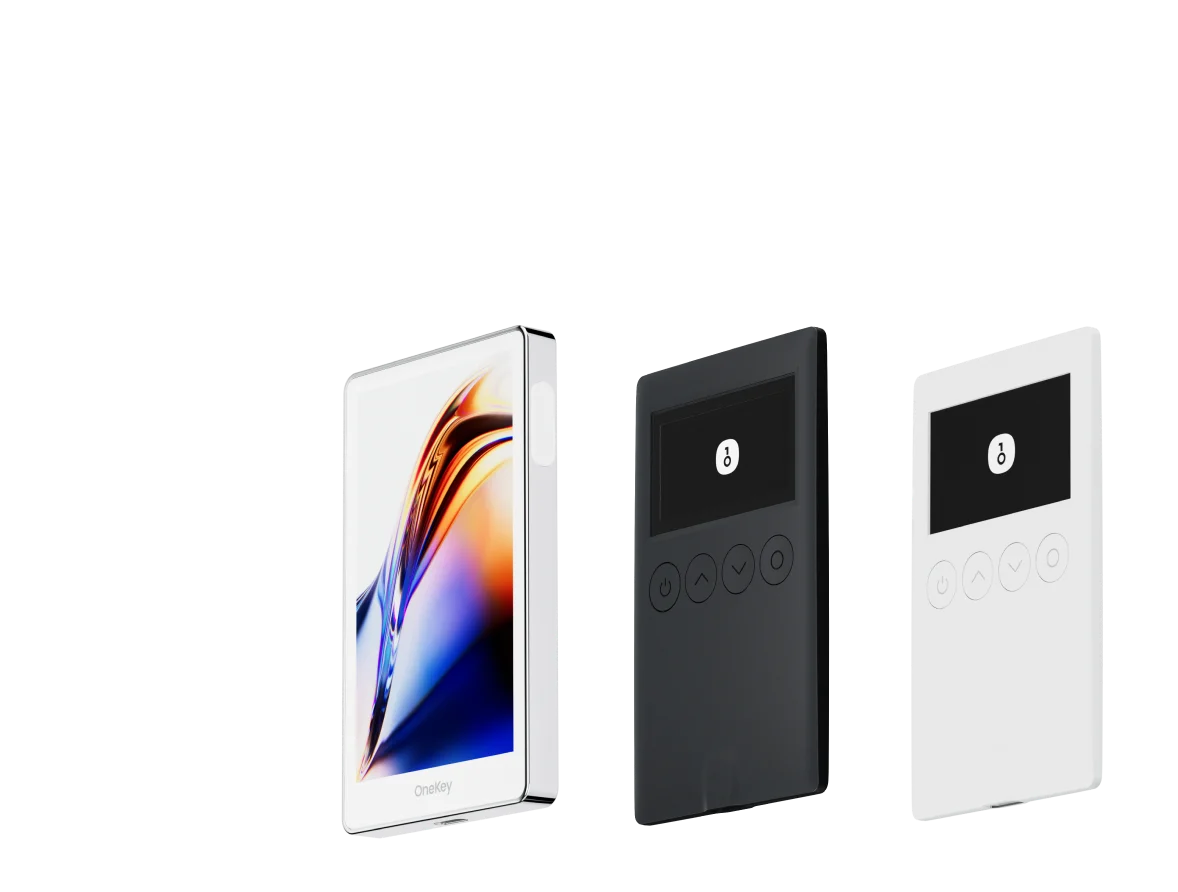
OneKey provides seed phrase protection guidance and supports hardware wallet workflows, allowing private keys to be kept inside a physically isolated secure chip for stronger protection.
On-chain trading: where non-custodial wallets matter most
For users who want to trade on-chain perpetuals, a non-custodial wallet provides one major advantage: you keep control of your assets, and trades do not pass through a centralized exchange account.
With OneKey Perps inside OneKey Wallet, users can access on-chain perpetual markets directly from a self-custody setup. Compared with trading through a centralized exchange:
- Funds are managed by smart contract protocols rather than a centralized exchange balance.
- There is no wallet-level KYC process required to get started.
- Deposits and withdrawals to supported on-chain protocols are controlled by the user, not by an exchange’s internal withdrawal policy.
Protocols such as dYdX and Hyperliquid follow a similar logic: rules are enforced by protocol design and smart contracts, and users do not need to hand asset custody to a centralized institution in the same way they would with a CEX.
That said, on-chain perpetuals are high-risk products. Liquidations, leverage, oracle behavior, smart contract risk, and market volatility can all lead to significant losses. Use them only if you understand the risks.
FAQ
Q1: Is my KYC data safe on custodial exchanges?
Custodial platforms store large amounts of sensitive personal information. That data can become a security risk in itself. There have been multiple incidents where user data from major exchanges or related services was leaked.
Using a non-custodial wallet does not require submitting personal identity documents to the wallet provider, which removes that specific data exposure risk at the wallet level.
Q2: If my non-custodial wallet is hacked, can I recover the funds?
Usually, recovery is extremely difficult. Blockchain transactions are generally irreversible. Once assets are transferred out, recovery often depends on tracing, exchange cooperation, and law enforcement involvement.
That is why prevention matters more than recovery: protect your seed phrase, avoid phishing links, verify transactions carefully, and be cautious with token approvals.
Q3: Can I use both custodial and non-custodial wallets?
Yes. Many crypto users use both.
A common approach is to keep long-term holdings in a non-custodial wallet or hardware wallet, while keeping only the amount needed for centralized exchange trading inside a CEX account.
The key is to understand the risks of each model and avoid leaving more funds than necessary on custodial platforms.
Q4: Does connecting a non-custodial wallet to a DApp require KYC?
Connecting a wallet to a DApp does not require KYC by itself.
Some DApps may apply their own compliance checks, such as regional restrictions or front-end access controls. Those are policies of the individual DApp, not the wallet itself. Many mainstream DeFi protocols do not require KYC from self-custody wallet users.
Q5: What does OneKey being open source mean?
OneKey’s code is available on OneKey GitHub, allowing anyone to review the wallet implementation and verify security claims such as private keys not being uploaded to servers.
Open source is an important trust signal for non-custodial wallets because it reduces the need to rely purely on “trust us” statements.
Conclusion: understand the model, then choose the right workflow
KYC is not a universal requirement for using crypto. It is mainly a compliance obligation for regulated financial intermediaries that custody user assets.
Once you understand the difference between custodial and non-custodial systems, it becomes clear why centralized exchanges generally require KYC, while self-custody wallets usually do not.
This is not a loophole. It is a deliberate distinction in how regulation treats custodial intermediaries versus non-custodial software tools. Self-custody gives users real asset control, but it also makes users responsible for their own security.
If you are ready to take on that responsibility and want a practical self-custody workflow, you can download OneKey Wallet and explore OneKey Perps for on-chain perpetual trading from a non-custodial setup.
Risk warning: This article is for informational purposes only and does not constitute financial, investment, or legal advice. Non-custodial wallets require users to secure their own private keys and seed phrases; if they are lost, assets may be permanently unrecoverable. On-chain trading, especially perpetuals and leverage, is high risk. Make independent decisions based on your own circumstances.