No-KYC Margin Trading Platforms That Still Work in 2026
Regulatory pressure on centralized exchanges keeps rising. KYC checks have moved from basic ID uploads to face verification, proof-of-funds requests, and in some cases bank statement reviews. At the same time, decentralized margin and perpetual trading protocols are still running and continue to improve.
This guide looks at no-KYC margin trading platforms that remain usable in 2026, have meaningful liquidity, and can be accessed on-chain. It also explains how to connect more safely using OneKey Wallet and OneKey Perps.
Key comparison table
1. How decentralized margin trading works
Decentralized margin trading is different from the margin account model used by a centralized exchange. Instead of depositing funds into a custodial platform and trading inside its internal ledger, you interact with smart contracts or app-specific chains.
The core building blocks usually include:
- Perpetual swaps: Contracts with no expiry date. Their prices are kept close to spot markets through a funding rate mechanism.
- Liquidity pools: In pool-based systems, liquidity providers effectively act as the counterparty to leveraged positions.
- Oracle pricing: Protocols use sources such as Chainlink or internal TWAP mechanisms to reduce the risk of price manipulation.
- On-chain liquidation: When margin falls below the required level, smart contracts or protocol logic automatically liquidate the position without manual intervention.
These platforms can operate without KYC because the protocol runs on public blockchain infrastructure. Any compatible wallet address can interact with the contracts or trading system, and identity verification is not built into the code path.
2. Major no-KYC margin trading platforms in 2026
Hyperliquid App
Hyperliquid is one of the largest on-chain derivatives venues by trading activity. It runs on its own L1 and offers order book-based perpetual futures trading. The experience is closer to a CEX than many DeFi perps platforms: low latency, limit orders, and relatively deep markets.
Key points:
- Supports perpetual contracts for BTC, ETH, SOL, and other major crypto assets
- Maximum leverage depends on the asset and current platform parameters
- USDC-denominated trading after funds are deposited to the Hyperliquid chain
- No KYC; your wallet address functions as your account
- Official reference: Hyperliquid Docs
GMX v2
GMX v2 is deployed on Arbitrum and Avalanche and uses a liquidity pool-based model. Traders can open long or short positions using assets such as USDC or ETH. Supported leverage varies by asset, liquidity, and protocol settings.
GMX uses oracle-based pricing, including Chainlink-based feeds, and is known for relatively low slippage on larger trades compared with many older DeFi trading venues.
dYdX v4
dYdX v4 moved to its own Cosmos-based app chain and offers order book-style perpetual trading. Gas costs are very low and may be effectively negligible for many users. It supports a range of major crypto markets and advanced order types such as stop-loss and trailing-stop orders.
Gains Network (gTrade)
Gains Network, commonly known through its gTrade interface, is deployed on Arbitrum and Polygon. It supports leveraged trading for crypto assets as well as non-crypto markets such as forex and commodities, with trading denominated in assets such as DAI or USDC.
Its main differentiator is access to synthetic leveraged exposure beyond crypto, including markets such as FX pairs and gold, without traditional account onboarding or KYC.
3. Platform comparison notes
Leverage limits, supported assets, margin requirements, liquidation rules, and regional access conditions can change frequently as platforms upgrade and regulatory pressure evolves. Always check the official documentation and in-app risk parameters before opening a position.
Do not assume that a leverage limit shown in an old guide, screenshot, or social post is still valid.
4. OneKey Perps: a practical no-KYC perps entry point
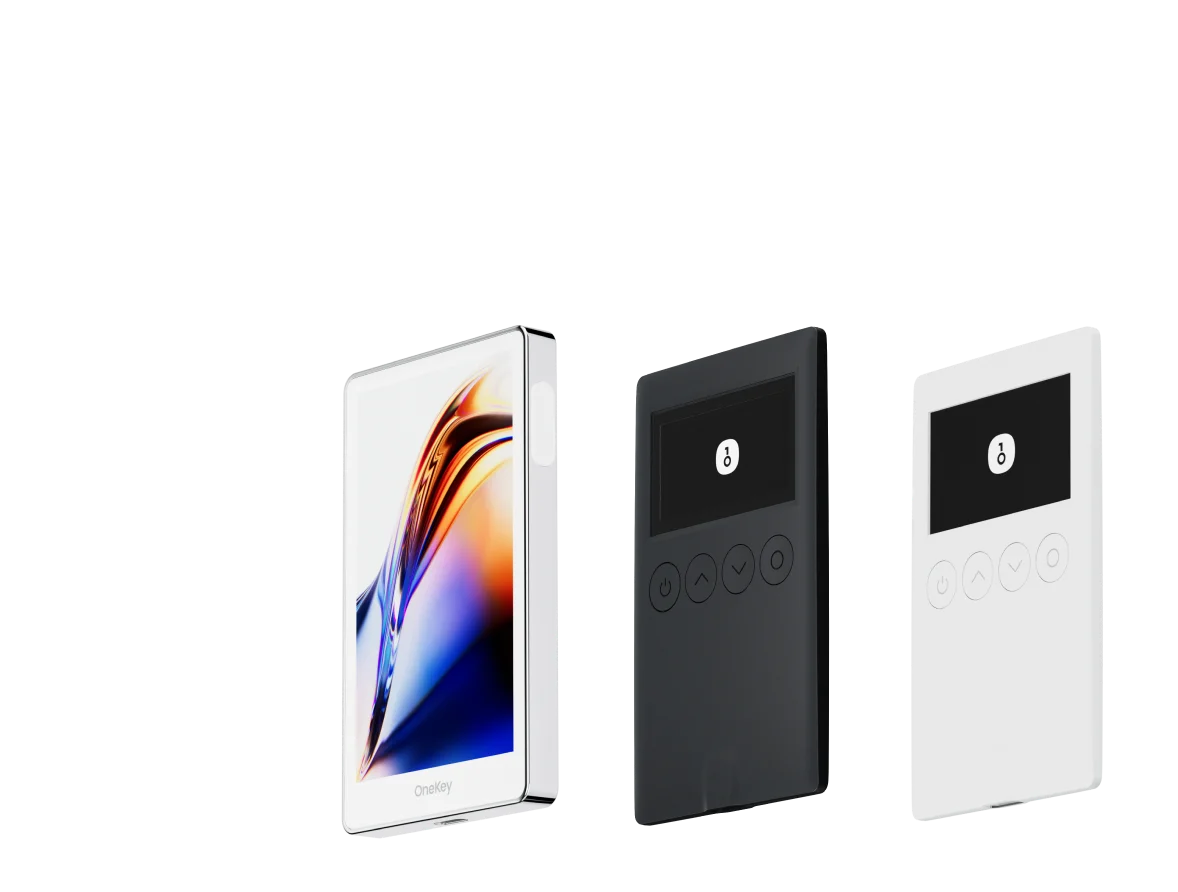
If you do not want to research and manage every derivatives protocol separately, OneKey Perps provides a simpler way to access major on-chain perps liquidity, including protocols such as Hyperliquid, through one interface.
With OneKey Perps, you can:
- Connect your OneKey Wallet instead of juggling multiple platform workflows
- Access routing to supported perps liquidity from a unified interface
- Use OneKey hardware wallet protection, with private keys stored locally and transaction signing completed on the device
- Reduce the friction of moving assets across chains when supported routes are available
For users who want self-custody plus a cleaner on-chain trading workflow, OneKey Perps is the practical starting point. Visit the OneKey official site to download the wallet and explore the full feature set.
5. How to open a leveraged position on Hyperliquid
The exact interface may change, but the basic workflow is generally as follows.
Step 1: Prepare funds
Prepare USDC on the supported source network, commonly Arbitrum, then deposit USDC into the Hyperliquid chain using the official Hyperliquid bridge or another supported bridge route.
Step 2: Connect your wallet
Open the Hyperliquid app, select Connect Wallet, and connect with a compatible wallet. You can use WalletConnect with OneKey Wallet where supported.
Step 3: Set up the position
Choose a market such as ETH-USDC, then select Long or Short. Set your leverage, enter the position size, and define stop-loss and take-profit levels before submitting the order.
Step 4: Confirm and monitor
Confirm the transaction or signature in OneKey. Once the position appears in the Positions panel, monitor it actively. Pay close attention to margin ratio, liquidation price, and funding rate. Add margin or reduce exposure if your liquidation buffer becomes too small.
6. Risk management essentials
Leverage can magnify profits, but it also magnifies losses. These rules can help reduce avoidable risk:
- Keep each position small, for example no more than 5%–10% of total trading capital
- Always use a stop-loss instead of hoping a losing trade reverses
- Track funding rates, especially when holding directional positions for a long time
- Understand your liquidation price before entering a trade
- Leave a meaningful buffer between market price and liquidation price; at least 20% is a useful baseline for many traders, though it is not a guarantee
- Review the relevant protocol documentation, such as Hyperliquid Docs, to understand liquidation mechanics
FAQ
Q1: Can decentralized margin trading platforms be shut down?
Because these protocols run on public blockchain infrastructure, users may still be able to interact with contracts or protocol systems even if a front end becomes unavailable. However, regulators may pressure development teams, infrastructure providers, or interface operators. Trends from regimes such as FinCEN guidance and MiCA are worth watching. Always follow official protocol announcements.
Q2: How does liquidation work in on-chain margin trading?
When your margin falls below the maintenance margin requirement, the protocol can automatically liquidate the position. The position is closed, liquidation fees may be deducted, and any remaining margin is returned according to the protocol rules. Unlike many CEX systems, on-chain liquidation activity can often be verified through blockchain explorers or protocol records.
Q3: What is the funding rate and why does it matter?
The funding rate is a periodic payment between long and short traders. It helps keep perpetual contract prices aligned with spot prices. When longs are crowded, longs may pay shorts; when shorts are crowded, shorts may pay longs. For longer holding periods, funding can become a major cost and should be included in your strategy.
Q4: Can I use a OneKey hardware wallet for on-chain margin trading?
Yes. OneKey hardware wallets can be used with supported DeFi and perps workflows through WalletConnect or together with the OneKey software wallet. Private keys remain inside the hardware device, and transaction signing is completed locally on the device, which is safer than using a software-only wallet.
Q5: How can I reduce the risk of being liquidated during extreme volatility or price wicks?
Use platforms with more robust oracle and pricing designs, such as those using decentralized oracle infrastructure like Chainlink or other anti-manipulation mechanisms. GMX and Hyperliquid both include pricing protections, though no system removes risk completely. Avoid max leverage, keep extra margin available, and do not place your liquidation price too close to the market.
Conclusion: on-chain leverage is still an option in 2026
The move toward stricter KYC has not eliminated decentralized margin trading. Protocols such as Hyperliquid, GMX, dYdX, and others remain active in 2026, with improving liquidity and trading infrastructure.
If you want a self-custodial workflow, download OneKey from the official OneKey site and try OneKey Perps as a practical way to access supported on-chain leverage markets without traditional exchange KYC. Keep position sizes controlled, understand liquidation rules, and treat leverage as a high-risk tool—not a shortcut.
Risk warning: Leveraged trading is highly risky and can result in the loss of all posted margin. In some cases, losses may exceed the initial amount committed. This article is for informational purposes only and is not financial, investment, legal, or tax advice. Crypto derivatives rules vary by country and region. Understand your local regulations before participating, assess your own risk tolerance carefully, and never trade with borrowed money you cannot afford to lose.