Privacy Mixers in 2026: Legal Status and Practical Use

May 6, 2026

Privacy mixers used to be almost synonymous with on-chain privacy. Since the regulatory crackdown that began in 2022, however, the landscape has changed significantly. In 2026, the legal status of mixers varies by jurisdiction, and their practical use cases have narrowed sharply.

This article summarizes the current state of privacy mixers so you can make a more informed decision.

Important: This article is for informational purposes only. It does not encourage or recommend any activity that may violate local laws. Before taking any action involving privacy tools or mixers, consult a qualified legal professional in your jurisdiction.

How mixers work

A mixer, also called a tumbler, is a tool designed to break the visible link between the source and destination of funds on-chain. It typically does this by pooling many deposits together, then distributing withdrawals in randomized amounts or to different addresses.

Broadly, mixers fall into two categories:

  • Centralized mixers: Operated by a service provider that controls the liquidity pool. These have largely disappeared from the mainstream market because operators face extremely high legal risk.
  • Decentralized mixers: Smart-contract-based systems such as Tornado Cash, which use zero-knowledge proofs to enable anonymous withdrawals without an operator directly handling funds.

From a cryptographic perspective, these tools rely on primitives similar in spirit to mechanisms used in typed signatures such as EIP-712, combined with on-chain verification logic to sever the visible source-of-funds trail.

The impact of the Tornado Cash case

In August 2022, the U.S. Treasury’s Office of Foreign Assets Control (OFAC) added Tornado Cash to its sanctions list. This became one of the most influential enforcement actions in the history of crypto mixer regulation. Afterward, Tornado Cash founders and developers faced arrests and criminal charges.

The effects are still visible today:

  • Major RPC providers such as Infura and Alchemy have blocked interactions with Tornado Cash contracts.
  • Many mainstream DEX and DApp front ends apply additional screening to addresses associated with mixers.
  • Law enforcement agencies in multiple countries have investigated related users and activity.

Some court decisions have raised questions about whether sanctioning autonomous smart contracts is legally valid. Even so, as of this writing, using Tornado Cash from within the United States remains a high-risk activity that may be treated as a sanctions violation.

The legal treatment of mixers remains fragmented. Some jurisdictions focus on the operators of mixing services, while others scrutinize users, front ends, infrastructure providers, or virtual asset service providers that process funds linked to mixers.

The European Securities and Markets Authority’s crypto-asset regulatory stance also indicates that the EU will continue strengthening monitoring of privacy tools under the MiCA framework.

The practical takeaway is simple: there is no universal “safe” legal status for mixers. Whether a specific action is lawful depends on where you are, the counterparties involved, the source of funds, and how local regulators interpret privacy-enhancing tools.

Why the practical value of mixers is declining

Even in regions where mixer use is not clearly prohibited, their privacy benefits have weakened.

Key reasons include:

  • CEX restrictions: Major centralized exchanges may reject deposits from known mixer-linked addresses or freeze accounts for compliance review, making funds harder to move back into regulated venues.
  • Improving chain analytics: Blockchain analytics firms continue to improve de-mixing and clustering techniques, reducing the effectiveness of older privacy patterns.
  • Mixer usage is itself visible: Interacting with a mixer leaves an on-chain record. The act of using a mixer can become a high-risk signal rather than a clean privacy layer.
  • Post-mix blacklisting risk: Addresses that receive mixed funds may be flagged by exchanges, wallets, analytics providers, or compliance vendors, affecting future usability.

In other words, mixers are no longer just a technical privacy choice. They can create legal, compliance, and liquidity friction that follows the funds long after the transaction.

Privacy alternatives within a compliance-aware framework

For traders who want better privacy without relying on high-risk tools, the following approaches are more practical.

Address management

Use separate addresses for separate purposes. For example, you may keep long-term holdings, DeFi activity, NFT activity, and trading activity in different wallets.

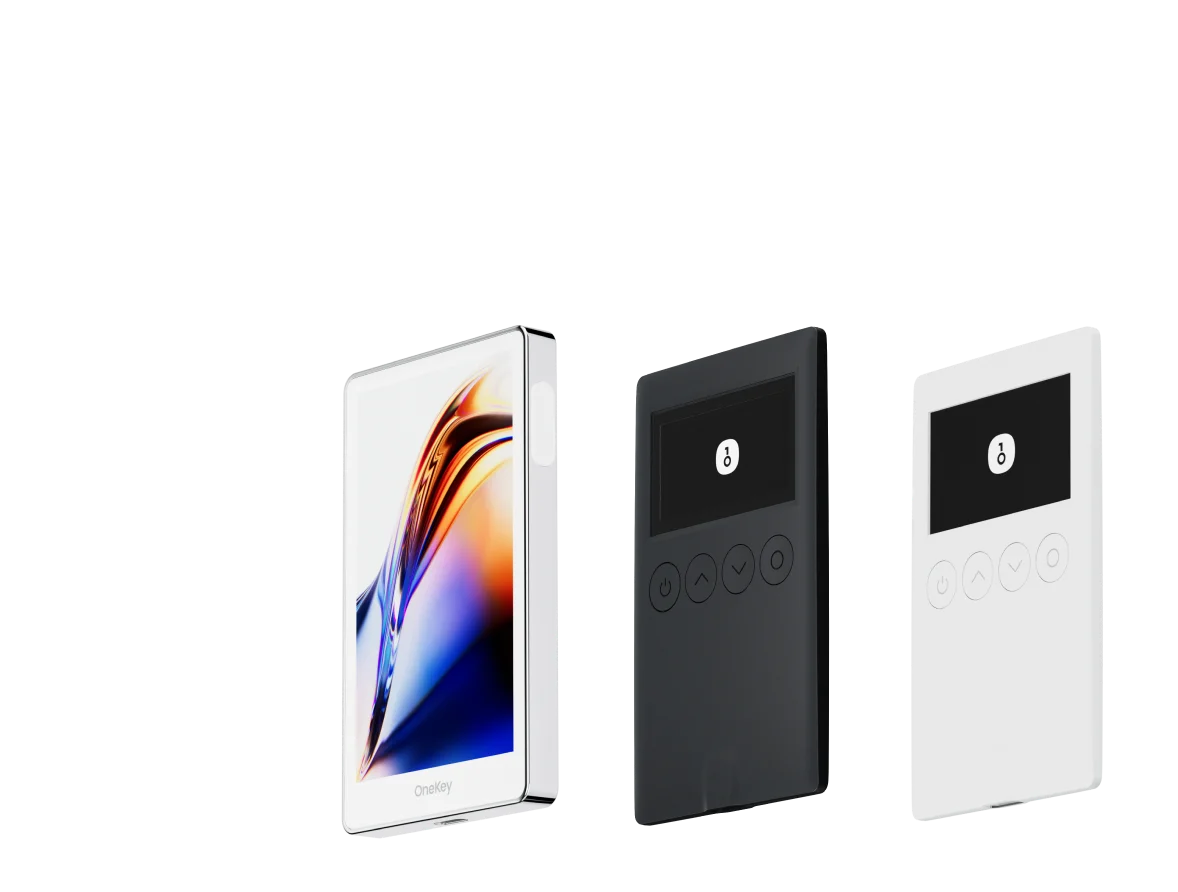
OneKey Wallet supports multiple accounts derived from a single recovery phrase, so you can maintain a clean multi-address setup without managing many separate private keys. This does not make you anonymous, but it reduces unnecessary address linkage.

Stealth addresses

Stealth addresses are a protocol-level privacy approach. They allow a sender to generate a one-time receiving address for a recipient, making it harder for outside observers to link payments to the same identity.

Unlike mixers, stealth addresses do not require a centralized operator or a pooled mixing contract. That gives them a more promising compliance outlook, though adoption and tooling are still developing.

Zero-knowledge identity tools

Zero-knowledge identity systems, including those built around W3C Verifiable Credentials, aim to let users prove specific facts without revealing the underlying data. For example, a user could prove “I have completed KYC” without publicly exposing their identity documents or full personal profile.

These tools may become an important part of compliant crypto privacy, especially where platforms need to satisfy regulatory requirements without over-collecting user data.

Focus on decentralized trading itself

Another practical privacy-preserving approach is to trade through DEX platforms that do not require account registration or KYC at the protocol level. Platforms such as Hyperliquid, dYdX, and GMX do not bind on-chain trading activity directly to a real-world identity by default. The level of privacy you retain still depends heavily on your address management and funding paths.

OneKey Perps provides access to decentralized perpetuals trading without account registration or KYC. For many traders, using a well-managed wallet setup together with OneKey Perps is a more practical privacy workflow than relying on high-risk mixer tools.

Common misconceptions about mixers

Misconception 1: “If I’m not in the U.S., I can use mixers freely.”

Reality: OFAC sanctions can have extraterritorial effects. Individuals or institutions with any connection to U.S. persons, U.S. infrastructure, U.S. financial institutions, or U.S.-linked counterparties may still be affected. Other countries are also developing their own rules and enforcement approaches.

Misconception 2: “A mixer completely erases transaction history.”

Reality: Mixer interactions are visible on-chain. Analytics techniques continue to improve, and some mixing patterns can be partially reconstructed. Using a mixer is a strong on-chain signal, not an invisible action.

Misconception 3: “Smart contracts cannot be sanctioned; only operators can.”

Reality: OFAC sanctioned Tornado Cash smart contract addresses directly. The legality of that approach remains debated in legal circles, but it has already produced real enforcement and compliance consequences.

FAQ

Q1: Can Tornado Cash still be used in 2026?

Technically, smart contracts deployed on-chain cannot simply be deleted, so interaction may still be possible. Practically, Tornado Cash is sanctioned by OFAC in the U.S., EU VASPs monitor related addresses, and many mainstream front ends and RPC providers block interactions. Actual use carries very high legal and compliance risk, while the privacy benefit has declined significantly.

Q2: What is the difference between a privacy mixer and a stealth address?

A mixer attempts to break the on-chain trail by pooling funds and separating deposits from withdrawals. A stealth address generates a one-time receiving address for each transaction, making it harder for outside observers to link payments to the same recipient. Stealth addresses are a protocol-level privacy approach and do not rely on external mixing infrastructure.

Even if there is no clear rule today, regulations can change quickly. Past cases show that regulators and law enforcement can investigate historical mixer activity. Operating in a legal gray area requires a clear understanding of the risks and professional legal guidance.

Q4: What if I accidentally receive funds that passed through a mixer?

This can happen, including through variants of “dusting attacks.” If you receive funds from a suspicious source, consider keeping them separate from your other assets and consult a compliance or legal professional before taking further action.

There is currently no solution that is fully legal in every jurisdiction, fully effective against all analytics, and widely available at scale. Address separation, stealth addresses, and ZK identity tools have better compliance prospects, but each comes with limitations and is still evolving.

Conclusion: Know the boundaries and operate carefully

In 2026, privacy mixers are no longer just a technical topic. They sit at the center of legal, compliance, and enforcement risk. For most traders, privacy alternatives inside a compliance-aware framework—address separation, DEX trading, stealth addresses, and emerging ZK identity tools—offer a more sustainable path.

If you want a practical workflow, download OneKey Wallet, separate your addresses by use case, and access decentralized perpetuals through OneKey Perps without relying on high-risk mixer tools.

Risk warning: This article is for informational purposes only and does not constitute legal, financial, or investment advice. It does not encourage any activity that may violate the law. Crypto regulation changes quickly and varies significantly by jurisdiction. Before making any decision involving mixers or privacy tools, consult a qualified legal professional in your area. Crypto trading involves substantial market risk; trade carefully.

Secure Your Crypto Journey with OneKey

View details for Shop OneKeyShop OneKey

Shop OneKey

The world's most advanced hardware wallet.

View details for Download AppDownload App

Download App

Scam alerts. All coins supported.

View details for OneKey SifuOneKey Sifu

OneKey Sifu

Crypto Clarity—One Call Away.