Report: Coinbase and Kraken Capture 22% of AI Mentions in U.S. Crypto Queries; IBIT Dominates Bitcoin ETF Answers
AI is quietly becoming a new “distribution layer” for the crypto industry. Increasingly, retail users don’t start their journey on a search engine or an app store—they start by asking an assistant a simple question: Where should I buy Bitcoin? or What’s the best way to store crypto?
A recent market analysis of AI-generated answers for U.S. crypto-related queries suggests a clear concentration of visibility:
- Coinbase accounts for 13% of AI citations in the “crypto” category
- Kraken accounts for 9%
- Together, they make up 22%—a lead that’s reported to be more than 3× other U.S. trading platforms
- Gemini ranks third at 5.5%, and Robinhood Crypto ranks fourth at 5%
- BlackRock’s spot Bitcoin ETF IBIT ranks fifth at 4.5%, and is described as dominant in answers tied specifically to “Bitcoin ETF” questions, aligning with IBIT’s prominence in the spot Bitcoin ETF market (see iShares Bitcoin Trust (IBIT) and the SEC’s spot Bitcoin ETF approval announcement)
This shift matters because AI answers tend to be recommendations, not just results. If AI repeatedly surfaces a short list of brands, it can shape user behavior—and potentially the U.S. retail crypto landscape—for years.
Why “AI citation share” is becoming a competitive moat
In 2025 and beyond, crypto growth is increasingly driven by narrative distribution as much as product features: ETFs brought Bitcoin into mainstream portfolios, stablecoins expanded on-chain settlement, and regulation continued to define which on-ramps feel “safe enough” for everyday users.
AI assistants compress that complexity into a few sentences. When users ask:
- “Where can I buy Bitcoin in the U.S.?”
- “Is a Bitcoin ETF safer than holding BTC myself?”
- “What’s the best way to store crypto long term?”
…the assistant often returns a shortlist. The brands that appear most frequently benefit from a compounding attention loop: more mentions → more clicks → more discussion → more training data signals → more mentions.
In other words, “AI mindshare” is starting to resemble what “top-of-funnel SEO” was a decade ago—except the funnel is shorter, and the recommendation tone is stronger.
IBIT and the new default mental model: “Bitcoin exposure” vs “Bitcoin ownership”
That IBIT reportedly dominates “Bitcoin ETF” related answers is not surprising. ETFs are structurally easy for AI to recommend because they map cleanly to familiar concepts: brokerage accounts, regulated products, tax forms, and traditional portfolio allocation.
For users whose goal is price exposure rather than using Bitcoin as an asset they control and transfer, a spot Bitcoin ETF can be a straightforward fit. For background on how ETFs work in general, see the SEC’s ETF overview.
But it’s crucial to separate two intents:
- Exposure: “I want BTC price exposure inside my existing investment account.” → ETF products like IBIT are often positioned for this.
- Ownership: “I want to hold BTC and be able to transfer it on-chain.” → that requires holding actual Bitcoin, not an ETF share.
AI answers can blur that distinction if the user’s prompt is vague. A better question is: “Do I need to withdraw Bitcoin to my own wallet, or do I only want price exposure?”
The surprising trend: AI is increasingly recommending custodial storage for “best way to store crypto”
The analysis also highlights a more controversial shift: hardware wallets are reportedly becoming less influential in AI answers overall, and when users ask “the best way to store crypto assets,” AI is increasingly likely to recommend custody via regulated platforms instead of self-custody.
This reflects how AI models tend to optimize for:
- Perceived safety for beginners (account recovery, customer support, familiar UX)
- Regulatory framing (U.S. compliance narratives and brand recognition)
- Lowest-effort path (fewer steps than learning seed phrases and backups)
Yet the tradeoff is fundamental: custodial storage introduces counterparty risk—the same category of risk that became painfully visible during the major exchange failures of 2022. Even if the names and balance sheets change, the risk type doesn’t disappear.
A practical way to think about it:
- Custody risk: “What if the platform freezes withdrawals, gets hacked, or fails?”
- Self-custody risk: “What if I lose my backup, get phished, or mishandle approvals?”
AI tends to recommend what’s easiest to operationalize, not what’s most resilient under stress.
What this means for everyday users: treat AI as a map, not a compass
If you use ChatGPT or other assistants to make crypto decisions, you’ll get better outcomes by forcing the model to reveal assumptions.
Here are three prompt patterns that reduce “brand autopilot” responses:
-
Ask for decision criteria before recommendations
“List the decision criteria for choosing a crypto exchange in the U.S., then suggest options.” -
Separate buying from storage
“Suggest a platform to buy Bitcoin, then separately explain the safest long-term storage options.” -
Ask for a risk table
“Compare custodial storage vs self-custody in a table: risks, failure modes, and mitigations.”
This matters because “most mentioned” is not the same as “best for your threat model.”
A balanced custody strategy for 2026: split roles, minimize blast radius
For many users, the most robust setup is not ideological—it’s modular:
- Use a regulated venue for on-ramping/off-ramping (fiat ↔ crypto)
- Use self-custody for long-term holdings you can’t afford to have frozen, rehypothecated, or exposed to platform risk
- Keep a smaller “hot” balance for active trading or frequent transfers
This approach reduces single-point-of-failure risk while keeping UX manageable.
For broader consumer guidance on safeguarding financial accounts (useful even in crypto), the FTC’s consumer advice on avoiding scams is a solid baseline reference.
Where OneKey fits: self-custody that stays relevant in an AI-first world
If AI recommendations are drifting toward custodial defaults, self-custody needs to compete on clarity and usability, not just ideology.
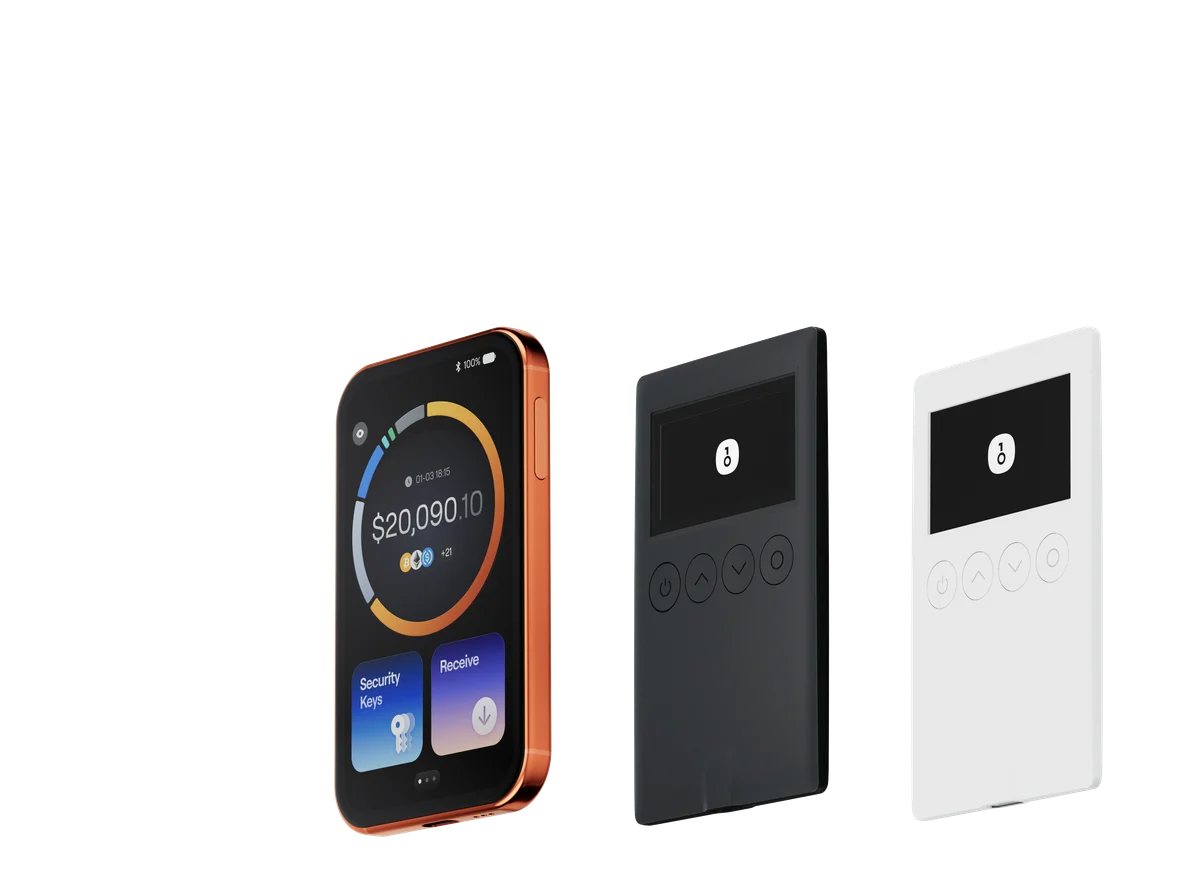
That’s where a hardware wallet like OneKey can be valuable: it’s purpose-built to keep private keys offline, helping users separate execution (buying, swapping, interacting) from custody (long-term control). In a world where AI may nudge users toward convenience, an intentional self-custody workflow is one of the few ways to preserve the core promise of crypto: ownership without permission.
The key is not choosing between “exchange” and “wallet” as a single winner—but designing a system where no single compromise ruins your entire financial life.
Closing thought: AI is shaping the crypto brand hierarchy—your prompts shape your outcome
The report’s most important implication isn’t which brand ranks first. It’s that AI is now a gatekeeper for retail discovery in U.S. crypto.
If you ask AI where to buy Bitcoin, it will likely highlight the most “citation-dominant” names. But if you ask AI how to reduce counterparty risk while keeping usability, you’ll get a different answer—and you’ll make a different decision.
In 2026, that difference is the edge.