The SEC’s 2026 Stance on No-KYC DEXs
Introduction Source: Hyperliquid docs.
The U.S. Securities and Exchange Commission’s approach to crypto remains one of the biggest regulatory questions for global traders. Over the past few years, the SEC’s Wells Notice to Uniswap Labs and lawsuits against major crypto firms have made many no-KYC DEX users wonder where the real risk sits.
In 2026, the regulatory picture looks more nuanced than it did during the peak enforcement cycle. But that does not mean DEX activity is risk-free. To understand the SEC’s practical stance, it helps to separate three things: the legal theory the SEC relies on, the entities it tends to target, and the actual risk profile for individual traders using self-custody wallets.
This article breaks down how the SEC thinks about DEXs, governance tokens, and no-KYC trading, with a practical focus on how traders can reduce operational and custody risk when using decentralized venues such as Hyperliquid, dYdX, and OneKey Perps.
The SEC’s Legal Foundation: The Howey Test and Securities Analysis
The SEC’s authority over crypto assets is rooted mainly in the Securities Act of 1933 and the Securities Exchange Act of 1934. Its core analytical tool is the Howey Test.
Under Howey, an arrangement may be treated as an investment contract — and therefore a security — if it involves:
- an investment of money;
- in a common enterprise;
- with a reasonable expectation of profit;
- based primarily on the efforts of others.
The SEC has long argued that many tokens outside Bitcoin and Ethereum, especially tokens sold through ICOs, token launches, or fundraising rounds, may qualify as unregistered securities. If tokens traded on a DEX are deemed securities, the SEC may argue that the DEX or its operator is running an unregistered securities exchange, broker, or related intermediary.
That legal theory sits at the center of the SEC’s pressure on Uniswap Labs and similar decentralized trading infrastructure.
Key Enforcement Events in 2024–2025
In April 2024, the SEC sent Uniswap Labs a Wells Notice, alleging that it may have operated as an unregistered securities exchange and unregistered broker. Uniswap Labs pushed back by arguing, among other things, that the protocol is neutral code and that a front end should not automatically be treated as a broker.
The case became a major reference point for the industry because it raised a difficult question: where does a decentralized protocol end, and where does a regulated platform operator begin?
At the same time, SEC actions involving Ripple, Coinbase, Kraken, and other crypto businesses created a broader legal record. Some courts accepted parts of the SEC’s arguments, while others were more skeptical of applying securities law broadly to all token transactions. That mixed case law gave the industry some legal breathing room, but it did not remove regulatory uncertainty.
2026: A More Nuanced Regulatory Signal
By 2026, several signals suggest the SEC’s approach is becoming more refined:
- new commissioners appear more open to leaving room for crypto innovation;
- internal crypto-focused workstreams have pushed for clearer asset classification guidance;
- some lawsuits have stalled, narrowed, or moved toward settlement;
- major DEX and perps protocols continue to build stronger legal and compliance frameworks.
Protocol documentation from projects such as Hyperliquid and dYdX shows ongoing attention to regulatory structure, access controls, risk disclosures, and compliance pathways. These teams are not ignoring regulation; they are actively planning around it.
The core pattern remains important: SEC enforcement has historically focused on platform operators, developers, issuers, promoters, and centralized points of accountability — not ordinary individuals trading through self-custody wallets.
What the SEC Usually Targets
The SEC’s DEX-related enforcement logic tends to focus on identifiable parties, including:
- companies that develop and maintain trading front ends;
- teams that issue or promote tokens;
- operators that collect fees from exchange-like activity;
- brokers, market makers, or intermediaries that facilitate securities transactions;
- governance or foundation structures that may have practical control over a protocol.
By contrast, individual users who connect a self-custody wallet and trade on a decentralized protocol have not historically been the SEC’s primary target. That does not mean there is zero risk. It means the enforcement priority has generally been upstream: the people and entities building, promoting, or operating the infrastructure.
Governance Token Risk
Governance tokens are one of the SEC’s main areas of concern.
If a DEX governance token was sold to raise capital, marketed with profit expectations, or tied to the future success of a protocol managed by a core team, the SEC may argue that the token meets the Howey Test and should be treated as a security.
This risk is usually most relevant to:
- token issuers;
- foundations;
- early investors;
- market makers;
- insiders;
- promotional teams;
- entities distributing or selling the token.
For ordinary secondary-market users who buy or sell governance tokens through a self-custody wallet, the SEC has not yet established a clear pattern of direct enforcement. Still, large positions in tokens with unresolved securities questions can create legal, liquidity, and exchange-access risk.
Practical Risk for Individual DEX Traders
For most individual traders, the direct risk of SEC enforcement appears lower than the risk faced by protocol operators or token issuers. The SEC has limited resources and generally prioritizes cases involving identifiable businesses, investor harm, token sales, or large-scale unregistered intermediation.
A trader using a self-custody wallet to access a decentralized protocol such as Hyperliquid, dYdX, or OneKey Perps is not in the same position as a company operating a front end, issuing a token, or collecting protocol revenue.
However, traders should not confuse “lower direct enforcement risk” with “no risk.” Important risks remain:
-
Front-end access risk
If a regulator pressures a DEX front end, the website or app may become unavailable in certain regions. -
Token classification risk
If an asset is later deemed a security, liquidity, exchange support, and compliance treatment may change quickly. -
Jurisdiction risk
Legal rules differ by country and region. A no-KYC DEX may be treated differently depending on where the trader lives. -
Smart contract and liquidation risk
Decentralized does not mean risk-free. Perpetual futures involve leverage, funding rates, liquidation mechanics, oracle risk, and market volatility. -
Policy-change risk
What is a gray area today can become a regulatory red line later.
Traders should regularly review official SEC materials and, when needed, consult qualified legal professionals in their own jurisdiction.
How to Use DEXs More Safely in 2026
A cautious DEX workflow in 2026 should focus on custody, venue quality, and regulatory awareness.
1. Use self-custody by default
Do not leave assets on platforms when you do not need to. A self-custody wallet gives you direct control over your private keys and on-chain assets.
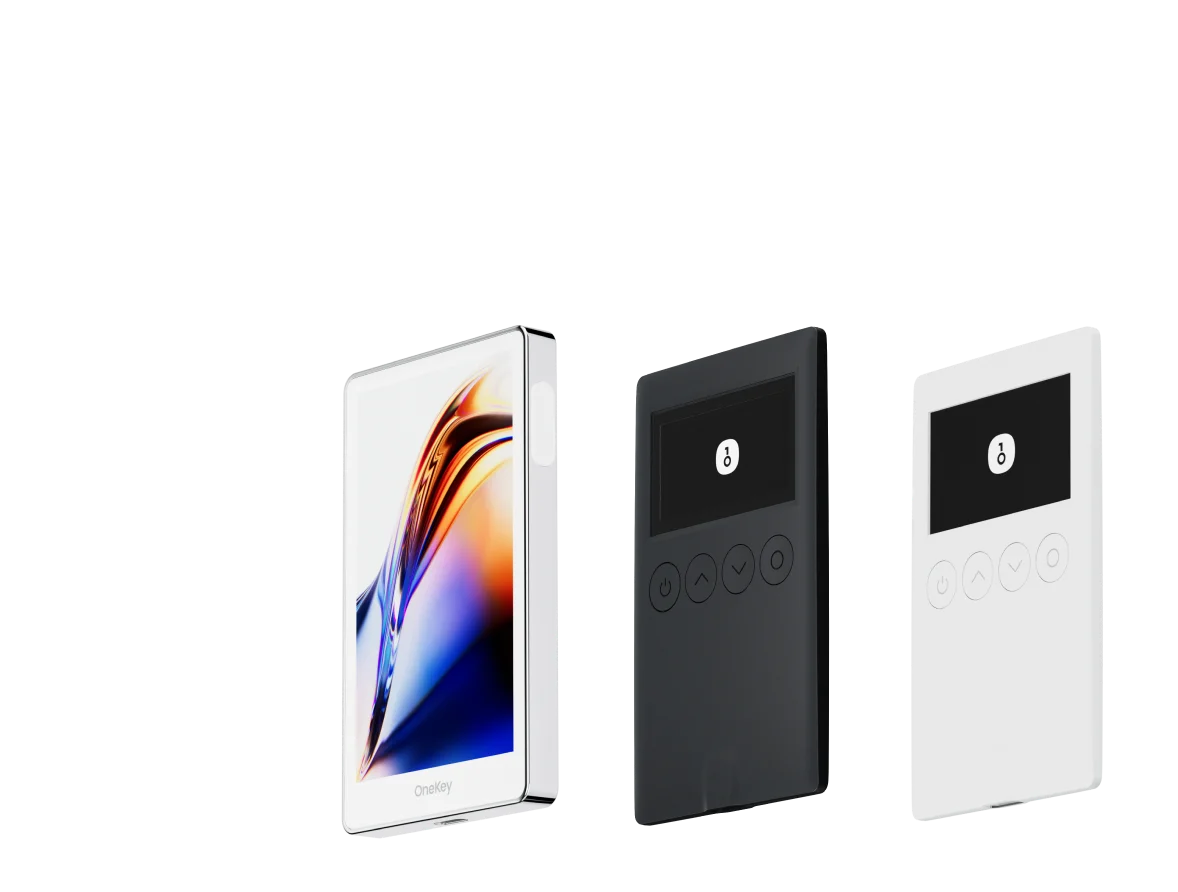
OneKey is a fully self-custodial wallet. Your private keys remain under your control, without relying on a centralized intermediary. If a DEX front end becomes unavailable, self-custody can help preserve your ability to access assets through other interfaces or direct contract interaction, where technically possible.
2. Choose established DEX and perps venues
Use protocols with serious engineering, security, and legal resources. Examples include major DEX and perps ecosystems such as Hyperliquid and dYdX.
For traders who want a self-custody workflow with integrated perpetuals access, OneKey Perps is a practical option. It lets users keep wallet-level control while accessing perps trading in a more streamlined environment.
3. Understand what you are trading
Before trading a token, especially a governance token, check:
- how it was issued;
- whether it had public or private fundraising;
- whether the team marketed profit expectations;
- whether the token has revenue, fee, or buyback mechanics;
- whether it has appeared in SEC complaints or regulatory statements.
Avoid taking oversized positions in assets with obvious unresolved legal risk.
4. Treat leverage as a risk tool, not a shortcut
Perps can be useful for hedging, directional exposure, and capital efficiency, but leverage can also accelerate losses. Use conservative position sizing, understand liquidation levels, and avoid trading with funds you cannot afford to lose.
5. Keep up with regulatory changes
Regulation in 2026 is still moving. Traders should monitor official SEC updates, court rulings, protocol announcements, and local rules in their own jurisdiction.
FAQ
Q1: Will the SEC sue individual traders for using a DEX?
Based on historical enforcement patterns, the SEC has focused on platform operators, developers, token issuers, promoters, and other identifiable intermediaries. There has not been a clear pattern of direct SEC enforcement against ordinary users trading through self-custody wallets.
That said, future policy can change. This is not a guarantee, and users should stay informed.
Q2: If a DEX like Uniswap or Hyperliquid is shut down, what happens to my assets?
If your assets are held in a self-custody wallet such as OneKey, they remain on-chain and controlled by your private keys. A front-end shutdown does not automatically mean your assets disappear.
In some cases, users may be able to access funds through another front end or by interacting directly with smart contracts. The exact process depends on the protocol design, chain, and contract status.
Q3: Are DEX governance tokens securities?
There is no single settled answer. The SEC has argued that some governance tokens can meet the Howey Test, especially when they are sold to raise funds and marketed around future profit expectations. Courts have not treated every token or every transaction the same way.
If you plan to hold a large governance-token position, understand the legal and liquidity risks first.
Q4: Is the SEC really changing its crypto stance in 2026?
There are signs of a more refined approach, including clearer classification discussions and some litigation moving toward settlement or narrowing. But the SEC’s investor-protection mandate has not disappeared.
Enforcement against unregistered securities offerings, misleading promotions, and unregistered intermediaries can continue.
Q5: Is it illegal to use a no-KYC DEX?
For individual traders, using a no-KYC DEX is not automatically illegal in many jurisdictions. The SEC’s main focus has generally been on unregistered platform operators and issuers rather than ordinary users.
However, rules vary by country and region. Sanctions, tax, securities, derivatives, and AML laws may still apply. This article is not legal advice.
Conclusion: Practical Takeaways for 2026
The SEC’s 2026 approach to crypto looks less one-dimensional than it did in 2023 and 2024, but uncertainty remains. For individual traders, the practical priority is not guessing every regulatory outcome. It is building a safer workflow:
- keep assets in self-custody;
- use reputable DEX and perps venues;
- understand the legal profile of the assets you trade;
- avoid excessive leverage;
- keep following regulatory developments.
OneKey Wallet and OneKey Perps offer a self-custody-first trading workflow for users who want direct control over their keys while accessing decentralized perps markets. Download OneKey and try OneKey Perps if you want a practical way to trade while keeping custody in your own hands.
Risk Disclosure
This article is for informational purposes only and does not constitute legal, investment, tax, compliance, or financial advice. Crypto assets are highly volatile and may result in significant loss of principal. The discussion of SEC policy is based on public information and does not represent the official view of the SEC or any regulator. Regulatory conditions can change at any time. Before making investment or compliance decisions, consult qualified legal or financial professionals. Nothing in this article should be read as an endorsement of any crypto asset, protocol, or trading strategy.