No-KYC Smart Contract Wallet: A Practical Guide
Traditional Ethereum externally owned accounts (EOAs) are controlled by a single private key. If that key is lost, there is no native recovery path. EOAs also have limited flexibility: they cannot batch multiple actions by default, set custom spending rules, or define recovery logic at the account level.
Smart contract wallets change that model. Instead of being just a private-key-controlled address, the account itself is programmable contract code. Security policies, authorization rules, recovery methods, and transaction logic can all be defined on-chain.
Just as important: smart contract wallets can still be non-custodial and no-KYC. This guide explains how they work, what to watch out for, and how to use them for safer on-chain asset management and perps trading.
Key comparison table
How smart contract wallets work
A standard EOA is directly controlled by a private key. The rules are fixed: whoever signs with the key controls the account.
A smart contract wallet separates the account from the signer. The account is a contract deployed on-chain, while one or more signer keys authorize actions. The contract defines what counts as a valid action and under what conditions it can happen.
This unlocks several important features:
- Social recovery: assign trusted guardian addresses that can help recover the account if the primary key is lost.
- Batch transactions: package multiple actions into one transaction to save time and potentially reduce total gas across complex workflows.
- Custom access controls: set daily transfer limits, whitelisted addresses, role-based permissions, or other account-level rules.
- Gas abstraction with Paymasters: pay gas with supported ERC-20 tokens, or use a third-party Paymaster to sponsor gas under certain conditions.
The most widely used account abstraction standard today is EIP-4337. It enables these capabilities without requiring changes to Ethereum’s base protocol, using infrastructure such as the EntryPoint contract.
KYC: how smart contract wallets differ from EOAs
A smart contract wallet is still a non-custodial wallet when designed properly. The wallet provider does not hold user funds, and the user controls the account through their signer keys and wallet logic. In that sense, it is similar to an EOA wallet and does not inherently require KYC.
The compliance layer to pay attention to is usually not the wallet itself, but optional infrastructure around it — especially Paymaster services.
Some Paymaster providers, which sponsor or abstract gas payments, may apply compliance checks depending on their own policies or regulatory obligations, including frameworks such as the EU’s MiCA regime or FinCEN guidance-related guidance.
For users who pay their own gas directly, the smart contract wallet itself does not create a KYC requirement.
Main smart contract wallet options
Smart contract wallet products vary in their implementation, supported chains, recovery design, multisig support, Paymaster integration, and user experience.
Treat any feature comparison as a technical reference only. Wallet functionality changes quickly, so always check the official documentation of the product you plan to use before moving meaningful funds.
How to start using an ERC-4337 smart contract wallet
Step 1: Choose a wallet entry point
The simplest way to use an ERC-4337 account today is through a wallet app or SDK that supports account abstraction.
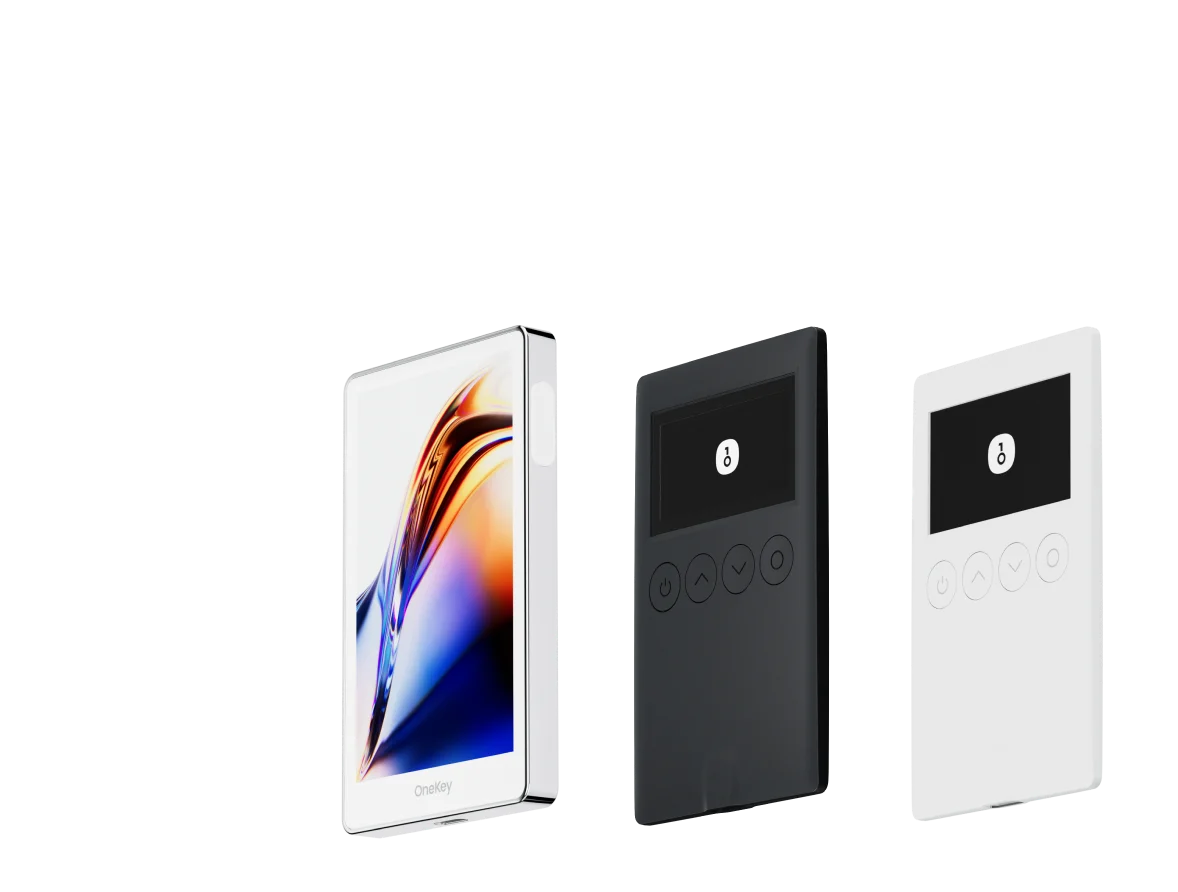
Some mainstream wallets, including OneKey, are integrating smart account features so the experience feels close to using a normal EOA wallet, while account abstraction logic runs in the background.
Step 2: Deploy the smart account
Unlike an EOA, a smart contract wallet needs a contract instance on-chain.
In many implementations, the account is created through counterfactual deployment. This means your wallet address can be known before the contract is actually deployed. The contract is deployed automatically when you make the first transaction, and the deployment gas is included in that transaction.
For users, this usually feels like a normal first transaction rather than a separate manual setup process.
Step 3: Configure your security policy
Set the account rules based on how you plan to use the wallet:
- For personal use, a single signer may be enough while still letting you benefit from batching and gas abstraction.
- For team funds or larger balances, use multisig rules so multiple keys are required for important actions.
- If key loss is a concern, set up social recovery with 1–3 trusted guardian addresses.
Do not rush this step. A smart account is powerful because its rules are programmable, but poor configuration can create unnecessary risk.
Step 4: Connect to DeFi protocols
Smart contract wallets can connect to many DeFi applications through WalletConnect, similar to EOAs.
For on-chain perps venues such as Hyperliquid, dYdX, and other contract-based trading protocols, the connection flow is often similar to using a regular wallet. Some protocols also support smart account signatures directly.
Before trading, confirm that the protocol you use supports your wallet type and signing method.
Smart contract wallet security checklist
Contract audits matter
Your asset security depends heavily on the quality of the wallet contract code. Choose well-known implementations that have gone through multiple independent audits and have a strong public security track record.
OneKey’s code is open source on OneKey GitHub, making its security history and development activity easier to review.
Choose guardians carefully
If you enable social recovery, your guardians become part of your security model. If an attacker controls enough guardian addresses, they may be able to reset control of your account.
For stronger security, consider using multiple cold wallet addresses that you control as guardians instead of relying on third parties.
Understand EIP-712 signing
EIP-712 structured signatures are widely used with smart accounts. Use a wallet that clearly displays what you are signing, including the requesting address and action details.
Never approve signatures you do not understand. Phishing attacks often rely on users signing unclear or misleading messages.
Manage token approvals
Smart contract wallets still face token approval risks. Unlimited approvals, old approvals, and approvals to compromised contracts can expose funds.
Use tools such as Revoke.cash periodically to review and remove unnecessary approvals.
OneKey and on-chain perpetuals
If you want to use a smart contract wallet for on-chain perpetuals trading, OneKey Perps is a practical workflow to consider.
OneKey Perps combines wallet-side security with access to on-chain perps liquidity, reducing the need to jump between random third-party DApps. Fewer external touchpoints can reduce exposure to phishing links, fake front ends, and malicious signing prompts.
For larger balances, a useful setup is to keep funds in a smart account controlled by a OneKey hardware wallet, while using software-side authorization for day-to-day actions where appropriate. Sensitive operations can still require physical confirmation on the hardware device, balancing usability with stronger key security.
FAQ
Q1: Is a smart contract wallet safer than a regular wallet?
It depends on the implementation and configuration.
Smart contract wallets can provide more flexible security features, such as social recovery, multisig, spending limits, and custom access rules. However, they also introduce smart contract code risk. If the wallet contract has a vulnerability, it may be exploited.
Using a well-audited, widely used implementation can significantly reduce this risk, but it cannot remove it entirely.
Q2: Is gas more expensive with an ERC-4337 smart contract wallet?
Often, yes for simple actions. Smart contract wallets need to execute account logic, so a basic transfer may cost more gas than an EOA transfer.
However, batching can make complex workflows more efficient by combining multiple actions into one transaction. The actual cost depends on the action, the wallet implementation, and current network conditions.
Q3: Can I use the same smart wallet address across chains?
On EVM-compatible chains, the same account abstraction contract and deployment salt can sometimes generate the same address across networks.
That said, cross-chain address consistency depends on the wallet’s implementation. Check the official documentation of your wallet before assuming the same address will work everywhere.
Q4: How is EIP-2612 related to smart contract wallets?
EIP-2612 defines the permit function, which lets users approve token spending with a signature instead of a separate on-chain Approve transaction.
Smart contract wallets can integrate permit-based flows to reduce friction and streamline multi-step transactions.
Q5: Can I completely avoid KYC with an ERC-4337 account?
The account itself does not require KYC when it is non-custodial.
However, if you use a third-party Paymaster to sponsor or abstract gas payments, that provider may apply verification based on its own business or compliance policies. Paying your own gas with ETH avoids that specific dependency.
Conclusion: programmable accounts are the next step in self-custody
Smart contract wallets are an important evolution in on-chain account design. They preserve the core no-KYC, non-custodial model of self-custody while adding security features and workflow flexibility that EOAs cannot provide on their own.
If you have not tried a smart contract wallet yet, start with a small amount and learn the flow before moving larger funds. Download OneKey, explore account abstraction features as they become available, and consider using OneKey Perps for a more integrated on-chain perps trading workflow.
Risk warning: This article is for informational purposes only and is not financial, investment, or legal advice. Smart contract wallets involve complex technical mechanisms and smart contract risk. Crypto assets and perpetual contracts are highly volatile and may result in loss of principal. Always make independent decisions based on your own risk tolerance.