No-KYC Perps in Southeast Asia: A Practical Guide for Retail Traders
Southeast Asia is one of the world’s strongest crypto adoption regions. Vietnam, the Philippines, Indonesia, and other markets have ranked highly in Chainalysis’ global crypto adoption research for years. But for retail traders using no-KYC perpetual DEXs, the legal and practical landscape varies significantly from country to country.
This guide breaks down the major Southeast Asian markets and outlines a practical workflow for retail traders who want to manage assets with self-custody and access perps without relying fully on centralized exchanges.
Key comparison table
What Southeast Asian Crypto Markets Have in Common
Crypto regulation across Southeast Asia is far from uniform, but several patterns show up across the region:
- Regulation often lags market adoption: In many countries, crypto rules are still being built while user activity is already mature.
- Banking access is uneven: Limited access to traditional financial services has helped drive crypto adoption.
- Enforcement resources are limited: Compared with the US, EU, Japan, or South Korea, enforcement tends to be less aggressive in many SEA markets.
- Stablecoin demand is strong: Inflation pressure and local currency depreciation make USDT especially popular across the region.
This makes Southeast Asia a more flexible environment for no-KYC DEX usage than many developed markets. That does not mean there is no risk. Rules can change, enforcement priorities can shift, and users still need to understand local restrictions.
Country-by-Country Snapshot
Vietnam: High Adoption, Light Regulation
Vietnam has one of the highest retail crypto participation rates in the world. The State Bank of Vietnam has made clear that crypto is not legal tender and cannot be used as a payment method, but the rules around holding and trading crypto assets remain less defined.
There is currently no comprehensive crypto asset framework. DEX usage sits in a legal gray area, and direct enforcement against individual on-chain users has been limited in practice.
For Vietnamese users accessing no-KYC perpetual DEXs such as Hyperliquid or GMX, the practical barriers are relatively low today.
Philippines: Relatively Open Framework
In the Philippines, the Securities and Exchange Commission and Bangko Sentral ng Pilipinas oversee different parts of the crypto market, including securities-like tokens and payment-related crypto services. The country has generally taken a more open approach, allowing centralized exchanges to operate legally if they register and comply with local rules.
For DEXs and individual users, there is no clear blanket KYC requirement at the user level. No-KYC DEX usage remains a gray area, but regulatory focus has mostly been on registered platforms and service providers rather than individual wallet activity.
Indonesia: Crypto as a Commodity
Indonesia classifies crypto as a commodity, regulated by BAPPEBTI rather than the main financial regulator. This means crypto falls under commodity trading rules, but ordinary personal holding and usage are relatively less restricted.
Crypto exchanges operating in Indonesia must be licensed. However, there have not been widely cited enforcement cases targeting individual users simply for accessing offshore DEXs.
Thailand: A More Developed Regulatory System
Thailand’s SEC has built a more complete crypto regulatory framework. Platforms serving the market are expected to register and comply with AML/KYC requirements. Thai regulators have also increased attention on unregistered offshore platforms in recent years, but enforcement has mainly targeted platform operators.
For individuals accessing on-chain DEXs through self-custody wallets, there is currently no clear direct rule covering every use case. Users should still pay attention to regulatory updates.
Malaysia: Clearer Rules and Public Warnings
Malaysia’s Securities Commission has issued dedicated digital asset guidelines and requires digital asset exchanges operating in the country to be licensed. The SC has also issued public warnings about unlicensed offshore platforms, highlighting the risks for users.
This makes Malaysia one of the clearer regulatory environments in the region, but also one where users should be more cautious about platform risk and compliance changes.
A Common DEX Workflow for Southeast Asian Retail Traders
Because banking penetration and fiat access differ from Western markets, many Southeast Asian retail traders follow a workflow like this:
- Buy USDT with local currency through a P2P market such as Binance P2P or similar local channels.
- Withdraw USDT to a self-custody wallet such as OneKey.
- Connect the wallet directly to a no-KYC perpetual DEX or an aggregator.
- After trading, move USDT back through the same route when cashing out.
The advantage is that users retain self-custody and avoid depending entirely on centralized exchange accounts. The trade-off is that P2P markets themselves may carry regulatory, counterparty, and bank account risk in some countries.
Why OneKey Wallet Fits Southeast Asian Retail Users
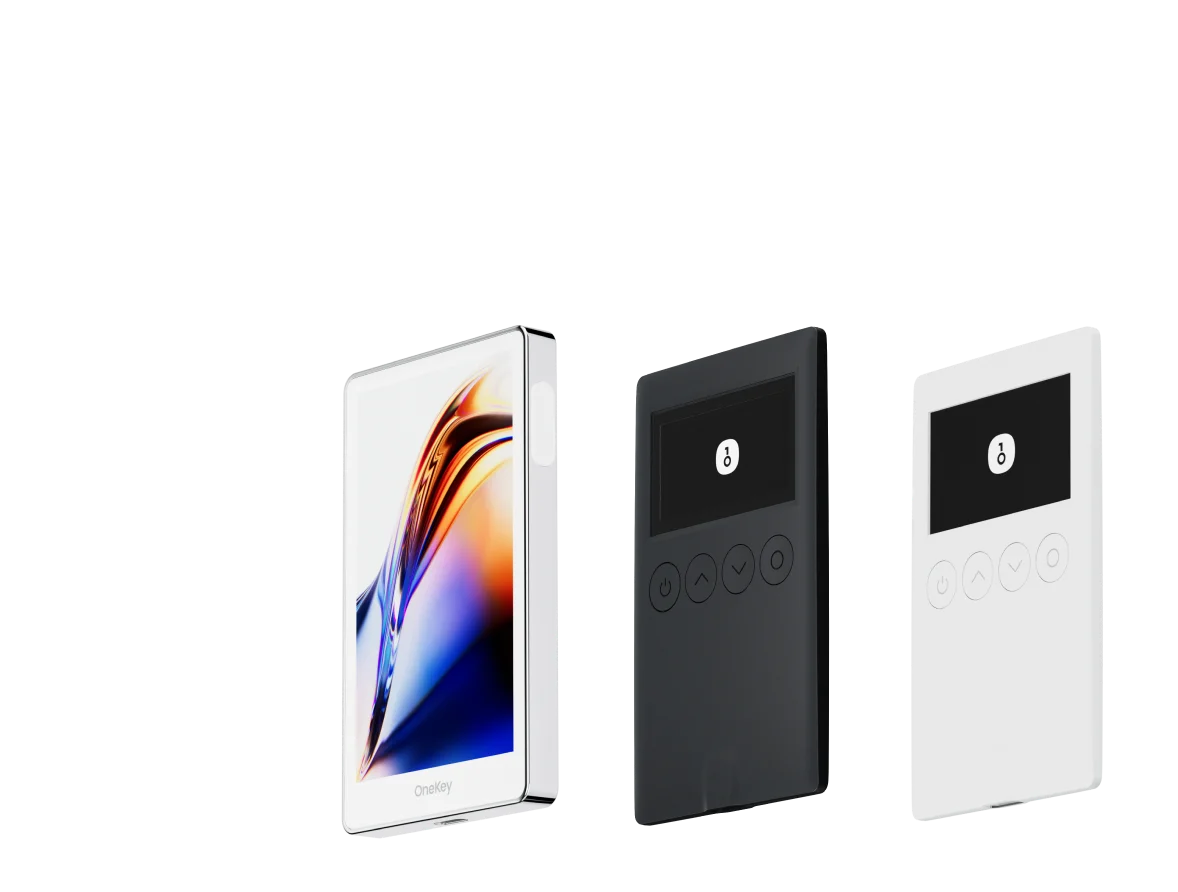
OneKey Wallet is a practical starting point for Southeast Asian crypto users who want self-custody before trading perps.
First, OneKey supports multiple languages and has a user experience suitable for non-professional users. The mobile app is especially relevant in Southeast Asia, where many users access crypto primarily from smartphones.
Second, OneKey is non-custodial. The platform cannot freeze or move your assets on your behalf. In a region where exchange failures and platform shutdowns are real concerns, holding assets in a self-custody wallet is a basic layer of protection.
Third, OneKey is open source, with code available through the OneKey GitHub. This gives users and developers more transparency than closed wallet systems.
Fourth, OneKey hardware wallets provide offline private key management. For users holding larger balances, moving key storage away from a hot wallet is an important security upgrade.
How OneKey Perps Helps SEA Traders Access Perpetual Markets
OneKey Perps aggregates liquidity from multiple no-KYC perpetual platforms, so users do not need to jump between several trading venues manually. For Southeast Asian retail traders, this creates a cleaner workflow: hold assets in OneKey, connect through OneKey Perps, and access major perpetual markets from one place.
Common use cases include:
- A Vietnamese retail trader using USDT to take a BTC perpetual long position while managing exposure to local currency weakness.
- A Philippine trader taking short-term ETH perp trades without submitting passport information to every platform.
- An Indonesian user using perps to manage cross-asset exposure without opening an offshore brokerage-style account.
Perpetuals are high-risk products. Leverage can amplify losses quickly, and liquidation can happen during sudden market moves. OneKey Perps is a practical access layer, not a way to remove market risk.
Security Habits Matter in Southeast Asia
Crypto security risk is significant across the region. Chainalysis research on crypto theft has highlighted Southeast Asia as one of the active regions for phishing, wallet drainer campaigns, and social engineering attacks.
Key habits for safer trading:
- Regularly use Revoke.cash to review and revoke unnecessary smart contract approvals.
- Treat unknown DApp links, Telegram messages, airdrop claims, and search ads with extreme caution. OWASP phishing analysis is a useful reference for learning common attack patterns.
- Keep larger balances in a OneKey hardware wallet instead of a hot wallet.
- Use separate wallets for long-term storage and active trading.
- Avoid signing transactions you do not understand, especially unlimited token approvals.
Stablecoin Choice: USDT vs USDC
Stablecoin selection affects real-world usability in Southeast Asia.
USDT generally has the deepest P2P liquidity across the region. It is often easier to buy and sell locally, and many traders treat it as the default trading stablecoin. However, USDT also faces more regulatory scrutiny, including ongoing concerns around reserve transparency.
USDC has stronger regulatory positioning in many markets, but P2P liquidity is often thinner in Southeast Asia. For active traders who need fast local entry and exit, that difference can matter.
Most retail users choose based on liquidity, route availability, and personal risk tolerance rather than brand alone.
FAQ
Q1: If I use a DEX in Vietnam, should I worry about enforcement?
At present, Vietnam has shown very little active enforcement against individual users accessing on-chain DEXs. However, the legal framework is still evolving. It is sensible to stay cautious, avoid unnecessary public exposure, and be careful with large bank-linked transactions.
Q2: Which Southeast Asian countries are currently friendliest to no-KYC DEX users?
Based on regulatory environment, legal clarity, and enforcement practice, Vietnam and the Philippines are currently among the more flexible markets. Thailand and Malaysia have more developed frameworks, but enforcement has generally focused more on platforms than individual users. Singapore has the clearest overall framework, but it is also more regulated.
Q3: Is buying USDT via P2P and moving it to a DEX a money-laundering risk?
A simple P2P purchase for investment or trading purposes is generally not treated as money laundering in most Southeast Asian countries. Risk changes if funds come from unclear sources, if a user is knowingly helping others evade controls, or if transactions are structured to hide illicit activity. Normal investment activity is a different risk profile, but users should follow local laws and keep records where appropriate.
Q4: Does OneKey support local Southeast Asian fiat deposits or local stablecoins?
OneKey Wallet is mainly for on-chain asset management. It does not directly provide fiat deposit rails. Most users first convert local currency into crypto through P2P markets or regulated exchanges, then transfer assets into OneKey for self-custody and on-chain use.
Q5: Will Southeast Asian crypto regulation become stricter after 2026?
The broad direction is toward more formal regulation, but the pace differs by country. Vietnam may move toward a more formal crypto asset framework in the 2026–2027 period. The Philippines, Thailand, and Malaysia already have more developed structures, so future changes may be more incremental.
Conclusion: The Right Tools Matter More Than Ever
Southeast Asian retail crypto traders have real advantages: active crypto communities, strong P2P liquidity, and in many markets, a relatively flexible environment for on-chain activity. But no-KYC does not mean no risk. Users still need to manage custody, smart contract exposure, liquidation risk, and changing local regulations.
OneKey Wallet gives retail users a non-custodial, open-source, hardware-compatible foundation for managing crypto assets. With OneKey Perps, users can access perpetual markets through a practical aggregation workflow without depending entirely on centralized platforms.
If you want to trade perps with self-custody as the starting point, download OneKey, secure your wallet properly, and try OneKey Perps with careful position sizing and a clear risk plan.
Risk Disclaimer
This article is for informational purposes only and does not constitute legal, financial, or investment advice. Crypto regulations in Southeast Asia differ significantly by country and continue to change. This article may not reflect the latest rules in your jurisdiction. Crypto derivatives and perpetual contracts are high-risk products and can result in rapid losses, including liquidation. Only trade where permitted by local law and only with funds you can afford to lose.