36 年,4 场战争,1 个剧本:资本如何在冲突中定价世界?
36 年,4 场战争,1 个剧本:资本如何在冲突中定价世界?
War shows us rubble. Capital only sees a spread.
When conflict reignites in the Middle East, people on the ground count minutes between sirens and uncertainty. Markets, meanwhile, count something else: how far oil can gap, whether gold should grind higher, when equities can risk a bounce, and how quickly liquidity needs to be repriced.
Across roughly 36 years—from the Gulf War to Iraq, from Russia–Ukraine to today’s Middle East flare-ups—the “script” repeats: fear → liquidity tightening → safe-haven bids → supply-shock premiums → policy reactions. The difference in 2026 is that a growing part of this repricing is happening on a new rail: blockchains, where value moves 24/7, settlement is programmable, and self-custody turns into an operational necessity rather than an ideology.
This article is about that invisible timeline: how capital prices conflict—and how crypto users can read (and survive) that pricing mechanism.
1) Conflict pricing has become 24/7, and crypto is part of the tape
Traditional macro assets react in predictable clusters during geopolitical stress:
- Energy risk premium (oil and shipping routes)
- Inflation expectations (and therefore rates)
- Safe-haven rotation (gold, short-duration sovereign debt, reserve currencies)
- Risk-off de-leveraging (equities, high beta assets)
Crypto used to sit outside this loop. Not anymore.
Three structural changes pulled crypto into the same macro theater:
- Institutional access improved (especially via spot crypto ETFs in the US market), turning Bitcoin into a more explicit risk and liquidity expression rather than a purely niche asset.
- Stablecoins became global “digital dollars”, making crypto the fastest bridge between local currency reality and global USD liquidity.
- Tokenized real-world assets (RWA)—especially tokenized US Treasuries—made “risk-free yield” and “on-chain collateral” converge.
Central banks and policymakers are explicitly analyzing these rails now, not as a curiosity, but as part of the next-generation monetary and financial system. See the Bank for International Settlements discussion on stablecoins, tokenization, and unified ledgers in its Annual Economic Report 2025 (Chapter III).
2) The new war-time “unit of account” is often a stablecoin
In regions where banking rails are fragile, capital controls tighten, or settlement is slow and expensive, stablecoins increasingly behave like portable, internet-native cash.
That reality creates a parallel pricing layer during conflict:
- When uncertainty spikes, demand for USD liquidity rises.
- For many users globally, the most accessible USD liquidity is not a bank account—it’s a stablecoin wallet.
- Stablecoins become working capital: payroll, remittances, supplier payments, and emergency funds.
This is precisely why regulators are moving from “crypto as an asset” to “stablecoins as payment infrastructure.” The IMF’s Understanding Stablecoins (2025) frames stablecoins through macro-financial stability, integrity, and legal certainty—key themes that become more sensitive under geopolitical fragmentation.
Regulation is now part of the pricing model
If stablecoins are the pipes, regulation becomes the valve:
- In the EU, MiCA implementation is turning stablecoin compliance into a gating factor for platforms and services. ESMA maintains a live hub for MiCA-related implementation and registers: Markets in Crypto-Assets Regulation (MiCA).
- At the global AML level, the FATF continues to update “payment transparency” expectations that affect cross-border crypto transfers and compliance tooling: FATF updates Recommendation 16 (June 2025).
For users, the takeaway is practical: stablecoin utility increases in crisis, but so does regulatory and counterparty risk (freezes, delistings, redemption constraints, and platform-level restrictions).
3) On-chain Treasuries: when “flight to safety” becomes tokenized
In classic conflict playbooks, a chunk of capital runs toward short-duration government debt and cash-like instruments. What’s new is that part of that demand can now be expressed on-chain.
Tokenized US Treasuries are one of the clearest “macro meets blockchain” products:
- They provide Treasury-like exposure in a format that can be used as programmable collateral.
- They settle faster than legacy fund rails and can plug into DeFi risk systems.
You can track the market directly via RWA.xyz’s tokenized Treasuries dashboard, which aggregates on-chain data across major issuers and platforms.
This matters during conflict because “capital pricing” is not just about direction—it’s about collateral quality. In stressed environments, the world re-ranks collateral. If tokenized Treasuries keep growing, they can become part of the on-chain collateral stack that influences:
- stablecoin liquidity,
- DeFi lending rates,
- and risk premiums across crypto markets.
4) Bitcoin in conflict headlines: digital gold, liquidity proxy, or both?
Bitcoin is often marketed as “digital gold,” but conflict-driven price action frequently shows a more nuanced truth:
- In sudden shocks, Bitcoin can trade like a liquidity asset (sold to raise cash).
- In longer arcs of monetary uncertainty, it can regain “hard asset” narratives.
What changed post-2024 is that market structure has become more institutional and benchmarked. The more Bitcoin is held through large financial wrappers, the more it is pulled into broader portfolio rebalancing and risk models.
So the right mental model in 2026 is not “Bitcoin always pumps in war” or “Bitcoin always dumps in risk-off.” It is:
Bitcoin is increasingly a macro-sensitive asset whose short-term behavior depends on liquidity conditions, while its long-term narrative competes as a scarcity asset in a fragmented world.
If you want a grounded view of how adoption is spreading across both mature and emerging markets—especially via stablecoins and practical usage—Chainalysis offers a data-driven lens in its 2025 Global Crypto Adoption Index.
5) Conflict also reprices custody: self-custody becomes a resilience layer
When people say “not your keys, not your coins,” it can sound ideological. Conflict makes it operational:
- Banks can impose withdrawal limits.
- Payment rails can be disrupted.
- Apps can be geo-fenced.
- Accounts can be frozen due to compliance pressure.
- SIM swaps and phishing surge during chaos, because attention is fragmented.
In other words, conflict reprices who controls settlement. That’s why self-custody remains a core pillar for serious users—especially those exposed to cross-border risk.
A simple resilience checklist for crypto users
If you hold crypto that you cannot afford to lose, treat conflict-driven volatility as a prompt to harden basics:
- Separate spending wallets from savings wallets
Hot wallets are for convenience; long-term holdings deserve stronger isolation. - Prefer offline key storage for meaningful balances
Keep private keys away from daily browsing environments. - Practice recovery, not just backup
Test that you can restore from a seed phrase correctly (in a safe environment). - Treat stablecoins as instruments, not guarantees
Understand issuer risk, platform risk, and jurisdictional risk. - Assume phishing spikes during major news cycles
Verify addresses, domains, and transaction details—every time.
6) Where OneKey fits: security that matches a world priced by uncertainty
In a world where conflict compresses decision time and expands attack surfaces, the most valuable feature is not “more yield” or “more features”—it’s reducing the number of ways you can lose.
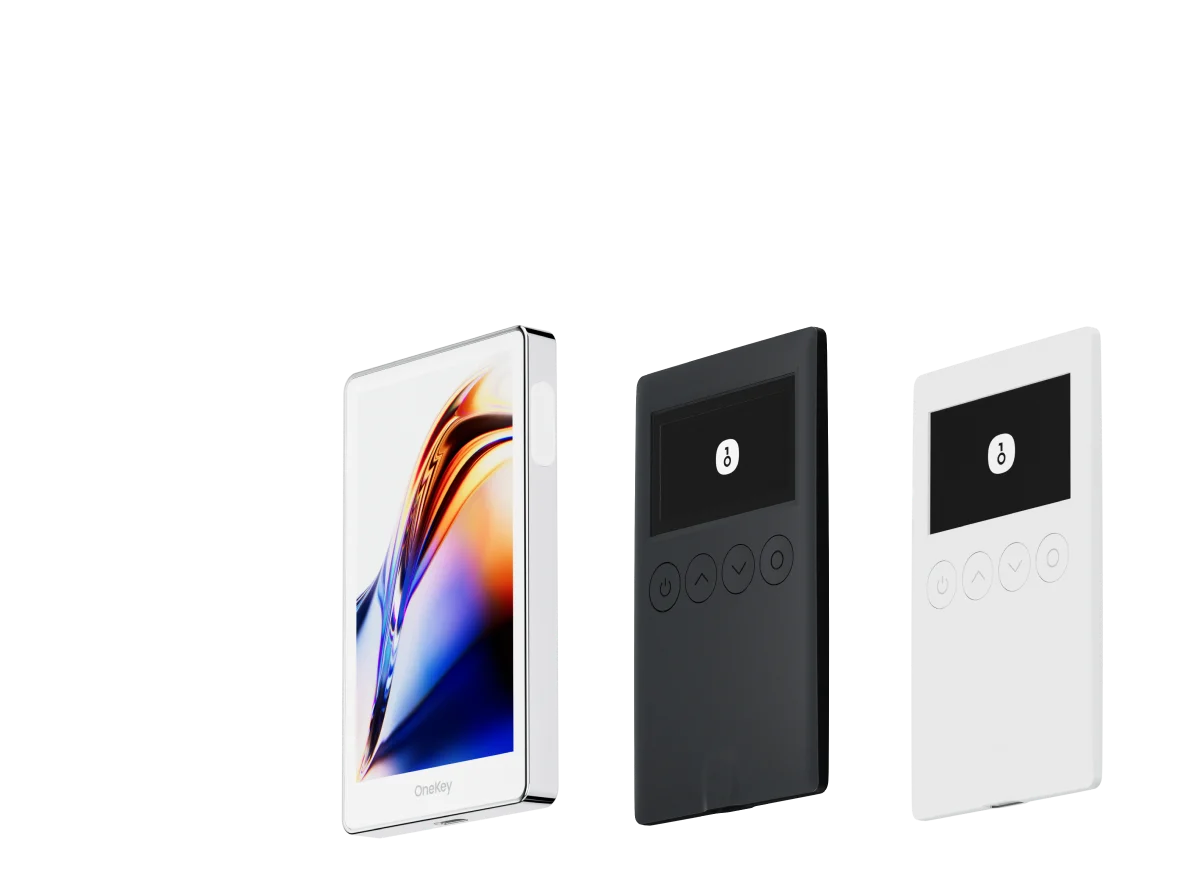
A hardware wallet is essentially a commitment to one principle: the private key does not touch an internet-connected device. For users who want to align day-to-day operations with that principle, OneKey is often a practical choice because it focuses on self-custody ergonomics while keeping security fundamentals intact—such as offline key isolation and transaction confirmation on-device. Some models also support air-gapped workflows (QR-based signing), which can be particularly appealing when you want an additional separation layer between signing and networking.
The key is not the brand—it’s the posture: make custody boring, predictable, and independent of headlines.
Conclusion: the script stays, but the rails evolve
The recurring script—fear, repricing, safe-haven rotation—hasn’t changed across decades. What has changed is the market plumbing:
- Stablecoins increasingly express the world’s demand for dollars.
- Tokenized Treasuries hint at a future where safe assets move on-chain.
- Bitcoin and crypto liquidity now react inside institutional risk systems.
- Self-custody becomes a resilience tool when uncertainty is not theoretical.
War may be unpredictable. Capital’s behavior is not. If you understand how the pricing engine works—and you build custody and risk controls accordingly—you stop reacting to the visible timeline and start managing the invisible one.