After a Reported $6.3 Billion Binance Theft, Crypto Platforms Tighten Security as Coinbase Revises Cold Storage
After a Reported $6.3 Billion Binance Theft, Crypto Platforms Tighten Security as Coinbase Revises Cold Storage
A reported $6.3 billion theft involving Binance has triggered a renewed security response across the cryptocurrency industry. Several major trading platforms are reviewing internal controls, strengthening account protections, and communicating more actively with customers about the safety of their assets.
The incident has also revived a broader debate: in an industry built around irreversible transactions and globally connected infrastructure, how should exchanges balance operational efficiency with the need to isolate digital assets from increasingly sophisticated attacks?
Exchanges Move Quickly to Reassess Custody Systems
Following the reported attack, Coinbase Chief Security Officer Jeff Lunglhofer said the company had made limited changes to its cold storage arrangements as a precautionary measure. The adjustment highlights an important reality in digital asset custody: even systems designed to remain offline must be continuously reviewed as attack methods evolve.
Cold storage is widely used to reduce exposure to online threats. However, it is not a complete substitute for comprehensive security architecture. Asset custody also depends on access policies, employee devices, signing workflows, key management, network segmentation, and the monitoring of unusual transactions.
Coinbase Product Vice President Will Megson also said the company was expanding its telephone security controls. This is particularly relevant because attackers often use social engineering rather than attempting to break cryptographic protections directly. In some cases, scammers keep victims on the phone while persuading them to change account settings, disclose sensitive information, or approve transactions.
For users, this is a reminder that legitimate support teams should not request seed phrases, private keys, or unrestricted remote access. Any unexpected call concerning an account should be treated as potentially fraudulent until verified through an official channel. Coinbase provides additional information about its security practices through its official security resources.
Gemini and Kraken Strengthen Monitoring and Incident Readiness
Gemini has reportedly introduced additional alerts and restrictions around fund movements. These measures may include more prominent transaction notifications, enhanced review procedures, and temporary limits when account behavior deviates from established patterns.
Kraken, meanwhile, stated that it was monitoring the situation closely and that its services remained operational at the time of the report. Maintaining service availability during a major industry incident is important, but operational continuity should not come at the expense of transparent communication or effective risk controls.
The response from different platforms reflects a shift toward layered security. Rather than relying on a single safeguard, exchanges are increasingly combining:
- Transaction monitoring and anomaly detection
- Withdrawal delays or risk-based limits
- Multi-party approval for high-value transfers
- Device and session verification
- Segmented custody infrastructure
- Employee security training
- Real-time customer alerts
- Formal incident response procedures
These controls are especially important because exchange security is not limited to the blockchain itself. A public blockchain may remain operational while the surrounding infrastructure—such as employee laptops, cloud environments, APIs, or administrative systems—becomes the target of an intrusion.
Binance Investigation Points to Multiple Access Paths
In an update issued after the incident, Binance said it had contained the compromised infrastructure, cancelled affected authorizations, and added further controls to prevent additional unauthorized activity.
The company’s preliminary investigation reportedly identified an intrusion involving an engineer’s laptop before uncovering other potential entry points. This illustrates how a single compromised endpoint can become part of a wider attack chain if privileged access is not sufficiently isolated.
The platform also temporarily suspended withdrawals while it assessed the situation, with restoration expected within roughly 34 hours at the time of the report. Although withdrawal suspensions can create frustration for users, pausing transfers may help prevent additional losses while investigators identify affected systems and revoke compromised permissions.
For centralized exchanges, this type of response raises several operational questions:
- Which systems can authorize withdrawals?
- How many employees or services must approve a large transfer?
- Can compromised credentials be revoked immediately?
- Are hot and cold assets separated by independent controls?
- How quickly can customers be notified when suspicious activity is detected?
The answers to these questions can significantly influence the scale of an incident.
The Blockchain Trail Does Not End with the Initial Theft
Blockchain transactions are public, but transparency does not automatically make stolen funds easy to recover. Attackers can move assets across wallets, networks, and decentralized services in an attempt to obscure their origin.
Blockchain intelligence firms have attributed the attack to TraderTraitor, a hacking group associated with North Korea. Chainalysis has also warned that the attackers used automated tools to transfer funds on the Tron network after the assets left Binance. Its broader research on North Korean cryptocurrency thefts demonstrates why exchanges and service providers need to monitor not only individual addresses, but also transaction patterns and coordinated wallet activity.
The movement of funds across chains creates additional challenges for compliance and security teams. A suspicious transfer may be split into smaller transactions, routed through multiple addresses, or converted into different assets. Effective monitoring therefore requires a combination of:
- Address screening
- Behavioral analytics
- Cross-chain tracing
- Automated risk scoring
- Cooperation between exchanges and blockchain investigators
Industry participants can find further background on blockchain-based asset tracing through Chainalysis’ research on cryptocurrency crime.
Why Real-Time Industry Coordination Matters
OKX CEO Star Xu has called for stronger cooperation across the sector, including real-time security incident notifications, joint monitoring of suspicious funds, and faster responses to emerging attacks. He also emphasized the need to prepare for AI-assisted threats.
This proposal addresses a significant weakness in the current ecosystem. Digital assets move across platforms within minutes, while security investigations can take hours or days. If an exchange discovers that a wallet is linked to an active attack but cannot rapidly share that information with other platforms, attackers may have enough time to move the funds beyond the reach of conventional controls.
A more coordinated framework could include:
- Secure channels for sharing indicators of compromise
- Standardized alerts for high-risk addresses
- Coordinated withdrawal reviews
- Joint exercises for large-scale incidents
- Clearer customer communication standards
- Shared defenses against automated phishing and impersonation
At the same time, information sharing must be designed carefully. Exchanges need to protect user privacy, avoid false positives, and ensure that emergency restrictions are based on reliable evidence rather than unverified claims.
What This Means for Individual Crypto Users
Large exchange breaches often lead users to focus on the platform involved. However, personal security remains a separate and essential layer of protection.
Users should consider the following practices:
Keep long-term assets away from constant online exposure
Assets that do not need to be traded frequently may be better protected through a self-custody setup that keeps signing authority under the user’s control. A hardware wallet can reduce exposure to browser malware, phishing pages, and compromised exchange accounts, provided that the recovery phrase is generated and stored securely.
Treat unsolicited calls and messages as high-risk
Attackers may impersonate exchange employees, compliance officers, or wallet support agents. Users should never share a recovery phrase, private key, one-time code, or screen-sharing access with someone who contacts them unexpectedly.
Verify transaction details on a trusted device
Malware can replace a copied wallet address or manipulate information displayed in a browser. Reviewing the destination address and transaction amount on a secure hardware device before approval can help reduce this risk.
Separate trading funds from long-term holdings
Keeping all assets on a single exchange account increases concentration risk. A more resilient approach may involve using separate accounts and custody arrangements based on the purpose and time horizon of the funds.
Prepare an incident response plan
Users should know how to disable sessions, revoke permissions, freeze exchange withdrawals, and contact official support channels before an emergency occurs. Preparation is especially important because blockchain transfers generally cannot be reversed after confirmation.
Security Is Becoming a Continuous Process
The reported Binance incident shows that crypto security is no longer a question of simply placing assets in cold storage or enabling two-factor authentication. Modern threats can involve compromised employee devices, social engineering, malicious software, stolen credentials, automated fund movement, and AI-generated impersonation.
Exchanges are responding by improving transaction controls, custody procedures, telephone defenses, and industry coordination. Users should respond by reducing reliance on a single platform, verifying every support interaction, and protecting their own signing authority.
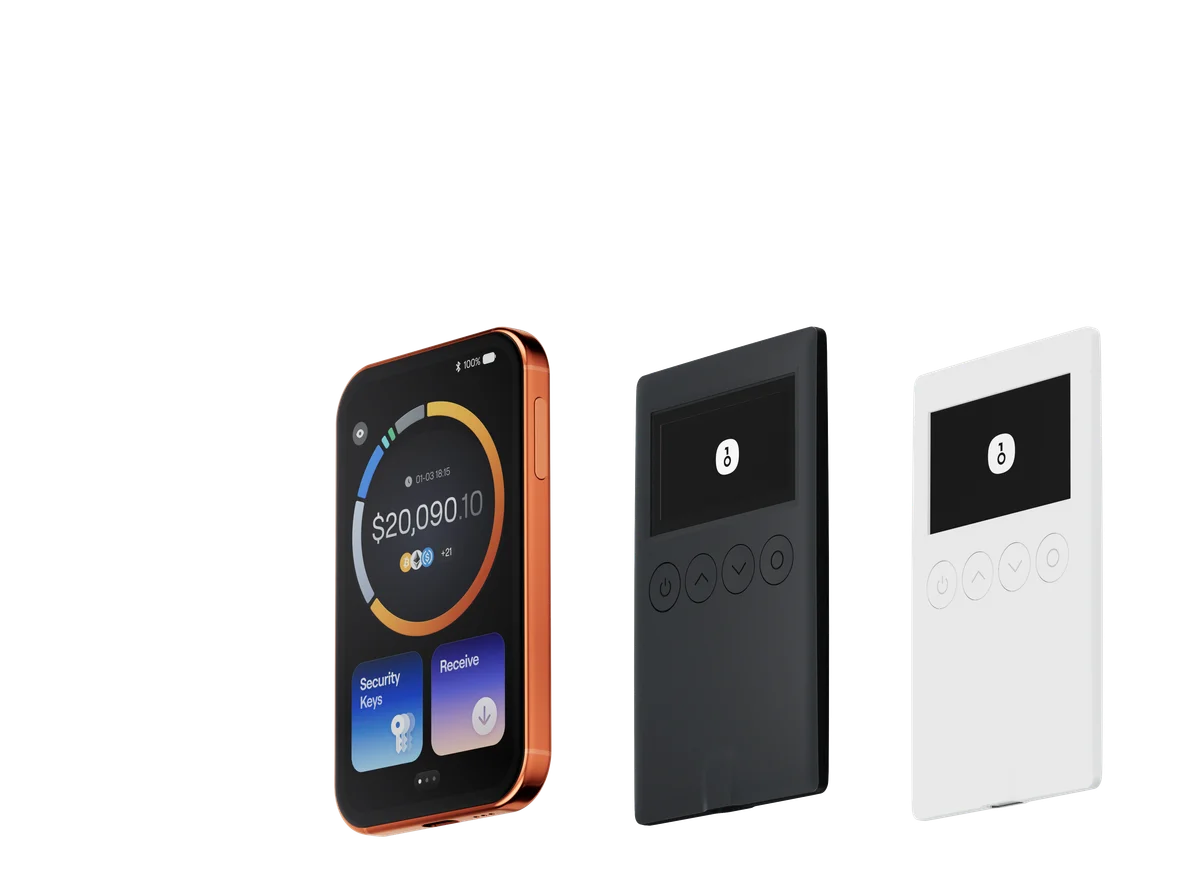
For individuals who hold digital assets for the long term, OneKey hardware wallets can provide an additional self-custody layer by keeping private keys isolated from routine online activity while allowing users to verify and approve transactions directly on the device. The technology is not a replacement for careful backup management or security awareness, but it can help reduce the risks associated with exchange exposure, phishing, and compromised computers.
The broader lesson is clear: in cryptocurrency, security must be treated as an ongoing operating discipline. Exchanges need stronger shared defenses, while users need custody practices that match the value and duration of their holdings.