Anthropic’s New Safety Measure: Claude Reviews Your Chat After Every Answer
Anthropic’s New Safety Measure: Claude Reviews Your Chat After Every Answer
Anthropic has disclosed a new AI safety mechanism that could have important implications for the cryptocurrency industry.
Starting in June, Claude began performing an additional “self-assessment” after generating an answer. In this hidden post-response step, the model reviews the conversation it has just processed and estimates whether it may involve abuse such as fraud, cyberattacks, or other high-risk activity.
The answer is not automatically blocked because of this review, and users do not see the assessment itself. Instead, the mechanism is designed primarily for monitoring, investigation, and account-level enforcement.
For crypto users, developers, and businesses increasingly relying on AI agents, the change raises a broader question: can AI systems detect malicious intent after the fact, and how should people protect assets when automated tools are involved?
What Claude’s self-assessment actually does
Traditional AI safety systems often depend on separate classifiers. These tools inspect prompts and outputs for signals associated with prohibited or dangerous activity.
Anthropic’s new approach gives Claude a second responsibility. After completing a response, the model uses the context it has just analyzed to assess whether the interaction may indicate abuse. It then assigns a risk level to the conversation.
According to the disclosure, the additional cost is relatively small. Claude generates approximately 10 extra tokens on average for the assessment, while the extra reasoning requirement accounts for less than 2% of total inference compute.
This design is different from real-time content filtering. The system may identify suspicious behavior without stopping the original answer. That distinction is particularly important in crypto, where an AI-generated response can be used immediately to create a wallet, deploy code, send funds, or contact potential victims.
Anthropic’s broader approach to AI safety is outlined in its public safety materials, while the NIST AI Risk Management Framework provides a useful industry reference for understanding risk identification, monitoring, and response.
Why this matters for cryptocurrency and blockchain
The cryptocurrency sector has several characteristics that make post-response AI monitoring especially relevant:
- Transactions are often irreversible.
- Public blockchain addresses can be pseudonymous rather than directly identifiable.
- Smart contracts can move assets automatically once deployed.
- Social engineering remains one of the most effective attack methods.
- AI coding tools can accelerate both legitimate development and malicious operations.
A scammer does not necessarily need an AI model to produce an obviously criminal answer. They may ask for help with customer support scripts, wallet recovery pages, token marketing, automated outreach, or code debugging. The harmful intent can emerge only after several seemingly ordinary interactions.
This makes conversation-level analysis more valuable than judging a single prompt in isolation. A request to write a professional message may appear harmless on its own. Combined with requests to impersonate a trading platform, pressure a victim into transferring cryptocurrency, and automate follow-up messages, the overall pattern becomes much more concerning.
Early detections included crypto-related abuse
Anthropic said the self-assessment system identified cases that conventional safeguards had missed.
In August, one API customer reportedly generated more than 100,000 risk alerts associated with child sexual exploitation. Anthropic said it reported the case to relevant U.S. authorities.
In September, the system detected an operation in which Claude Code was allegedly used to automate romance scams targeting dozens of victims. Anthropic investigated the activity and banned the associated accounts.
These examples show how an AI provider can use post-generation monitoring to identify behavior that may not be obvious at the moment each individual response is created.
They also highlight a growing concern for digital-asset users. Romance scams, investment fraud, and fake customer-support operations frequently use cryptocurrency because transfers can cross borders quickly and may be difficult to reverse. The U.S. Federal Trade Commission’s consumer guidance on cryptocurrency scams describes several common patterns, including impersonation, guaranteed-return promises, and urgent payment requests.
Detection is not the same as prevention
Anthropic’s results also show the limitations of self-assessment.
In a test involving 24 cyberattack scenarios with standard safeguards disabled, the model attempted to use self-assessment for real-time intervention. The attacks still succeeded in 13 cases.
That result is important because it prevents a common misunderstanding: an AI model that can recognize suspicious behavior after producing an answer is not necessarily capable of stopping the behavior before damage occurs.
For cryptocurrency applications, the difference can be measured in seconds. If an AI agent generates a malicious smart contract, exposes a private key, approves a token transaction, or sends a deceptive message, a later risk classification may help with investigation but cannot automatically reverse the consequences.
This is why AI safety monitoring should be treated as one layer of a broader security architecture rather than as a replacement for transaction controls.
The privacy trade-off behind background review
A system that reviews conversations after responding must process additional information about the user’s interaction. Even when the purpose is security, this creates legitimate questions:
- What data is retained?
- How long are risk assessments stored?
- Who can access flagged conversations?
- Are business customers notified when activity is reviewed?
- Can users appeal an automated enforcement decision?
- How are false positives handled?
These questions matter for crypto companies that may use AI to process wallet addresses, transaction metadata, incident reports, or customer support conversations. Blockchain data is often public, but the connection between an address and a real person may be sensitive. Combining on-chain activity with private AI conversations could create a much richer behavioral profile.
Businesses integrating AI into financial or Web3 workflows should therefore review vendor policies, minimize unnecessary personal data, and separate high-risk secrets from general-purpose chat environments. Private keys, seed phrases, API credentials, signing permissions, and production deployment secrets should never be entered into a conversational AI tool merely because the tool appears secure.
What users should do when working with AI and crypto
The rise of AI-assisted development and automated agents does not eliminate the need for basic operational security. Users should continue to apply independent controls before any funds or permissions are exposed.
Keep signing authority separate from AI tools
An AI assistant may help explain a transaction or review code, but it should not have unrestricted access to private keys or unrestricted authority to sign transactions.
Use separate environments for testing and production. Limit permissions wherever possible, and require explicit human approval before high-value transfers, contract upgrades, or changes to treasury infrastructure.
Verify addresses and contract details independently
Never rely solely on an AI-generated explanation of a wallet address, smart contract, or transaction. Check the destination, network, token amount, and approval scope through an independent interface before signing.
Attackers can also manipulate websites, documentation, and support channels. A familiar-looking message is not proof of authenticity.
Treat AI-generated code as untrusted until reviewed
AI can accelerate smart contract development, but generated code may contain access-control errors, unsafe assumptions, or vulnerabilities that are difficult to notice during a quick review.
Testing, code review, static analysis, and professional security audits remain necessary for contracts handling real funds. The OWASP Smart Contract Top 10 provides a useful overview of recurring security risks in blockchain applications.
Be skeptical of urgency and guaranteed returns
AI-generated messages can make scams more persuasive and personalized. An unexpected request to move funds, connect a wallet, provide a recovery phrase, or invest under time pressure should be treated as suspicious, regardless of how polished the communication appears.
No legitimate support representative needs a wallet’s recovery phrase or private key.
What this means for the future of AI-powered Web3
Anthropic’s self-assessment mechanism represents a shift from simple prompt filtering toward continuous behavioral monitoring. Instead of asking only whether a single request violates a rule, the system attempts to evaluate the broader trajectory of an interaction.
That approach may become increasingly important as AI agents gain the ability to browse the web, write code, interact with APIs, and execute blockchain transactions. At the same time, the limits of current systems are clear. Detection can miss attacks, and post-response review may happen too late to prevent financial loss.
For the crypto industry, the most practical model is defense in depth:
- AI providers should improve abuse detection and transparency.
- Developers should limit agent permissions and isolate sensitive credentials.
- Applications should add transaction simulation, allowlists, rate limits, and approval workflows.
- Users should maintain control of signing authority and verify every important transaction.
- Wallets should make risky actions visible before authorization.
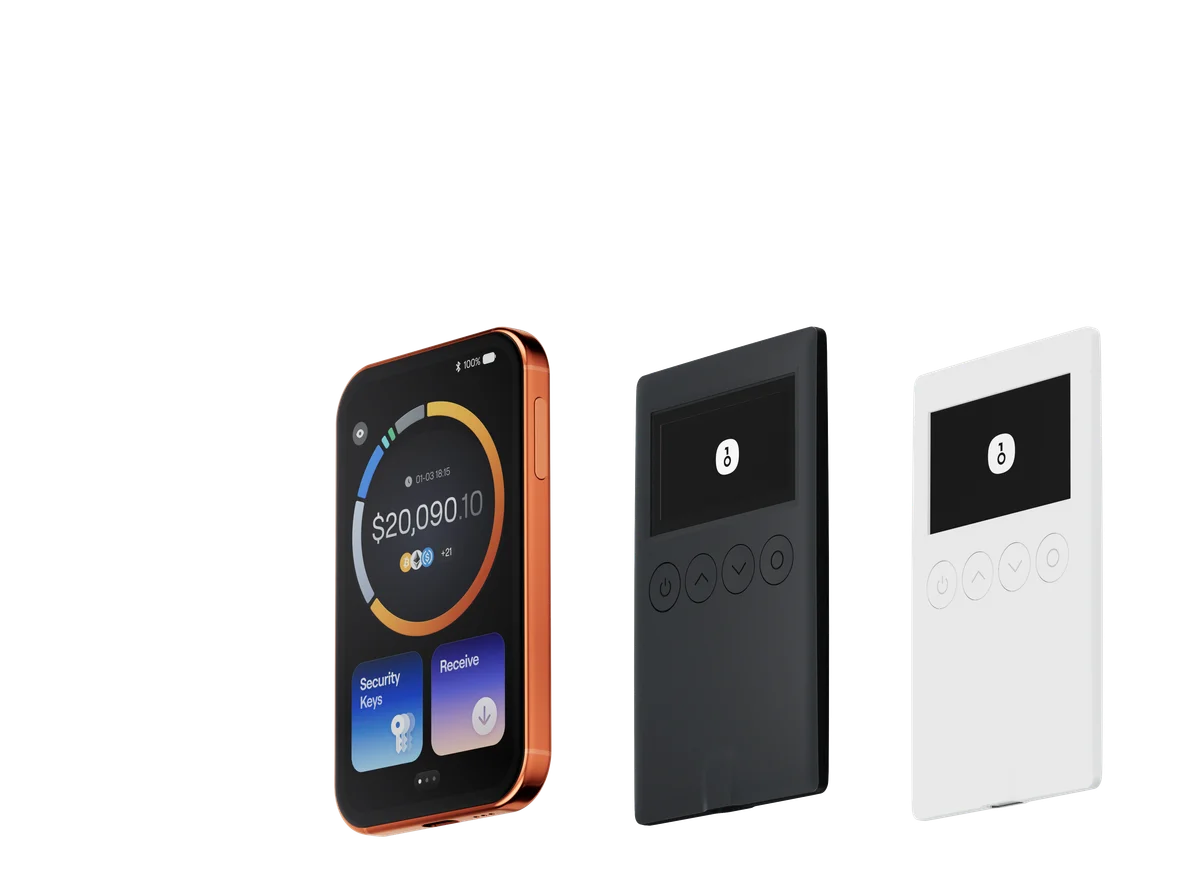
OneKey hardware wallets are designed around this final layer of user-controlled signing. Keeping private keys isolated from general-purpose software can reduce the consequences of a compromised computer, malicious application, or overly permissive AI workflow. A hardware wallet cannot determine whether an AI-generated message is a scam, but it can help ensure that transactions still require deliberate authorization from the person who controls the assets.
Anthropic’s experiment is a reminder that AI safety is becoming a continuous process rather than a one-time filter. In cryptocurrency, where automation and irreversible transactions meet, the safest strategy is not to trust any single model or monitoring system. It is to combine AI oversight with strong privacy practices, limited permissions, independent verification, and hardware-backed control of private keys.