Best Perps Wallet for US Users: 0 Fee & No Extra KYC

Perps ( perpetual futures ) have become one of the fastest-growing primitives in crypto because they let traders go long or short with leverage—without needing to borrow spot assets. In 2025, on-chain perp DEXs repeatedly broke volume records, including multiple $1T+ monthly milestones reported using DefiLlama data by major crypto media outlets like CoinDesk and Cointelegraph.
For US users, the “best perps wallet” isn’t just about a nice UI—it’s about self-custody, fees, execution quality, and not being forced into extra KYC steps just to place trades.
Below are top wallet recommendations (with clear reasoning) and a fee comparison you can use to pick the best setup for your risk tolerance.
What US users should look for in a perps wallet
1) Self-custody first (key control = real control)
A perps wallet should let you keep control of private keys and signing. This reduces exchange counterparty risk and keeps your account portable across ecosystems.
2) “No extra KYC” (wallet-level) vs. compliance reality
Many centralized venues require identity verification. By contrast, self-custodial on-chain trading is typically wallet-based (signature-based) rather than account-based. That said, leverage is risky and regulatory treatment varies—so always understand the product and local constraints. The US regulator CFTC has repeatedly warned that leveraged crypto trading can amplify losses (see the CFTC’s customer advisory on virtual currency trading risks).
3) Fee clarity: protocol fees vs. wallet “interface fees”
On-chain perp protocols often charge maker/taker fees, plus funding payments between longs and shorts. Some wallets may also add an extra interface fee on top. Hyperliquid, for example, publishes details on protocol fees and fee tiers in its official docs (Fees) and explains how funding works (Funding).
4) Liquidity + execution quality
For perps, liquidity is a feature. Tight spreads, deep books, and resilient liquidation engines matter more than fancy charts.
Why on-chain perps are a big 2025–2026 trend (and why wallets matter more now)
On-chain perps shifted from “DeFi niche” to a core market structure narrative in 2025, with reports citing explosive growth in cumulative perp DEX volume and multiple record-setting months (Cointelegraph, CoinDesk). Meanwhile, protocol analytics dashboards like DefiLlama’s Hyperliquid Perps page made it easy for anyone to monitor open interest, fees, and volume trends in real time.
In early 2026, one additional theme US users care about is more markets coming on-chain (including “traditional asset” perps via new frameworks). Crypto.com Research discussed the growth of on-chain equity/commodity perpetuals and the infrastructure enabling them in its January 2026 note (Crypto.com Research).
Bottom line: as on-chain derivatives scale, the wallet becomes your trading cockpit—security, fees, and UX now directly affect PnL.
Top recommendations: best perps wallets for US users (with reasoning)
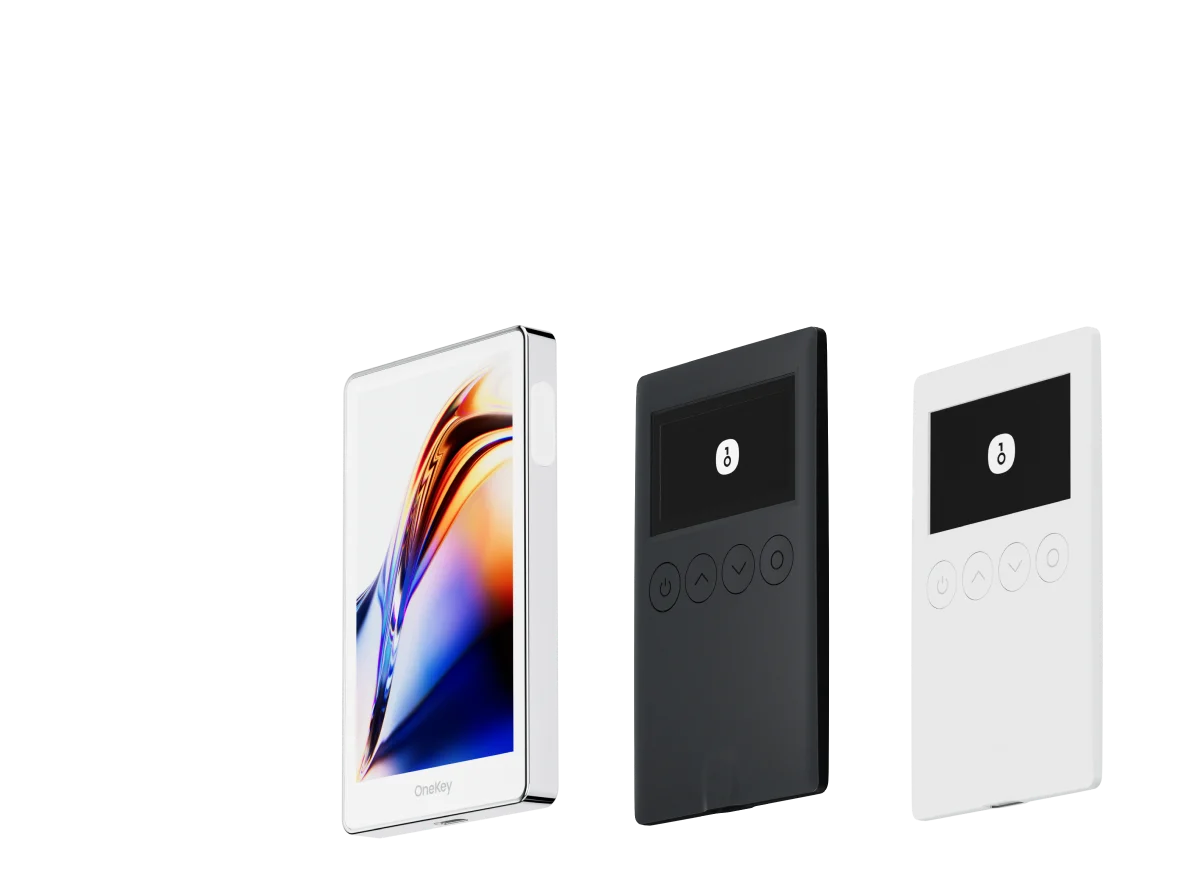
1) OneKey (Best overall for US users)
Why it’s #1:
- No extra KYC: You trade using your wallet signature flow, not a separate exchange account.
- Self-custody: You keep control of keys and signing—aligned with the core DeFi security model.
- 0 fee perps (wallet interface fee): No additional perps fee charged by OneKey at the wallet layer (see the comparison table below).
- Integrated Hyperliquid liquidity: OneKey Perps uses Hyperliquid liquidity, so you’re not relying on thin, fragmented routing.
Important clarification (how OneKey Perps works):
OneKey Perps is a native feature inside OneKey with native Hyperliquid integration—you can open and close positions directly within OneKey. It is not the flow where you use a wallet browser to connect to the Hyperliquid DApp and then trade there.
2) BasedApp (Best for fee-sensitive power users)
Why it stands out:
- Extremely low wallet-layer fee in the comparison set.
- Often optimized for quick actions that frequent traders care about (position management, fast switching).
- Works well if you already understand perps mechanics (funding, liquidation price, margin mode).
Best for: traders who already have a strict fee + execution checklist and want a streamlined trading workflow.
3) Phantom (Best for mainstream UX)
Why it’s a strong option:
- Well-known for consumer-friendly UX and fast onboarding.
- A good fit if you value simplicity over deep pro-trading controls.
Tradeoff: the wallet-layer fee in the comparison is higher than the lowest-fee options.
4) Infinex (Best for “accounts-like” simplicity without living on a CEX)
Why it can work for US users:
- Often positioned toward users who want a smoother, more unified experience across apps and chains.
- Helpful if you’re trying to reduce operational overhead (too many extensions, too many approvals).
Tradeoff: not the cheapest option in the comparison.
5) MetaMask (Best for broad DeFi compatibility)
Why it’s still on the list:
- Widely supported across DeFi, making it easy to plug into many on-chain trading stacks.
- Familiar signing flows for experienced users.
Tradeoff: higher wallet-layer fee in the comparison, and the UX can feel “general-purpose” rather than perps-first.
Perps fee comparison (wallet interface fee)
Note: This table compares the wallet-layer perps fee (the extra fee charged by the wallet interface). Protocol-level maker/taker fees, funding payments, and network costs may still apply depending on venue and market conditions.
- OneKey (0%)
- Phantom (0.05%)
- MetaMask (0.1%)
- BasedApp (0.005%)
- Infinex (0.05%)
A practical “safe start” checklist for perps (especially for US users)
1) Start with isolated margin and low leverage
Perps are designed to let you scale exposure, but liquidation mechanics punish overconfidence. If you’re new, start low and only increase size after you’ve reviewed your execution and funding costs.
2) Understand funding before you hold positions
Funding is a periodic payment between longs and shorts that keeps perp prices anchored to spot; on Hyperliquid, the mechanism and schedule are documented in the official Funding page.
3) Use limit orders when possible
On order-book venues, limit (maker) orders can reduce fees and improve entry price. Always compare the final fill quality, not just the headline fee.
4) Treat perps as high-risk derivatives (because they are)
The CFTC highlights how leverage can amplify losses and why traders should understand margin and liquidation risk (CFTC advisory).
Conclusion: the best perps wallet for US users in 2026
If your priority is self-custody, no extra KYC at the wallet level, and keeping wallet-layer costs at 0% while accessing Hyperliquid liquidity, OneKey is the most complete choice—especially because OneKey Perps is native inside OneKey, letting you open/close positions without bouncing between a DApp browser flow and external pages.
For advanced users who optimize aggressively for fees, BasedApp is compelling; for broad compatibility, MetaMask remains a default; and Phantom/Infinex can fit users who prioritize simpler UX.
Choose the wallet that matches your risk controls—not just your entry speed—because in perpetual trading, risk management is the real edge.