Binance Theft of $6.3 Billion Raises New Crypto Wallet Security Concerns as Experts Warn of More Attacks Ahead
Binance Theft of $6.3 Billion Raises New Crypto Wallet Security Concerns as Experts Warn of More Attacks Ahead
A major security incident reportedly affecting approximately $6.3 billion in assets linked to Binance has renewed debate over how exchanges protect customer funds. On the same day, Polymarket’s international platform temporarily halted trading after a third-party data provider was compromised, with at least $2.7 million in user funds reportedly stolen.
These incidents highlight a difficult question for crypto users: Should assets remain on centralized trading platforms, or should investors take full control through self-custody wallets?
There is no universal answer. Each model involves different risks, responsibilities, and recovery mechanisms.
Exchange Custody Offers Convenience, but Not Bank-Like Protection
Centralized exchanges remain the primary entry point for many cryptocurrency users. They provide liquidity, trading tools, customer support, and—at least in some cases—the financial resources to reimburse users after a security incident.
However, keeping assets on an exchange means users do not directly control the private keys. Their funds depend on the platform’s wallet architecture, internal controls, withdrawal policies, employees, vendors, and cybersecurity response procedures.
Tyler Moore, a cybersecurity professor at the University of Tulsa, has warned that concentrating large balances on trading platforms can expose users to significant counterparty risk. Unlike traditional bank deposits in certain jurisdictions, crypto exchange balances generally do not benefit from a broadly applicable deposit insurance system.
The Federal Trade Commission’s consumer guidance on cryptocurrency also emphasizes that crypto transactions typically lack the same reversal and recovery mechanisms available through conventional financial institutions.
This creates an important distinction:
- A platform may promise to reimburse affected customers.
- A platform may have sufficient capital to absorb losses.
- Neither guarantee is automatically equivalent to legally protected deposit insurance.
Users should therefore examine an exchange’s security disclosures, withdrawal controls, proof-of-reserves methodology, insurance arrangements, and historical incident response before treating it as a long-term vault.
Self-Custody Removes Exchange Risk—but Adds User Responsibility
Self-custody addresses a different problem. When users hold their own private keys, they are less dependent on an exchange’s solvency, internal wallet management, or withdrawal availability.
That independence is one of blockchain’s core advantages. Yet it also means that mistakes can become irreversible. Lost recovery phrases, malicious approvals, phishing attacks, fake wallet applications, and compromised devices can all lead to permanent losses.
Brett Falk, a professor at the University of Pennsylvania, has argued that some users may prefer keeping funds with a financially capable company rather than relying entirely on self-custody. His view reflects a practical reality: many users are not prepared to manage seed phrases, transaction signing, address verification, and device security without assistance.
The challenge is that self-custody is not a single security category. There is a meaningful difference between:
- Leaving assets on an exchange account protected primarily by login credentials.
- Holding keys in a browser wallet exposed to phishing and malicious websites.
- Using a hardware wallet that keeps private keys isolated from ordinary online activity.
- Managing funds through a carefully designed multisignature or institutional custody system.
The right choice depends on the user’s technical ability, asset size, transaction frequency, and tolerance for operational risk.
Third-Party Vendors Are Becoming a Critical Attack Surface
The Polymarket incident illustrates another growing concern: a company can suffer a security disruption even when the direct target is a service provider rather than its core wallet infrastructure.
Crypto platforms increasingly depend on external vendors for data feeds, analytics, cloud services, identity verification, communications, and transaction monitoring. Each connection can expand the attack surface.
A breach at a third-party provider may not immediately expose private keys, but it can still create serious consequences, including:
- Manipulated market or pricing data
- Unauthorized access to administrative systems
- Phishing campaigns using trusted branding
- Disruption of deposits, withdrawals, or trading
- Leakage of user information that supports targeted attacks
For users, this means platform security should not be evaluated solely by asking whether an exchange has a strong wallet system. Vendor management, access segregation, incident monitoring, and data integrity are equally important.
The NIST Cybersecurity Framework provides a widely used structure for identifying, protecting, detecting, responding to, and recovering from cyber risks. Although it is not specific to digital assets, its principles are highly relevant to crypto exchanges and Web3 platforms.
AI Could Increase the Speed and Scale of Crypto Attacks
Experts also expect artificial intelligence to change the threat landscape. Attackers can use AI to produce more convincing phishing messages, imitate customer service agents, automate social engineering, and identify potential targets at scale.
For crypto users, the most dangerous AI-enabled attacks may not involve breaking blockchain cryptography. They may instead exploit human trust.
Examples include:
- Personalized messages that imitate an exchange’s support team
- Fake security alerts asking users to “verify” a wallet
- Voice or video impersonation of executives and influencers
- Automatically generated malicious websites that resemble legitimate platforms
- Fraudulent investment opportunities promoted through coordinated accounts
Blockchain transactions are generally difficult or impossible to reverse once confirmed. As a result, users should treat unexpected wallet prompts, urgent withdrawal requests, and requests for recovery phrases as high-risk events.
A legitimate service should never require users to disclose their seed phrase or private key. Anyone who obtains that information may be able to move the assets without further permission.
Regulation May Improve Standards, but It Cannot Eliminate Risk
Regulatory oversight is another point of disagreement.
CFTC Chairman Michael Selig has argued that offshore platforms may not provide users with safeguards comparable to those found in regulated U.S. financial markets. He has expressed support for a federal registration pathway that would allow certain trading platforms to operate under clearer cybersecurity and compliance requirements.
A regulatory framework could help establish minimum standards for:
- Customer asset segregation
- Cybersecurity governance
- Incident reporting
- Risk disclosures
- Vendor oversight
- Market surveillance
- Business continuity and recovery planning
However, regulation cannot guarantee that every attack will be prevented. Brett Falk has noted that even platforms subject to U.S. oversight could remain vulnerable to sophisticated cyber threats.
The CFTC’s digital asset customer advisories similarly warn that digital asset markets involve substantial risks, including fraud, theft, platform failure, and limited legal protections.
Regulation can improve accountability and transparency. It cannot replace sound wallet design, strong authentication, transaction monitoring, or user caution.
There Is No Universal Definition of “Safe”
Ryan Kirkley, CEO of Global Settlement Network, has encouraged users to be cautious about placing assets in wallets or platforms that lack meaningful insurance support. His broader argument is that the industry still does not have a single solution capable of guaranteeing safety for every user and every type of asset.
That assessment is important because crypto security is multi-layered. A platform may have strong cold-storage procedures but weak customer support controls. A user may possess a secure hardware wallet but approve a malicious smart contract. An exchange may reimburse customers after an incident, but reimbursement policies can vary by jurisdiction and circumstance.
Instead of searching for one perfect custody method, users should match their security strategy to the purpose of their funds:
For active trading
Keep only the amount required for near-term activity on a trading platform. Avoid treating an exchange account as a permanent savings account.
For long-term holdings
Consider a dedicated self-custody setup with a secure signing device, offline recovery backups, and a carefully tested recovery process.
For high-value portfolios
Use layered controls such as multiple wallets, transaction limits, separate devices, and—where appropriate—multisignature governance.
For all users
Enable strong authentication, verify URLs, review transaction details on a trusted screen, and maintain a clear record of wallet addresses and recovery procedures.
A Practical Security Checklist for Crypto Users
The recent incidents offer several practical lessons:
-
Separate trading balances from long-term holdings.
Keeping all assets in one location creates a single point of failure. -
Use hardware-based key protection for significant balances.
A hardware wallet can keep private keys isolated from many online threats, although it does not protect users from every form of phishing or social engineering. -
Never share a seed phrase or private key.
No legitimate support representative, exchange, or wallet provider should request it. -
Verify transactions on the device itself.
Do not rely only on information displayed by a potentially compromised computer or browser. -
Review token approvals and smart-contract permissions.
Unused approvals can create additional exposure in decentralized finance environments. -
Maintain independent backups.
Store recovery information securely and avoid photographing or uploading it to cloud services. -
Monitor platform announcements and withdrawal conditions.
Temporary freezes, unusual maintenance, or changes in withdrawal policies may indicate operational stress. -
Assess counterparty risk before depositing funds.
Consider where the company is registered, how customer assets are held, what protections exist, and how incidents have been handled in the past.
What the Binance and Polymarket Incidents Mean for the Industry
The reported Binance and Polymarket incidents do not prove that centralized custody or self-custody is universally superior. Instead, they demonstrate that crypto security must be evaluated across the entire custody chain.
Centralized platforms may offer capital reserves, professional security teams, and the ability to compensate users. Self-custody may reduce dependence on intermediaries and provide direct ownership of private keys. Both models can fail when users, platforms, or service providers neglect basic security controls.
As AI-assisted attacks become more accessible and crypto infrastructure grows more interconnected, users should expect more attempts to exploit identity systems, third-party vendors, wallet interfaces, and human behavior.
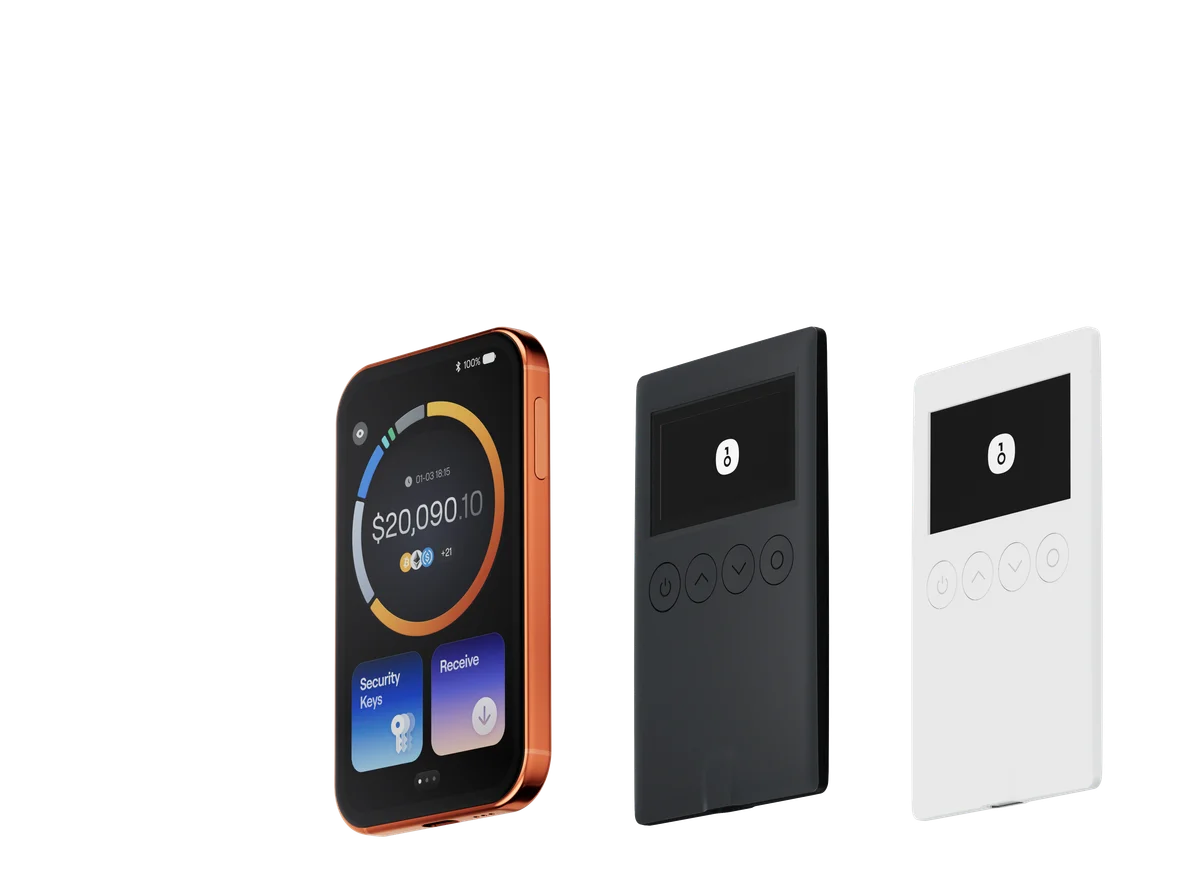
For individuals seeking to reduce dependence on exchange custody, a hardware wallet such as OneKey can provide an offline environment for signing transactions and managing private keys. Its value is greatest when combined with disciplined operational practices: secure backups, verified transaction details, updated firmware, and careful approval of every request.
The central lesson is straightforward: crypto ownership is not only about where assets are stored. It is also about who controls the keys, which systems can influence transactions, how incidents are handled, and whether the user has a realistic plan for recovery.