Binance to Launch Trading Pairs for Three Tokenized Securities, Including Axe Compute
Binance to Launch Trading Pairs for Three Tokenized Securities, Including Axe Compute
Binance is expanding its tokenized-asset offering with the planned launch of three new bStocks trading pairs: Axe Compute (AGPUB), AMC Entertainment (AMCB), and Cypherpunk Technologies (CYPHB). The pairs will be quoted against USDT, giving eligible users access to a crypto-native market for selected tokenized securities.
According to the exchange’s official announcement center, spot trading is scheduled to begin at 20:00 on September 23, 2025, Beijing Time. Binance also plans to enable spot algorithmic trading bots for the same markets.
Three New USDT Trading Pairs
The new markets are expected to include:
- AGPUB/USDT — Axe Compute
- AMCB/USDT — AMC Entertainment
- CYPHB/USDT — Cypherpunk Technologies
To support the launch, Binance will offer zero maker fees for these trading pairs until 07:59 on October 1, 2025, Beijing Time. Withdrawals are scheduled to open at 21:00 on September 23.
The promotional fee period may attract market makers and short-term traders, but users should still evaluate liquidity, bid-ask spreads, volatility, and the availability of reliable market data before placing orders. A temporary fee reduction does not guarantee deep liquidity or stable execution.
What Are bStocks and Tokenized Securities?
Tokenized securities are blockchain-based representations of financial instruments or economic interests connected to traditional assets. Unlike conventional shares held through a traditional brokerage account, tokenized products use distributed ledger technology to record ownership, transfers, or claims within a blockchain-based system.
The broader tokenization market has become one of the most closely watched areas in digital assets. During 2025, financial institutions, fintech companies, and blockchain platforms continued exploring tokenized funds, bonds, equities, and real-world assets. The potential advantages include faster settlement, programmable compliance, fractional access, and the ability to operate within a global digital-asset infrastructure.
However, “tokenized” does not automatically mean “the same as holding a conventional share.” The rights attached to a product may vary depending on its issuer, legal structure, collateral arrangements, redemption mechanism, and applicable jurisdiction. Investors should review the relevant product documentation and Binance’s platform terms before trading.
For additional context on how regulators view digital representations of securities and related investment risks, users can consult the U.S. Securities and Exchange Commission’s investor education resources.
Why This Listing Matters for Crypto Markets
The addition of AGPUB, AMCB, and CYPHB illustrates how crypto exchanges are increasingly connecting blockchain-based trading infrastructure with traditional financial assets. Instead of requiring users to move between multiple platforms, tokenized securities can potentially be accessed through familiar crypto market functions, including USDT settlement, limit orders, and automated trading tools.
This development also highlights several important trends:
1. Tokenized Markets Are Becoming More Accessible
USDT-based trading pairs make it easier for crypto users to compare prices and manage positions within an existing digital-asset account. This could lower the operational barrier for users who already understand spot trading but are less familiar with traditional brokerage infrastructure.
2. Automated Trading Is Expanding Beyond Major Cryptocurrencies
The simultaneous launch of spot algorithmic trading bots signals that automated strategies are moving into a wider range of assets. While algorithmic tools can help users manage recurring orders or predefined strategies, they can also amplify losses in markets with limited liquidity or sharp price movements.
Users should understand the bot’s configuration, including order frequency, price boundaries, maximum investment, and stop conditions. Automated execution does not remove the need for risk management.
3. Compliance Remains Central to Asset Tokenization
Tokenized securities are subject to more complex regulatory considerations than ordinary utility tokens or payment-focused cryptocurrencies. The legal treatment of an asset can differ according to the user’s location, the issuer’s structure, and the rights associated with the product.
Binance has stated that these tokenized securities are not available to U.S. persons. Geographic restrictions may also apply to users in other jurisdictions. Users should rely on the eligibility information displayed on the platform and comply with local laws rather than attempting to bypass regional controls.
Key Risks to Consider Before Trading
The launch creates new trading opportunities, but it also introduces risks that may not be obvious to users accustomed to large cryptocurrency markets.
Product and Counterparty Risk
A tokenized security may depend on an issuer, custodian, broker, or other service provider. Users should investigate how the product is backed, what rights holders receive, and whether redemption is available.
Liquidity Risk
Newly listed pairs may experience limited order-book depth. A large market order can result in significant slippage, particularly during the first hours of trading or around major price movements in the referenced asset.
Regulatory Risk
The legal status of tokenized securities continues to develop across jurisdictions. Changes in regulation, licensing requirements, or platform policies could affect availability, trading, or withdrawals.
Price and Tracking Risk
A tokenized product may not perfectly track the price of its referenced asset. Differences can arise from trading hours, liquidity conditions, currency conversion, fees, market demand, or the structure of the token itself.
Custody and Withdrawal Risk
Although trading is scheduled to open at 20:00, withdrawals are not expected to become available until 21:00. Even after withdrawals open, users should confirm the supported network, withdrawal conditions, and whether the asset can be transferred to an external wallet.
A Practical Checklist for Traders
Before trading the new bStocks pairs, users may want to verify:
- Whether they are eligible to access the products in their jurisdiction.
- The legal and economic structure of each tokenized security.
- The available trading hours and withdrawal conditions.
- Order-book depth and expected slippage.
- The terms of the zero-maker-fee promotion.
- Whether spot trading bots are appropriate for the asset’s liquidity and volatility.
- Whether external withdrawals are supported and which networks are available.
- How taxation and reporting obligations may apply locally.
Tokenized securities combine elements of traditional finance and crypto markets. As a result, users should not evaluate them solely through the lens of conventional stocks or digital tokens. Understanding both sides of the product is essential.
The Bigger Picture for Blockchain-Based Finance
The Binance listing reflects a broader transition in blockchain markets: the industry is moving beyond purely native crypto assets and experimenting with digital representations of real-world financial instruments.
The long-term success of tokenized securities will likely depend on more than trading volume. Transparent disclosures, robust custody arrangements, reliable price discovery, regulatory clarity, and interoperable settlement infrastructure will all be important. As these standards improve, tokenization could become a meaningful layer connecting traditional finance with blockchain-based markets.
For now, the launch of AGPUB/USDT, AMCB/USDT, and CYPHB/USDT should be viewed as an experiment in market access rather than a substitute for traditional securities ownership. Careful research, position sizing, and jurisdiction-aware risk management remain essential.
Securing Digital Assets Alongside Exchange Activity
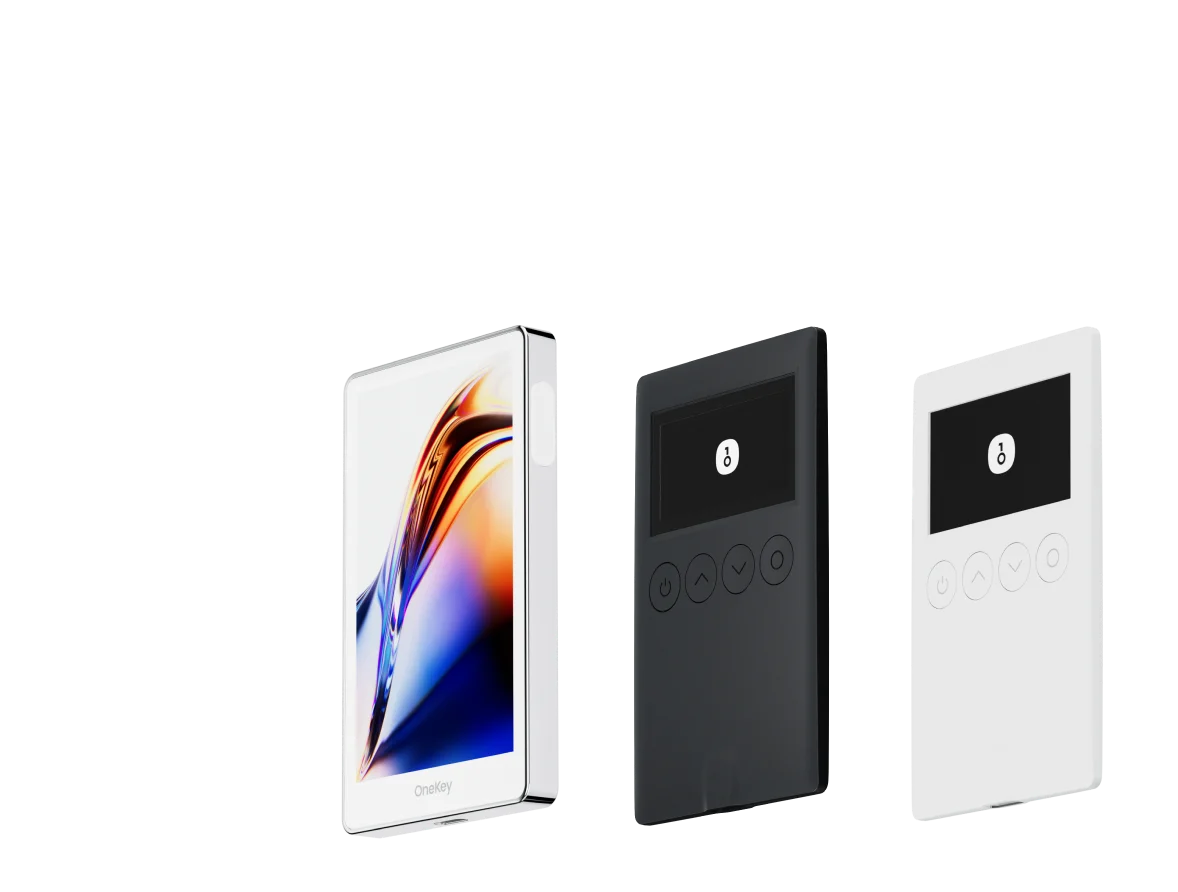
Users who trade on centralized platforms may also hold other crypto assets in self-custody. A hardware wallet such as OneKey can help protect supported digital assets by keeping private keys isolated from internet-connected devices and requiring secure transaction confirmation.
However, a hardware wallet does not automatically custody assets held inside a Binance account, and compatibility depends on the specific token and blockchain network. Before transferring any asset, users should confirm network support, contract details, and withdrawal availability. Self-custody can improve control over private keys, but it also makes backup management and transaction verification the user’s responsibility.