Bitunix Analysts: Binance Theft of More Than $6.3 Billion Puts Exchange Custody Security to the Test Again
Bitunix Analysts: Binance Theft of More Than $6.3 Billion Puts Exchange Custody Security to the Test Again
The cryptocurrency market recently faced two different forms of systemic stress at the same time: forced deleveraging and a major exchange security incident.
According to market data reported for October 30, approximately 239,224 crypto traders were liquidated over a 24-hour period, with total losses reaching around $1.536 billion. The largest single liquidation in the reported period involved a Binance BTCUSDT position valued at approximately $11.09 million, according to CoinGlass liquidation data.
At roughly the same time, a reported attack on Binance’s multi-chain hot-wallet infrastructure raised a more fundamental concern: whether centralized trading platforms can protect assets when attackers compromise the systems surrounding wallet authorization, even if the underlying private keys are not directly exposed.
A Market Shock Beyond Price Volatility
Liquidations are a familiar risk in leveraged crypto markets. When prices move sharply, exchanges automatically close undercollateralized positions, transferring losses from individual traders to the broader market through reduced liquidity and increased volatility.
A large-scale custody incident is different. It can affect users who are not trading with leverage, hold no derivatives positions, and have not made any operational mistake. The risk comes from the platform’s ability to safeguard assets, validate withdrawals, and isolate critical permissions.
The combination of these two events is particularly damaging to market confidence:
- Forced liquidations increase short-term selling pressure.
- A security breach can trigger withdrawals and liquidity concerns.
- Uncertainty over affected assets may widen spreads and create discounts.
- Traders may begin evaluating counterparty risk in addition to market risk.
This is why exchange security incidents often have consequences that extend beyond the directly stolen funds. They can influence user behavior, reserve transparency, withdrawal availability, and confidence in centralized custody as a whole.
What the Reported Attack Reveals About Hot-Wallet Risk
The reported incident involved approximately $6.36 billion in assets transferred from ten blockchains. The scale, if confirmed in full, would make it one of the largest crypto thefts on record and larger than the previously reported Bybit incident.
Investigators reportedly identified a sophisticated process in which attackers prepared malicious transaction logic in advance. The activity allegedly involved Ethereum’s EIP-7702 authorization mechanism, as well as wallet-signing workflows on other networks.
EIP-7702 is part of Ethereum’s account-abstraction development path and allows an externally owned account to temporarily adopt smart-contract functionality through an authorization process. The feature can improve usability and enable more flexible transaction execution, but it also makes permission management more important. A poorly protected authorization flow can create risks even when traditional private-key theft has not been demonstrated.
The broader lesson is that wallet security is not limited to the question of whether a private key has been copied. A hot wallet may still be exposed if an attacker can compromise:
- The employee device used to manage production systems.
- Service containers responsible for withdrawal processing.
- Transaction-generation or signing infrastructure.
- Access tokens, credentials, or session permissions.
- Automated approval rules and policy engines.
- Cross-chain asset-management workflows.
In other words, the security boundary includes the entire transaction pipeline, not only the final signing device.
Preliminary Findings Point to an Expanded Attack Surface
Binance’s preliminary investigation reportedly indicated that a DevOps engineer’s laptop may have been compromised. The attacker then allegedly moved through service containers and submitted unauthorized withdrawals.
The exchange stated that it had not found evidence that wallet private keys were directly leaked. This distinction is technically important but does not eliminate the severity of the incident. If an attacker obtains sufficient control over the infrastructure that prepares, authorizes, or submits transactions, assets can potentially be moved without extracting a raw private key from storage.
This is a classic example of privilege escalation across connected systems:
- An endpoint compromise provides initial access.
- Internal services expose additional credentials or permissions.
- A container or orchestration layer becomes a bridge to production.
- Automated signing or approval logic executes malicious instructions.
- Funds are distributed across multiple chains to complicate recovery.
Modern exchanges therefore need layered controls that assume individual components may fail. Stronger defenses may include hardware-backed authentication, strict separation between development and production environments, short-lived credentials, transaction simulation, destination allowlists, independent withdrawal approval, and real-time anomaly detection.
Attribution Requires Caution
Blockchain investigators have reportedly linked the activity with high confidence to TraderTraitor, a threat group commonly associated by security researchers with North Korean cyber operations. However, attribution made by a private security company is not the same as a final judicial or government determination.
The distinction matters because blockchain transactions can be traced, but identifying the real-world operators behind them remains complex. Attackers may use intermediary wallets, cross-chain bridges, mixers, over-the-counter brokers, and decentralized protocols to obscure the movement of funds.
For investors, the practical issue is not only who conducted the attack. It is also whether the exchange can:
- Stop unauthorized transfers quickly.
- Freeze funds at cooperating platforms.
- Identify affected addresses across multiple networks.
- Explain the attack path with sufficient technical detail.
- Demonstrate that remaining systems are safe to operate.
- Publish verifiable information about reserves and liabilities.
Frozen Funds Do Not Equal Recovered Funds
Binance reportedly said that approximately $3 billion in assets had been frozen and that losses would be covered through its SAFU fund and corporate resources. At the same time, on-chain tracking reportedly estimated that roughly $3.1 billion remained freely movable, including significant amounts of Bitcoin and Ether.
These figures should be treated as dynamic rather than final. Asset classifications can change as funds are moved, frozen, bridged, deposited at exchanges, or divided among new addresses. The difference between “identified,” “frozen,” and “recovered” is also critical:
- Identified funds have been linked to addresses associated with the incident.
- Frozen funds are subject to restrictions imposed by an exchange, issuer, or service provider.
- Recovered funds have been returned or secured under a formal recovery process.
Until a complete technical report and a clear accounting of affected assets are published, the market should avoid treating any preliminary number as conclusive. Readers can monitor public wallet activity through tools such as Etherscan and Arkham, while remembering that address labels and attribution data may be updated over time.
The Main Risk Is Permission Concentration
The most important takeaway is not that hot wallets are inherently unsafe. Hot wallets are necessary for exchanges that process large volumes of deposits and withdrawals. The deeper problem is excessive concentration of authority.
If one compromised device, service account, or operational workflow can initiate a transaction with insufficient independent verification, the platform has created a single point of failure. This remains true even when private keys are protected by multi-party computation, hardware security modules, or other advanced technologies.
A resilient custody design should assume that:
- An employee endpoint may be compromised.
- A cloud account may be misconfigured.
- A service container may be altered.
- A signing request may be malicious.
- A transaction destination may be disguised.
- An attacker may remain undetected long enough to prepare a coordinated transfer.
Security controls must therefore verify not only who signed a transaction, but also what is being signed, where the funds are going, why the transfer is legitimate, and whether the transaction fits normal operational behavior.
What Crypto Users Should Monitor Next
The market will likely focus on several indicators as the investigation develops:
- Withdrawal service status — Whether affected networks resume normal processing and whether restrictions remain in place.
- Movement of remaining assets — Whether suspected addresses continue transferring Bitcoin, Ether, or other tokens.
- Changes in frozen balances — Whether reported freezes lead to actual recovery or only temporary restrictions.
- A full technical post-mortem — Details about the compromised endpoint, container access, authorization flow, and detection timeline.
- Updated proof of reserves and liabilities — Evidence that can help users evaluate whether the platform remains solvent and operationally sound.
- Independent security validation — Confirmation that critical permissions have been rotated, isolated, and re-audited.
Users should also reconsider how much capital they need to keep on a trading platform. Exchanges are useful for liquidity and execution, but they remain custodians of user assets. Long-term holdings may be better managed through self-custody, provided the user understands seed-phrase protection, transaction verification, and recovery procedures.
Why Self-Custody Still Requires Discipline
Self-custody removes exchange counterparty risk, but it does not remove security risk. The responsibility shifts from a platform’s infrastructure team to the individual asset holder.
A hardware wallet can help keep private keys isolated from internet-connected devices and reduce exposure to malware, phishing, and unauthorized browser access. However, users must still protect their recovery phrase, verify transaction details on the device itself, avoid signing unknown contract approvals, and maintain a secure backup strategy.
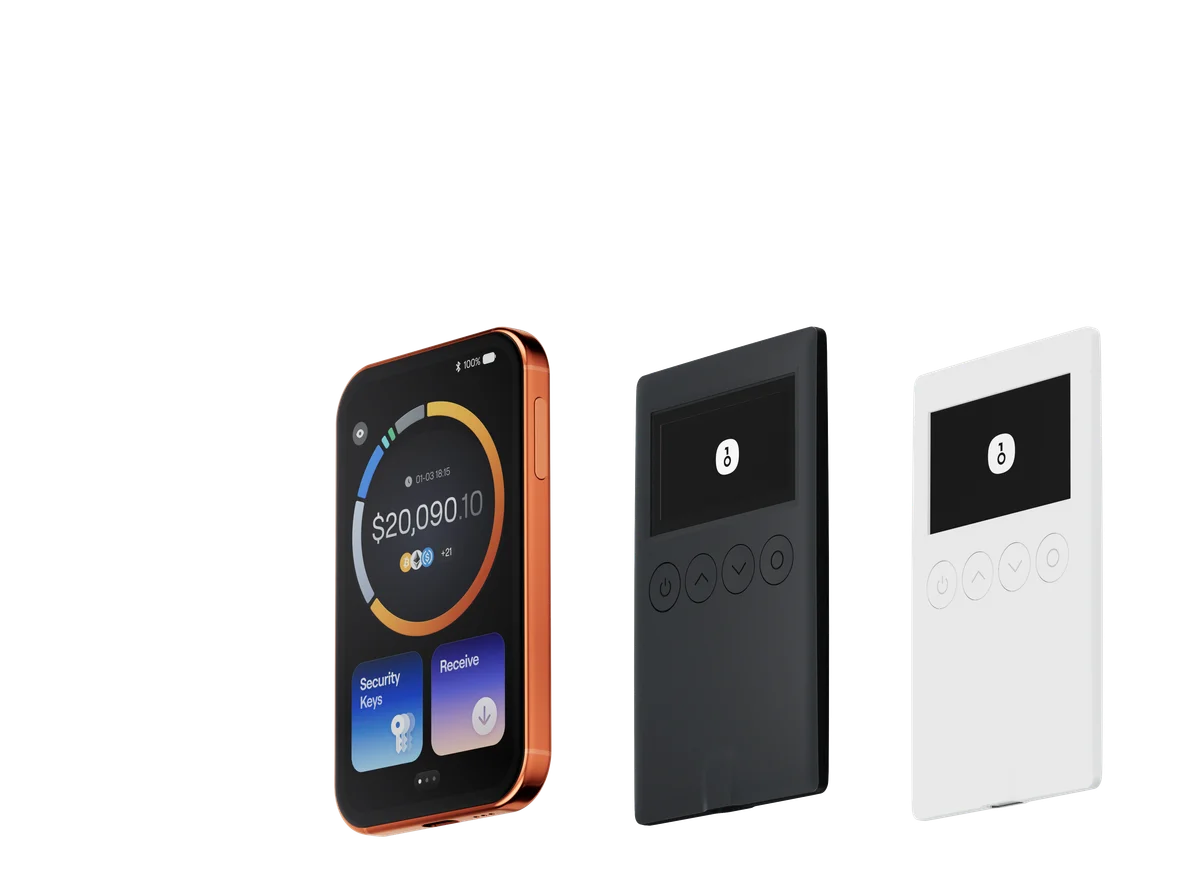
For users reassessing custody after this incident, OneKey hardware wallets are relevant because they are designed around offline key storage and on-device transaction verification. They can serve as a practical layer for separating long-term holdings from exchange accounts, especially when users follow basic operational rules:
- Keep the recovery phrase offline and never upload it to cloud storage.
- Do not enter the recovery phrase into websites, messages, or support forms.
- Review recipient addresses and token approvals before signing.
- Use separate wallets for long-term savings and higher-risk DeFi activity.
- Test the recovery process with a small amount before relying on it.
The Binance incident is a reminder that blockchain security is an end-to-end problem. Protecting assets requires more than safeguarding a private key; it requires controlling every device, permission, service, and signing decision that can move funds.
As leveraged liquidations and custody failures increasingly intersect, crypto users must evaluate both market exposure and counterparty exposure. Transparent investigations, stronger permission isolation, and responsible self-custody will be essential to restoring confidence in the digital-asset ecosystem.