Coinbase: More Than 99% of User Assets Held in Cold Storage with Split Private Keys
Coinbase: More Than 99% of User Assets Held in Cold Storage with Split Private Keys
Coinbase has detailed how it protects customer assets after a separate hot-wallet security incident affected another major cryptocurrency exchange. The company said its own systems and customer funds were not impacted, while outlining a custody architecture built around cold storage, distributed key management, transaction controls, and continuous monitoring.
The disclosure comes at a time when exchange security remains a central concern for crypto users. As digital-asset platforms manage larger balances and increasingly sophisticated infrastructure, the distinction between asset custody, transaction authorization, and operational access has become more important than ever.
More Than 99% of Customer Assets Are Kept Offline
According to Coinbase, more than 99% of customer assets are stored in cold wallets. These wallets are kept offline for most of the time, significantly reducing their exposure to internet-based attacks, credential theft, and unauthorized automated transactions.
Only a limited amount of cryptocurrency is maintained in hot wallets to support routine user activity, such as withdrawals, deposits, and trading-related transfers. Coinbase says hot-wallet balances are adjusted according to expected transaction demand rather than being left permanently at a high level.
This approach reflects a broader security principle in digital-asset custody: online liquidity should be limited to what is operationally necessary. The less value directly exposed to online systems, the smaller the potential impact of a compromise involving an application, credential, or signing service.
Coinbase’s public overview of its security and custody practices is available through its security information page.
Institutional Custody Uses Segregated Cold Storage
Coinbase also stated that assets held in its institutional custody vaults are maintained entirely through cold storage. These assets are separately segregated on-chain, creating a clearer distinction between institutional holdings and other platform balances.
On-chain segregation can improve transparency and operational accounting, although it should not be confused with a complete proof-of-reserves system. Users still need to evaluate how an exchange handles liabilities, withdrawal obligations, legal ownership, and the relationship between customer assets and the platform’s own balance sheet.
For institutions, these distinctions are particularly important. Large holders generally require more than an assurance that funds are “secure.” They also need clear controls around authorization, asset segregation, auditability, governance, and recovery procedures.
Private Keys Are Distributed Rather Than Held in One Place
A key part of Coinbase’s model is the use of distributed key protection. The private keys associated with cold storage are divided across multiple locations or control domains. During the signing process, the complete private key is not reconstructed in a single accessible environment.
This structure is designed to reduce the risk associated with a single point of failure. If one system, facility, or administrator is compromised, an attacker should not automatically gain everything required to authorize a transfer.
The same principle applies to hot-wallet operations. Coinbase says that production signing services are not designed for independent access by one individual. Requiring multiple controls and separating operational responsibilities can reduce the chance that a stolen credential or malicious insider will be sufficient to move funds.
However, distributed key management is not a substitute for sound governance. Security also depends on how recovery procedures, access approvals, software updates, employee privileges, and emergency operations are designed and tested.
Withdrawal Controls Add a Second Layer of Defense
Cold storage protects the majority of assets by keeping them offline, but exchanges still need to process legitimate transactions at scale. Coinbase says it uses several additional controls to manage this operational layer:
- Withdrawal limits and policy-based transfer restrictions
- Monitoring for unusual account or transaction behavior
- Investigation procedures for suspicious activity
- Dynamic controls based on withdrawal volume and risk signals
- Emergency mechanisms that can pause some or all fund movements
If the system detects abnormal transactions or a sudden increase in withdrawal activity, Coinbase says it may begin an investigation and impose temporary limits. In more serious circumstances, signing keys can be disabled to suspend transfers.
These mechanisms are especially relevant during periods of market stress. Large price movements, social-engineering campaigns, phishing attacks, and coordinated account takeovers can all create abnormal withdrawal patterns. A temporary delay may frustrate users, but it can also provide a critical window for investigation and containment.
Customer Assets Are Intended to Remain Customer-Owned
Coinbase says it holds customer assets on a 1:1 basis and does not lend or use them without the customer’s instruction. In practical terms, this means the platform’s stated custody model is based on maintaining the assets required to honor customer balances rather than treating those balances as a source of unrestricted funding.
This issue became a major focus across the cryptocurrency industry after several large platforms failed, froze withdrawals, or revealed weaknesses in their balance-sheet practices. The U.S. Securities and Exchange Commission’s investor guidance on crypto assets also emphasizes that crypto platforms may involve unique custody, operational, and counterparty risks.
For users, the important questions include:
- Who legally owns the assets?
- Are customer funds segregated from corporate funds?
- Can the platform lend, rehypothecate, or otherwise reuse them?
- What controls govern withdrawals?
- What happens if the platform experiences insolvency, litigation, or a prolonged outage?
A platform’s security architecture is therefore only one part of the custody evaluation. Legal structure, financial disclosures, operational resilience, and withdrawal history matter as well.
Coinbase Reports $377 Billion in Platform Assets
Coinbase reported that, as of September 30, 2026, its platform assets had reached approximately $377 billion. The company also reported $8.6 billion in cash and cash equivalents and $2.2 billion in investment crypto assets.
At this scale, custody security is not merely an infrastructure concern. It is a systemic operational responsibility involving wallet architecture, employee access, software security, incident response, regulatory compliance, and liquidity management.
The company’s financial filings and disclosures can be reviewed through its investor relations and SEC filings section. Users should consult primary documents when assessing an exchange’s financial position rather than relying solely on marketing descriptions or social-media commentary.
What This Means for Individual Crypto Users
Coinbase’s model highlights several practical lessons for anyone holding digital assets on a centralized platform.
1. “Cold storage” does not mean zero risk
Offline custody can reduce exposure to online attacks, but it does not eliminate risks related to governance, physical security, insider access, recovery procedures, or platform solvency.
2. Hot-wallet exposure should be limited
Hot wallets are necessary for efficient withdrawals, but maintaining only operationally required balances can reduce the amount exposed to an internet-connected environment.
3. Key management is as important as wallet type
The question is not only whether assets are held offline. Users should also consider how private keys are generated, divided, accessed, backed up, and used for transaction approval.
4. Withdrawal controls can protect users during an incident
Limits, anomaly detection, and emergency pauses may slow certain transactions, but they can also help prevent a compromised account or abnormal system event from turning into a large-scale loss.
5. Long-term holdings require a custody strategy
Exchange custody may be convenient for active trading, while long-term holders may prefer to control their own signing credentials through a self-custody setup. In that case, protecting the recovery phrase and verifying transaction details become the user’s responsibility.
The Security Challenge Is Expanding with AI
Coinbase also noted that the growth of artificial intelligence is changing the risk landscape. AI can help security teams detect unusual behavior, classify threats, automate investigations, and improve incident response. At the same time, attackers can use similar tools to generate more convincing phishing messages, automate social engineering, discover software weaknesses, and scale fraud campaigns.
This creates a competitive security environment in which defensive systems must improve continuously. Strong custody is no longer defined by a single technology. It requires layered controls spanning cryptography, infrastructure, human procedures, monitoring, and crisis response.
For crypto users, the practical takeaway is straightforward: security should be evaluated as a system, not as a slogan. Cold storage, split-key authorization, withdrawal monitoring, and emergency controls can significantly reduce risk, but users should still understand how their assets are held and who ultimately controls the keys.
A Broader Lesson for Digital-Asset Custody
Coinbase’s disclosure reinforces a trend that is reshaping the crypto custody industry: keeping assets safe requires minimizing online exposure and eliminating single points of failure wherever possible.
For centralized exchanges, this means combining cold storage with carefully controlled liquidity, distributed signing, asset segregation, and real-time monitoring. For individual users, it means deciding whether convenience or direct control is the more appropriate priority for each portion of a portfolio.
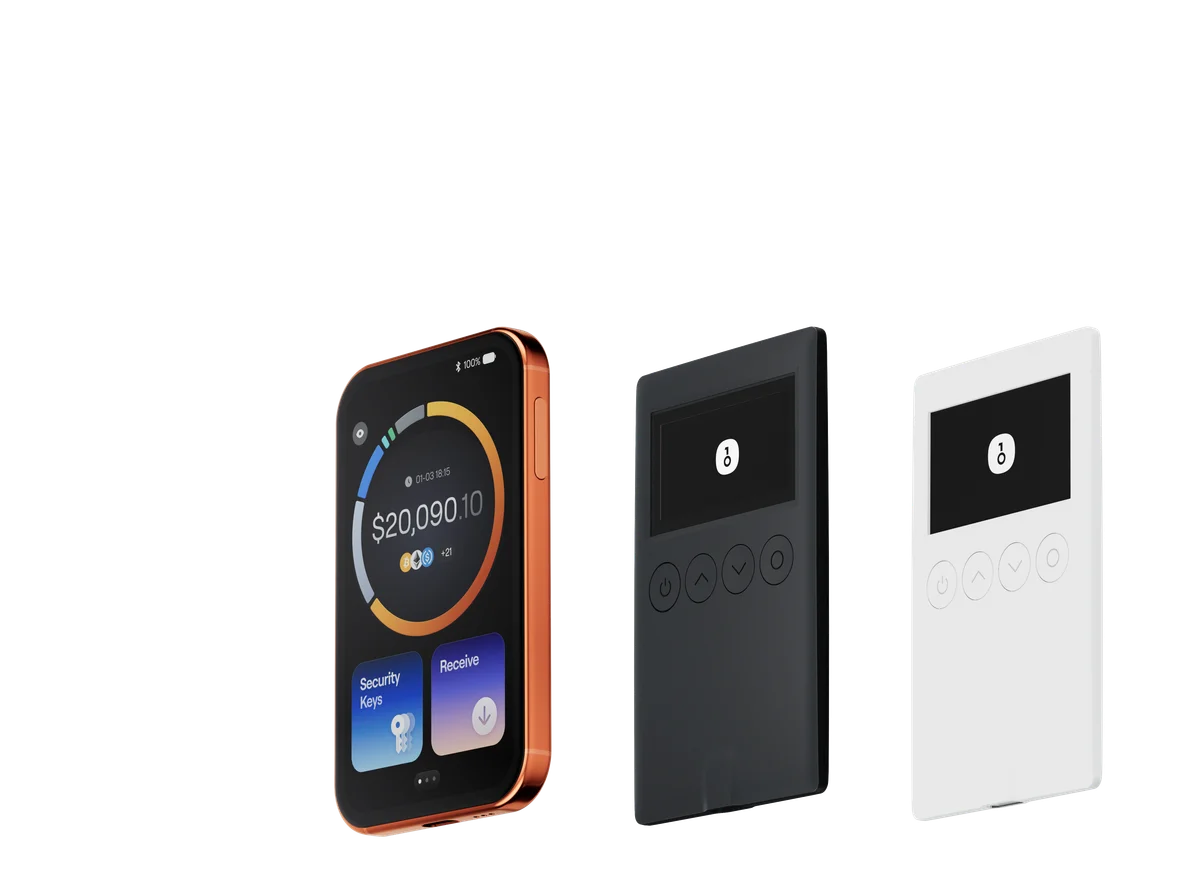
Users who choose self-custody can use a hardware wallet such as OneKey to keep signing credentials isolated from everyday internet-connected devices. The device itself is only one part of the process, however. A secure setup should also include an offline recovery backup, strong physical protection, careful transaction verification, and a clear inheritance or recovery plan.
As crypto adoption expands, the most resilient custody strategy will be the one that treats private keys, operational access, and user behavior as equally important parts of the security equation.