Coinbase to List GEODNET (GEOD) for Spot Trading on June 23, 2026
Coinbase to List GEODNET (GEOD) for Spot Trading on June 23, 2026
Coinbase is preparing to open spot trading for GEODNET (GEOD), expanding access to one of the more discussed DePIN (Decentralized Physical Infrastructure Network) projects in the precision-location niche.
According to Coinbase Markets’ stated launch plan, the GEOD-USD order book is scheduled to open on June 23, 2026, with trading expected to begin at or after 9:00 AM Pacific Time (PT), depending on liquidity conditions and regional availability. GEOD is also expected to appear across Coinbase.com, the Coinbase App, and Coinbase Advanced, while eligible institutional users can access it via Coinbase Exchange.
Below is what this listing could mean for traders, what GEODNET actually does, and the practical considerations that matter most when a token moves onto a major centralized venue.
When does GEOD-USD trading start? (Time zones and “on or after” nuance)
Coinbase frequently uses an “on or after 9:00 AM PT” window for new spot listings, because the exchange may delay the opening until there is sufficient liquidity for orderly trading. Coinbase has used this same format in prior launches and has also described phased rollouts (e.g., post-only → limit-only → full trading) in past listing notes. For a historical example of the timing language and phased approach, see Coinbase’s announcement for a prior spot launch: [“Trading will begin on or after 9AM Pacific Time (PT), if liquidity conditions are met”】.
Key timestamp (for reference):
- 9:00 AM PT on June 23, 2026 is 12:00 PM ET on June 23, 2026
- It is also 12:00 AM Beijing Time on June 24, 2026 (Beijing is typically 15 hours ahead of Pacific Time in late June)
Because the opening can be delayed, it’s worth monitoring official operational updates such as the Coinbase Exchange status page, which is where Coinbase often posts real-time market-mode transitions (auction, limit-only, full trading).
What is GEODNET, and why is it categorized as DePIN?
GEODNET is building a decentralized network of GNSS reference stations (often described as base stations) to provide RTK correction data for high-precision positioning—useful for applications that need centimeter-level location accuracy (robotics, mapping, surveying, autonomous systems, and more). GEODNET’s own documentation frames the network as an RTK system combined with blockchain incentives, where participants operate stations and earn rewards. You can explore the project’s technical overview in the GEODNET Docs Center and its network description in GEODNET’s network page.
This design fits squarely into the broader DePIN trend—one of the most persistent industry themes coming out of 2024–2025, as crypto shifted from “purely financial” narratives toward networks that coordinate real-world infrastructure. For a higher-level sector view, Messari’s State of DePIN report is a useful starting point.
Token basics: what chain is GEOD, and why that matters for deposits/withdrawals
One of the most common user mistakes during exchange listings is assuming a token only exists on one network. For GEOD, it’s especially important to understand token standard and transfer paths before moving funds.
GEODNET’s documentation describes GEOD as a token available as an SPL asset on Solana and references Wormhole NTT (Native Token Transfers) in the context of token movement. Start here:
- GEOD Token Introduction
- Wormhole NTT transfer flow documentation
- Background on SPL assets: Solana token documentation and SPL Token basics
Practical takeaway: when Coinbase enables GEOD deposits and withdrawals, users should only use the networks Coinbase explicitly supports for GEOD at launch. Sending a token on an unsupported network (or to the wrong address type) is one of the fastest ways to create an irreversible loss scenario.
Why a Coinbase spot listing matters (beyond price speculation)
A listing on a major regulated venue can change a token’s market structure in several ways:
-
Deeper liquidity discovery in USD terms
A GEOD-USD order book can attract new market participants who prefer fiat-quoted spot markets and consolidated execution venues. -
Broader retail access and simpler UX
When an asset is available in the Coinbase App and Coinbase Advanced, it typically becomes easier for users to manage limit orders, risk controls, and position sizing without navigating multiple venues. For an overview of Coinbase Advanced’s trading environment, see What is Coinbase Advanced? and Coinbase’s explanation of order books via order types / Coinbase Markets. -
A stronger “DePIN infrastructure” narrative in 2026
As more capital rotates from meme-driven cycles toward infrastructure and real revenue narratives, DePIN projects often get evaluated on coverage, utilization, and sustainability—metrics that are easier to discuss once market access broadens.
What traders should watch on listing day
Spot listings are operational events as much as they are market events. A simple checklist:
1) Market mode and early-book behavior
If Coinbase uses phased opening (as it has in past launches), early trading may start in a restricted mode (e.g., post-only). That can create:
- Thin books and sudden spreads
- Rapid price jumps when full trading begins
2) Region availability
Coinbase commonly limits new assets to “supported jurisdictions.” If GEOD is not available in your region at launch, you may see the market but be unable to trade. In that case, the safest approach is to wait for official eligibility expansion rather than attempting workarounds.
3) Contract/address verification
Even on centralized exchanges, scams cluster around listings (fake tokens, spoofed tickers, misleading explorers). Always confirm you’re interacting with the correct asset page and supported networks before transferring.
Self-custody after a listing: where OneKey fits
A major listing often triggers a second wave of user activity: withdrawals to self-custody for longer-term holding, or simply to reduce exchange exposure.
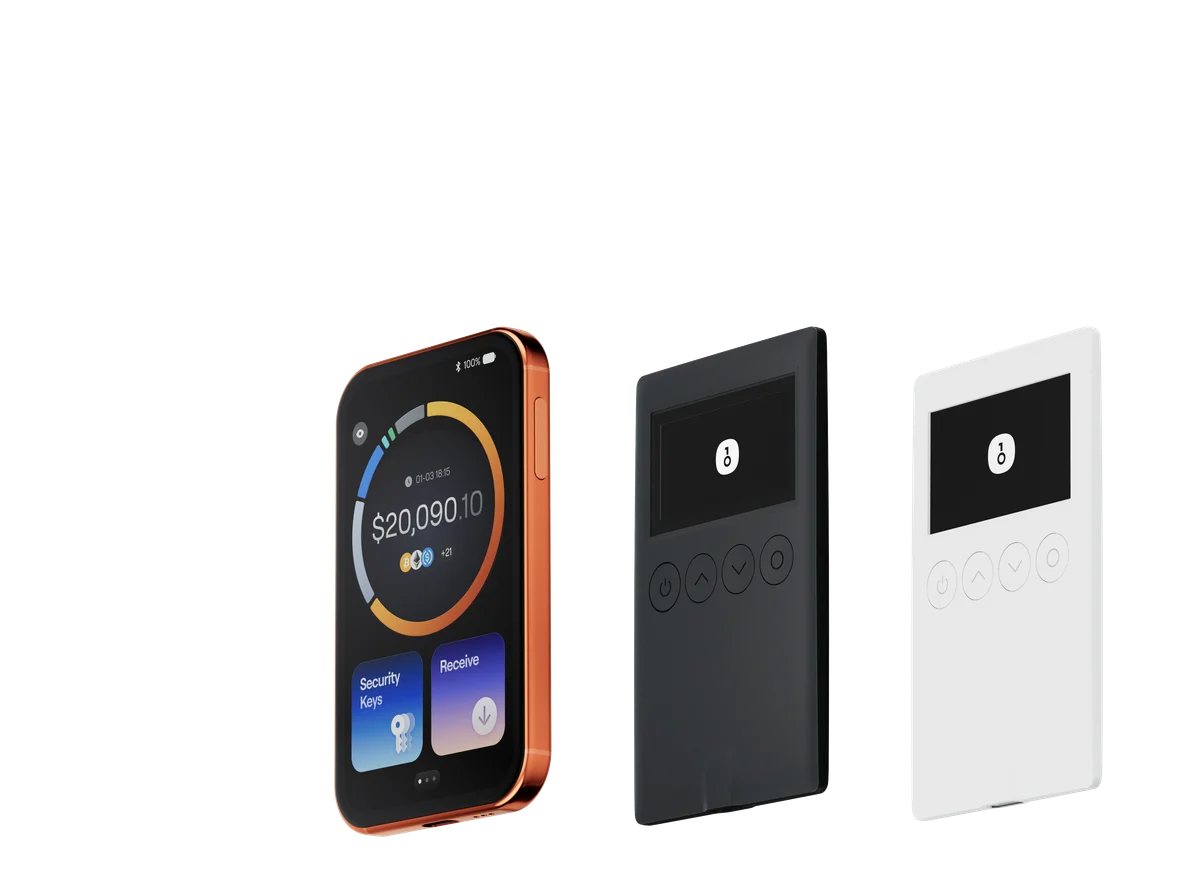
If you plan to hold GEOD beyond short-term trading, consider using a hardware wallet so your private keys remain offline. OneKey is designed for self-custody with on-device transaction confirmation—useful when markets are volatile and phishing attempts increase around high-visibility listings.
Two practical best practices (especially relevant for multi-network tokens):
- Send a small test transaction first before moving a large balance.
- Double-check the network selection (Solana SPL vs other transfer routes) and only follow the deposit/withdrawal instructions provided by the platform you’re using.
Closing thoughts
GEODNET sits at the intersection of DePIN, location intelligence, and token-incentivized infrastructure—a theme that has stayed relevant through multiple market regimes. Coinbase’s planned GEOD spot listing on June 23, 2026 is notable not just as a liquidity event, but as another signal that infrastructure-oriented crypto assets continue to push toward mainstream exchange distribution.
As always, focus on execution details: launch timing can shift with liquidity, availability can vary by region, and safe transfers depend on using the correct network and token standard. For real-time market availability updates, keep an eye on the Coinbase Exchange status page.
Disclaimer: This article is for informational purposes only and does not constitute investment advice. Crypto assets are volatile, and availability may vary by jurisdiction.