CoinShares: Bitcoin’s Quantum Risk Is Manageable, and Market Fears Are Overstated
CoinShares: Bitcoin’s Quantum Risk Is Manageable, and Market Fears Are Overstated
On February 8, crypto media highlighted a recent CoinShares research note arguing that quantum computing is a real (non-zero) future possibility, but not an imminent existential threat to Bitcoin. The key takeaway is pragmatic: Bitcoin’s “quantum problem” looks less like a ticking time bomb and more like a foreseeable engineering migration—one the ecosystem can plan for, test, and deploy with clear milestones rather than panic. (Reference: CoinShares research note)
This matters in 2025–2026 because “quantum fear” has re-entered the narrative at the same time as post-quantum cryptography (PQC) is becoming standardized in traditional cybersecurity—pushing the broader industry (and by extension, crypto users) to ask a reasonable question:
If banks and governments are preparing for PQC, what should Bitcoin holders do today?
What people mean by “Bitcoin’s quantum risk”
Bitcoin security relies on two cryptographic pillars:
- Digital signatures (authorizing spends): historically ECDSA, and now also Schnorr signatures for Taproot spends (BIP 340, plus Taproot context from Bitcoin Optech).
- Hash functions (mining and address/commitment hashing): primarily SHA-256.
Quantum risk is often oversimplified as “quantum breaks crypto.” In reality, different quantum algorithms map to different parts of Bitcoin:
- Shor’s algorithm threatens elliptic-curve signatures by solving the discrete logarithm problem at scale, which could (in theory) allow an attacker to derive a private key from a revealed public key. (Background: IBM Quantum tutorial on Shor’s algorithm)
- Grover’s algorithm provides a quadratic speedup for brute-force search, which theoretically reduces the effective security level of symmetric hashes (e.g., SHA-256 from “256-bit” to roughly “128-bit” security in a very simplified framing). (Background: IBM Quantum tutorial on Grover’s algorithm)
CoinShares’ view is that these are known theoretical vectors, but the “dangerous” part—having a fault-tolerant quantum machine capable of exploiting them against Bitcoin in realistic time windows—remains far away. (Reference: CoinShares research note)
Why the market’s “everyone is vulnerable” narrative is misleading
A common fear is: “Once quantum arrives, all BTC can be stolen.”
But Bitcoin’s design creates an important nuance: many outputs do not reveal a public key until spending. Modern address types typically hide the public key behind a hash until the moment you broadcast a spend. That means a would-be attacker generally needs not only a powerful quantum computer, but also speed—deriving a key during a short exposure window before confirmation.
CoinShares also notes that the most structurally exposed coins are concentrated in older output types (notably Pay-to-Public-Key, P2PK) and frames the overall impact as bounded and manageable rather than systemic. (Reference: CoinShares research note)
Separately, it’s worth emphasizing: Grover’s algorithm does not magically “undo” SHA-256. It changes brute-force economics, but SHA-256 remains an extremely conservative primitive in practice, and Bitcoin’s proof-of-work difficulty adjustment also changes the dynamics for any hypothetical quantum mining advantage.
The realistic threat model: “long-exposure” vs “short-exposure”
To think clearly about quantum risk, it helps to split it into two timelines:
- Long-exposure risk: coins sitting in outputs where the public key is already known (or repeatedly reused), giving an attacker unlimited time to work.
- Short-exposure risk: coins where the public key is revealed only when you spend—so an attacker would need to derive the private key fast enough to front-run or replace your transaction before confirmation.
This distinction is exactly why many researchers discuss migration paths that reduce the “short-exposure” window and/or introduce new quantum-resistant spend conditions in advance. For an example of how Bitcoin developers have been discussing upgrade paths, see this summary of a Bitcoin-Dev thread in Bitcoin Optech Newsletter #335.
Why “it’s an engineering problem” is the right framing
Bitcoin has already evolved its cryptography via soft forks, with Taproot being a prime example of safely introducing new capabilities without forcing every user to move immediately (Taproot overview).
A quantum-resilience roadmap likely looks similar:
- Introduce new spend mechanisms that avoid quantum-vulnerable signature paths (or restrict them under certain future conditions).
- Standardize and battle-test PQ signatures once the community is confident in the selected schemes and their implementation complexity.
- Gradually migrate funds over many years, driven by wallets, exchanges, custodians, and user best practices—not overnight emergency action.
In 2025, discussion around proposals in this direction became more visible, including draft work often referred to as “BIP 360” in community forums—though the scope and naming have evolved. A technically focused place to follow the discussion is Delving Bitcoin, for example: “Changes to BIP-360” and “Major BIP 360 Update”.
The important point for users: there is no need to bet everything on a single headline. The ecosystem is already exploring multiple migration designs, and Bitcoin’s upgrade culture typically favors conservative, well-reviewed changes over rushed pivots.
2025–2026 context: PQC is becoming “real” in traditional security
One reason this topic is heating up is that PQC is no longer purely academic. In recent years, the U.S. National Institute of Standards and Technology (NIST) has been finalizing and publishing PQC standards.
A concise starting point is NIST’s announcement of its first finalized post-quantum standards, including signature standards that will shape how the internet migrates over the next decade: NIST press release on post-quantum standards (FIPS 203 / 204 / 205).
This does not mean Bitcoin must immediately switch. It does mean:
- the tooling, audits, and implementation experience around PQC will mature quickly,
- and the broader world’s migration playbook (phased rollout, hybrid modes, long deprecation windows) offers useful lessons.
What Bitcoin holders can do today (practical, no-panic checklist)
Quantum computing is not your biggest risk in 2026—phishing, malware, SIM swaps, and approval scams are. Still, there are sensible “quantum-hygiene” actions that also improve everyday security:
-
Avoid address reuse
Reusing addresses repeatedly increases public-key exposure and makes your on-chain footprint easier to analyze. -
Prefer modern script types in your receiving setup
Use wallets that default to SegWit and support Taproot where appropriate, as modern output types are designed with better privacy and operational safety properties. -
If you control very old coins, review whether they sit in legacy output types
The most quantum-sensitive outputs are those with already-revealed public keys over long periods. If that describes your situation, consider planning a careful migration—well before any “Q-Day” narrative becomes urgent. (Context: CoinShares research note) -
When spending, aim to get confirmed promptly
The “short-exposure” window is most relevant at spend time. Using appropriate fees and avoiding stuck transactions is good operational practice regardless of quantum. -
Use a hardware wallet for transaction verification and safe migrations
If Bitcoin eventually introduces new quantum-resistant spending paths, users will likely migrate funds in normal on-chain transactions. A hardware wallet helps by keeping keys offline and making it easier to verify destination addresses and transaction details on a trusted screen—critical during any high-attention upgrade cycle.
Where OneKey fits (and why it’s relevant to the quantum conversation)
Even though quantum risk is a future cryptography topic, most real-world losses happen during present-day execution: signing the wrong transaction, approving malicious contracts, or leaking secrets.
That’s where a security-oriented hardware wallet workflow remains valuable: private keys stay offline, and you can review what you sign—which matters both for everyday protection and for any future “migration transactions” users may choose to make as Bitcoin adopts new defensive cryptographic options.
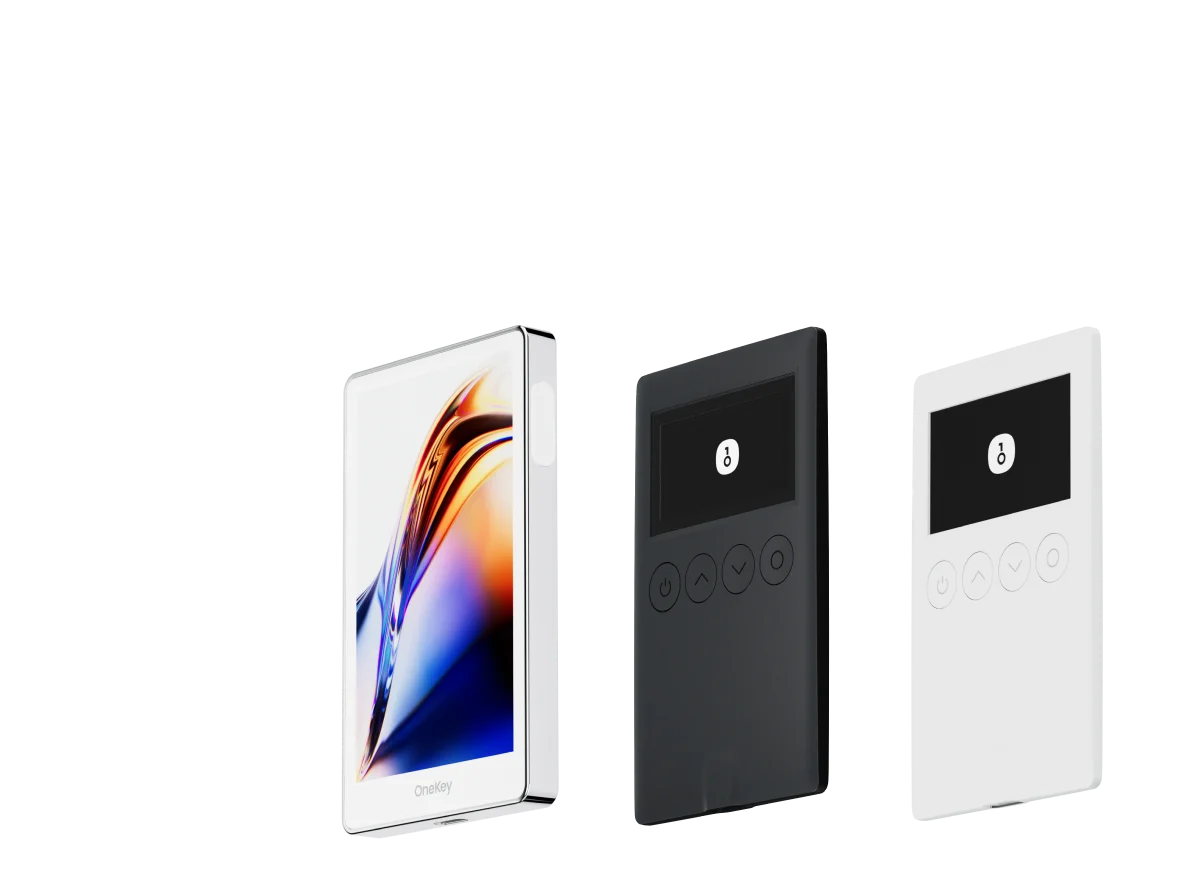
If you’re thinking about long-term self-custody with an eye on future protocol upgrades, using a hardware wallet like OneKey can be a practical part of that plan: it keeps your signing environment isolated and helps you execute high-stakes transfers more safely—without needing to react emotionally to quantum headlines.
Bottom line
CoinShares’ conclusion is directionally right: quantum computing is not a zero-probability event, but Bitcoin’s quantum risk is not an immediate crisis. It is best treated as a manageable migration—one that can be tracked through open technical discussion, standardized cryptography progress, and measured protocol engineering rather than social-media urgency. (Reference: CoinShares research note)