Crypto’s Disintermediation Narrative Is Reversing: Stablecoins, RWA, and ETFs Are Creating New Financial Intermediaries

Updated Jul 27, 2026

Crypto’s Disintermediation Narrative Is Reversing: Stablecoins, RWA, and ETFs Are Creating New Financial Intermediaries

For more than a decade, crypto’s most powerful narrative was disintermediation. Bitcoin introduced a peer-to-peer monetary network without banks. Ethereum expanded that idea into programmable finance. DeFi promised lending, trading, and asset management without brokers, clearing houses, or centralized gatekeepers.

Yet as the crypto market matures, a more nuanced reality is emerging: blockchain technology is not eliminating intermediaries. It is changing what intermediaries do, how they are trusted, and how much of their activity can be verified on-chain.

Stablecoin issuers, tokenized asset managers, ETF sponsors, qualified custodians, oracle providers, governance delegates, and compliance infrastructure companies are becoming the new middle layer of digital finance. This does not necessarily mean crypto has failed. It may mean crypto is entering the same historical pattern seen in many financial technology cycles: new rails rarely remove intermediation altogether; they redistribute power toward new institutions that are better adapted to the new infrastructure.

The key question for 2026 is no longer whether crypto can remove every intermediary. It is whether the new digital financial intermediaries can be more transparent, efficient, auditable, and user-aligned than the traditional ones they are replacing.

From “Trust the Code” to “Trust the Issuer”

Stablecoins are the clearest example of this shift.

In early crypto culture, stablecoins were often treated as practical tools: a way to move dollar-like value across exchanges, DeFi protocols, and global wallets. The trust assumption appeared simple: token balances were recorded on-chain, transfers settled quickly, and smart contracts enforced the rules.

But the most widely used stablecoins are not purely technological products. They are financial instruments backed by off-chain reserves, banking relationships, redemption policies, legal structures, and risk management practices. In other words, the core trust layer has moved from code alone to issuer governance.

A dollar-backed stablecoin user is not only asking whether the token contract works. They are asking deeper questions:

  • Are reserves held in safe and liquid assets?
  • Are attestations or audits reliable and frequent?
  • Can users redeem under stressed market conditions?
  • Which regulator oversees the issuer?
  • What happens if a banking partner fails?
  • Can addresses be frozen or transactions restricted?

These are not purely blockchain questions. They are questions about financial intermediation.

Global regulators have recognized this. The Financial Stability Board has published recommendations for stablecoin arrangements, emphasizing governance, redemption rights, risk management, and cross-border oversight. The European Union’s MiCA framework has also created a dedicated rulebook for crypto-asset service providers and issuers of asset-referenced and e-money tokens. In the United States, stablecoin policy has become a central part of the digital asset agenda, reflecting the view that fiat-backed tokens are no longer a niche crypto product but a potential part of mainstream payment infrastructure.

This regulatory direction turns stablecoin issuers into a new class of trust centers. They may operate on public blockchains, but their credibility depends on reserves, compliance, banking access, and institutional controls. The blockchain provides settlement transparency; the issuer provides monetary credibility.

That is a major reversal from crypto’s original slogan. Stablecoins are not removing financial intermediaries. They are creating digitally native ones.

RWA Tokenization Is Being Led by Institutions, Not Anonymous Communities

Real-world asset tokenization, often called RWA, has become one of the strongest growth narratives in crypto. The concept is straightforward: bring traditional assets such as Treasury bills, money market funds, private credit, bonds, commodities, and fund shares onto blockchain rails.

The appeal is clear. Tokenized assets can support faster settlement, fractional ownership, programmable compliance, 24/7 transferability, and potentially better collateral mobility. For investors, RWA tokenization offers a bridge between traditional yield products and blockchain-based financial applications.

But the leading actors in this market are not decentralized internet communities. They are asset managers, banks, fund administrators, transfer agents, and regulated platforms.

Major institutions including BlackRock, Franklin Templeton, JPMorgan, and WisdomTree have all explored or launched blockchain-based financial products. BlackRock’s tokenized fund initiative brought attention to the possibility of using public blockchains for institutional fund distribution. Franklin Templeton has been active in tokenized money market funds. JPMorgan has used blockchain-based infrastructure for institutional settlement and collateral use cases. WisdomTree has developed tokenized financial products aimed at regulated market access.

According to data providers tracking tokenized assets, the on-chain value of real-world assets has expanded significantly, with tokenized private credit, U.S. Treasuries, commodities, and institutional funds becoming major categories. Platforms such as RWA.xyz show how quickly this segment has grown from a small experiment into a multi-billion-dollar market.

This growth is important, but it changes the narrative. RWA tokenization does not mean that anyone can magically put any asset on-chain without intermediaries. A tokenized Treasury product still needs an issuer, custodian, broker, administrator, compliance process, legal wrapper, and redemption mechanism. A tokenized credit product still requires underwriting, servicing, risk monitoring, and investor reporting.

The innovation is not the disappearance of institutions. The innovation is that institutional activity can become more programmable and, in some cases, more transparent.

If RWA becomes a core part of blockchain adoption, the winners may be the intermediaries that can combine regulatory credibility with on-chain composability.

ETFs Brought Crypto to Institutions, But Through Familiar Gateways

The approval and growth of spot Bitcoin ETFs marked a turning point in crypto market structure. For years, investors who wanted Bitcoin exposure had to use exchanges, self-custody, offshore products, or less efficient investment vehicles. Spot ETFs changed that by allowing investors to access Bitcoin through traditional brokerage and retirement account channels.

The U.S. Securities and Exchange Commission’s approval of spot Bitcoin exchange-traded products in 2024 was a watershed moment for institutional adoption. It gave asset managers, financial advisers, and brokerage platforms a familiar wrapper for crypto exposure.

But ETFs also reinforced intermediation.

Many investors who buy a spot Bitcoin ETF do not hold private keys. They do not broadcast transactions. They do not interact with the Bitcoin network directly. Instead, they rely on a chain of financial entities: ETF issuers, authorized participants, market makers, custodians, administrators, exchanges, and brokers.

This structure is powerful because it reduces operational complexity. Institutions often have mandates, risk policies, accounting constraints, and custody requirements that make direct crypto ownership difficult. ETFs solve those problems by translating crypto exposure into a regulated financial product.

At the same time, this model means that institutional adoption does not automatically equal self-sovereign ownership. It may increase demand for the underlying asset, deepen market liquidity, and improve legitimacy, but it also strengthens the role of regulated financial intermediaries.

This is not a contradiction. It is the market choosing convenience, compliance, and operational familiarity over direct network participation.

For individual users, the distinction matters. Holding an ETF and holding Bitcoin on-chain are different experiences with different trade-offs. The ETF offers accessibility and integration with traditional finance. Self-custody offers direct control, bearer ownership, and independence from product-level intermediaries.

Both models can coexist. But they serve different purposes.

DAO Governance Shows That Decentralization Is Not Automatic

Even inside crypto-native systems, decentralization is more complicated than the branding suggests.

Many DAO governance processes are transparent in the sense that votes, proposals, and token balances are visible on-chain. That is a genuine improvement compared with opaque corporate decision-making. However, transparency does not guarantee equal influence.

In practice, governance power often concentrates among large token holders, early investors, core contributors, foundations, market makers, and professional delegates. Many retail token holders do not vote regularly. Some lack the expertise to evaluate technical proposals. Others delegate their voting power to specialized participants.

This creates a new governance layer. Delegates, multisig signers, forum moderators, protocol foundations, security councils, and core developer teams often become the practical decision-makers of decentralized systems.

Again, this is not necessarily a failure. Complex financial protocols require expertise, continuity, and accountability. The problem arises when projects advertise full decentralization while critical decisions remain concentrated in a small group with limited checks and balances.

The better standard is not “no intermediaries.” It is visible, constrained, and accountable intermediation.

A well-designed DAO can make governance power measurable. It can publish proposals, reveal voting patterns, enforce timelocks, and allow the community to exit or fork if trust breaks down. That is different from traditional finance, where many key decisions happen behind closed doors.

The crypto advantage is not that power disappears. It is that power can become easier to observe.

Why New Intermediaries Are Emerging

The return of intermediaries is not surprising when viewed through the lens of financial history.

Markets need services that pure software cannot fully provide:

  • Identity and legal accountability
  • Credit assessment and risk pricing
  • Asset custody and recovery procedures
  • Compliance with local regulations
  • Insurance and operational controls
  • User support and dispute resolution
  • Liquidity coordination
  • Governance and upgrade management

Blockchains are excellent at settlement, verification, programmability, and censorship resistance under specific assumptions. They are less suited to determining whether a borrower is creditworthy, whether a fund’s off-chain assets exist, or whether a regulated product complies with securities law.

As crypto scales, the industry increasingly separates into two layers.

The first layer is open infrastructure: public blockchains, smart contracts, cryptographic proofs, and self-custody tools.

The second layer is institutional coordination: issuers, custodians, asset managers, regulated exchanges, compliance providers, and governance operators.

The future of crypto finance will likely depend on how these two layers interact.

If the institutional layer becomes as opaque and rent-seeking as legacy finance, crypto will lose much of its transformative value. But if intermediaries operate on transparent rails, publish verifiable data, and compete in open markets, blockchain may still deliver a meaningful upgrade.

The New Standard: Verifiable Intermediation

A more realistic framework for the next phase of crypto is “verifiable intermediation.”

This means accepting that intermediaries will exist, while demanding that their actions become easier to inspect and challenge.

For stablecoin issuers, this could mean frequent reserve disclosures, clear redemption rights, independent attestations, and transparent token supply data.

For RWA platforms, it could mean on-chain ownership records, audited asset pools, clear legal claims, and standardized reporting.

For ETF and custody providers, it could mean stronger segregation of assets, public proof-of-reserves where appropriate, and clearer explanations of counterparty risk.

For DAOs, it could mean better delegation dashboards, governance participation metrics, conflict-of-interest disclosures, and emergency powers that are limited by design.

This is where blockchain can still be revolutionary. Not by pretending that finance can operate without any trusted parties, but by reducing blind trust and replacing it with verifiable trust.

What This Means for Crypto Users

For users, the practical lesson is simple: understand which type of exposure you actually have.

If you hold a stablecoin, you are exposed to issuer and reserve risk.

If you buy a tokenized fund, you are relying on legal and operational structures beyond the blockchain.

If you gain Bitcoin exposure through an ETF, you are holding a financial product rather than the underlying asset directly.

If you participate in a DAO, your voting power may be diluted by large holders and organized delegates.

If you self-custody crypto assets, you remove certain intermediaries but take on responsibility for key management, transaction verification, and operational security.

None of these models is universally better. The right choice depends on the user’s goals, risk tolerance, technical comfort, and regulatory environment.

What matters is clarity. Crypto users should know when they are trusting code, when they are trusting an institution, and when they are trusting themselves.

Self-Custody Still Matters in an Intermediated Crypto World

The rise of new financial intermediaries does not make self-custody irrelevant. In fact, it may make self-custody more important as a baseline option.

As more crypto exposure moves into ETFs, tokenized funds, custodial platforms, and regulated products, direct ownership becomes a conscious choice rather than the default. Users who want full control over their assets need tools that help them manage private keys safely.

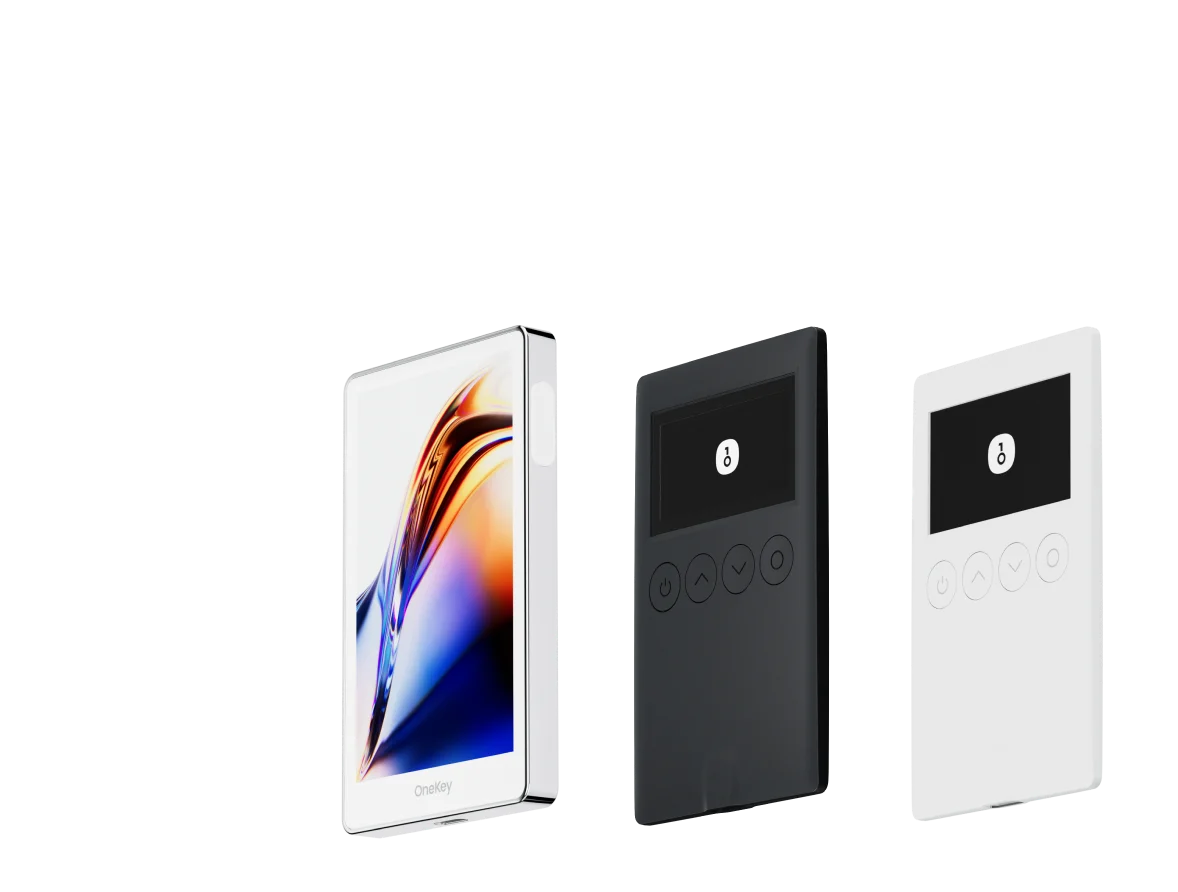
This is where hardware wallets remain central to the crypto security stack. A hardware wallet can help users keep private keys offline, verify transactions more carefully, and reduce exposure to exchange or platform failure. For users who interact with DeFi, hold long-term assets, or want a stronger separation between ownership and intermediated access, self-custody is still one of crypto’s defining capabilities.

OneKey is designed for this environment: a world where users may interact with stablecoins, DeFi protocols, tokenized assets, and multi-chain applications, while still wanting direct control over their private keys. As crypto becomes more institutional, the ability to choose self-custody remains a critical form of financial optionality.

Conclusion: The End of a Simple Narrative

Crypto’s original disintermediation story was powerful because it captured a real frustration with legacy finance: slow settlement, high fees, opaque risk, restricted access, and excessive gatekeeping.

But the industry’s next chapter is more complex.

Stablecoins are turning issuers into payment infrastructure providers. RWA tokenization is bringing asset managers and banks onto blockchain rails. ETFs are opening the door to institutional capital through traditional market structures. DAOs are proving that governance still requires coordination and expertise.

The result is not a world without intermediaries. It is a world with new intermediaries built around digital assets, programmable settlement, and on-chain verification.

The most important question is whether these new institutions will be better than the old ones. More transparent. More accountable. More efficient. More open to user choice.

That is the real test for crypto in 2026 and beyond.

Secure Your Crypto Journey with OneKey

View details for Shop OneKeyShop OneKey

Shop OneKey

The world's most advanced hardware wallet.

View details for Download AppDownload App

Download App

Trade global assets. Start with your email in minutes.

View details for OneKey SifuOneKey Sifu

OneKey Sifu

Crypto Clarity—One Call Away.