CZ: Users Should Protect Their Data and Reduce Information Reuse Across Platforms
CZ: Users Should Protect Their Data and Reduce Information Reuse Across Platforms
Data breaches have become a persistent risk in the cryptocurrency industry. Even when customer funds are not directly exposed, leaked personal information can create the conditions for phishing, SIM swapping, identity theft, and targeted social engineering.
On October 28, Binance founder Changpeng Zhao, commonly known as CZ, highlighted several data exposure incidents affecting companies in both the digital-asset and traditional-finance sectors. The reported cases involved a service provider connected to Coinbase, South Korean crypto exchange Bithumb, and two Korean securities firms: Mirae Asset and Daishin Securities. In the Coinbase-related incident, the exposed information reportedly involved user contact data rather than access to funds.
The incidents point to an important reality for crypto users: you may not be able to prevent a company from being breached, but you can reduce the damage caused by the information you share.
Why a Data Leak Can Become a Crypto Security Problem
A leaked email address or phone number may appear harmless on its own. However, attackers can combine several data points to build a convincing profile of a target.
Information commonly exposed in financial-service breaches can include:
- Full name
- Email address
- Phone number
- Residential or mailing address
- Identity-document details
- Trading or account activity
- Customer-service interactions
This information can be used to make fraudulent messages look legitimate. An attacker may impersonate an exchange, wallet provider, bank, or compliance team and claim that the recipient must complete a verification step, unlock an account, or confirm a suspicious transaction.
The goal is often not to break into a platform directly. Instead, attackers try to persuade the victim to reveal a password, approve a transaction, install malicious software, or disclose a recovery phrase.
The U.S. Federal Trade Commission’s guidance on SIM-swap scams explains how criminals can take control of a victim’s phone number and use it to receive authentication codes. In the crypto sector, this can be especially dangerous when a phone number is used as a recovery method or as the primary factor for account access.
The Risks of Reusing the Same Information Everywhere
Many users register for multiple exchanges, wallets, NFT marketplaces, payment services, and blockchain applications with the same email address and phone number. This makes account management convenient, but it also creates a strong connection between otherwise separate services.
If one database is compromised, attackers can use the leaked information to:
- Identify other platforms where the victim may have an account.
- Match a person’s real-world identity to their crypto activity.
- Send highly personalized phishing messages.
- Attempt password resets on unrelated services.
- Search for additional information through public sources.
- Target the victim with social-engineering attacks.
The more platforms that share the same identifiers, the easier it becomes to build a complete profile. This is particularly concerning for users who hold digital assets across several exchanges or interact with decentralized applications under a recognizable identity.
Data minimization is therefore not only a privacy principle. It is also part of a practical crypto security strategy.
Use Separate Email Aliases for Different Services
One of the simplest improvements is to use a unique email alias for each major exchange or financial platform.
For example, instead of using one address everywhere, a user could create separate aliases for:
- A centralized exchange
- A fiat on-ramp
- A trading platform
- A blockchain analytics service
- A software or hardware wallet account
- A non-financial web service
If one alias later receives suspicious messages, the user can identify which service may have exposed or shared the address. More importantly, a unique alias makes it harder for attackers to connect that account with the user’s other online identities.
An alias should not be treated as a replacement for strong authentication. It works best alongside a unique password, a password manager, and phishing-resistant multi-factor authentication where available. The National Institute of Standards and Technology’s digital identity guidance provides broader recommendations for authentication and account security.
Reduce the Amount of Personal Information You Share
Users should also think carefully about the information required during account registration and verification.
Some crypto platforms must collect identity information to comply with legal and regulatory requirements. In those cases, users may not be able to avoid submitting documents. However, they can still reduce unnecessary exposure by:
- Avoiding optional profile fields
- Removing unused phone numbers from accounts where possible
- Limiting public disclosure of wallet addresses
- Avoiding screenshots that reveal balances or transaction history
- Separating personal social-media profiles from crypto identities
- Reviewing privacy settings on exchanges and financial apps
- Deleting inactive accounts when the service allows it
Users should also be cautious when sharing identity documents with unfamiliar platforms. Before completing verification, check the company’s legal identity, security practices, privacy policy, and customer-support channels. A request for sensitive documents received through an unsolicited message should be treated as suspicious, even if the message contains accurate personal details.
Protecting Against Phishing After a Breach
A data breach can make future scams more credible. Users should assume that a message containing their name, phone number, or partial transaction history may still be fraudulent.
Before taking action:
- Do not click links in unexpected account alerts.
- Open the service through a bookmarked website or official application.
- Never share a seed phrase, private key, or one-time authentication code.
- Treat urgent requests involving withdrawals or account freezes as high-risk.
- Verify support requests through an independent channel.
- Check the exact domain name before entering credentials.
- Do not install software at the request of an unknown “support agent.”
A legitimate platform will not need a user’s recovery phrase to restore access or investigate a transaction. Anyone asking for it is attempting to take control of the wallet.
The Cybersecurity and Infrastructure Security Agency’s phishing guidance also recommends slowing down and independently verifying unexpected requests rather than responding under pressure.
Self-Custody Does Not Eliminate Privacy Risk
Self-custody can reduce dependence on third parties for control of private keys, but it does not automatically solve identity and privacy problems.
A user may hold assets in a self-custodial wallet while still exposing personal data through exchange accounts, blockchain applications, social platforms, or public wallet disclosures. If a wallet address is linked to a name, email address, or trading account, on-chain activity may become easier to analyze and associate with a real-world identity.
A safer approach combines several layers:
- Keep private keys and recovery phrases offline.
- Use a dedicated email identity for financial services.
- Avoid publishing wallet addresses unnecessarily.
- Review transaction details before signing.
- Separate long-term holdings from frequent trading activity.
- Keep backups secure and never store recovery phrases in cloud documents or messaging apps.
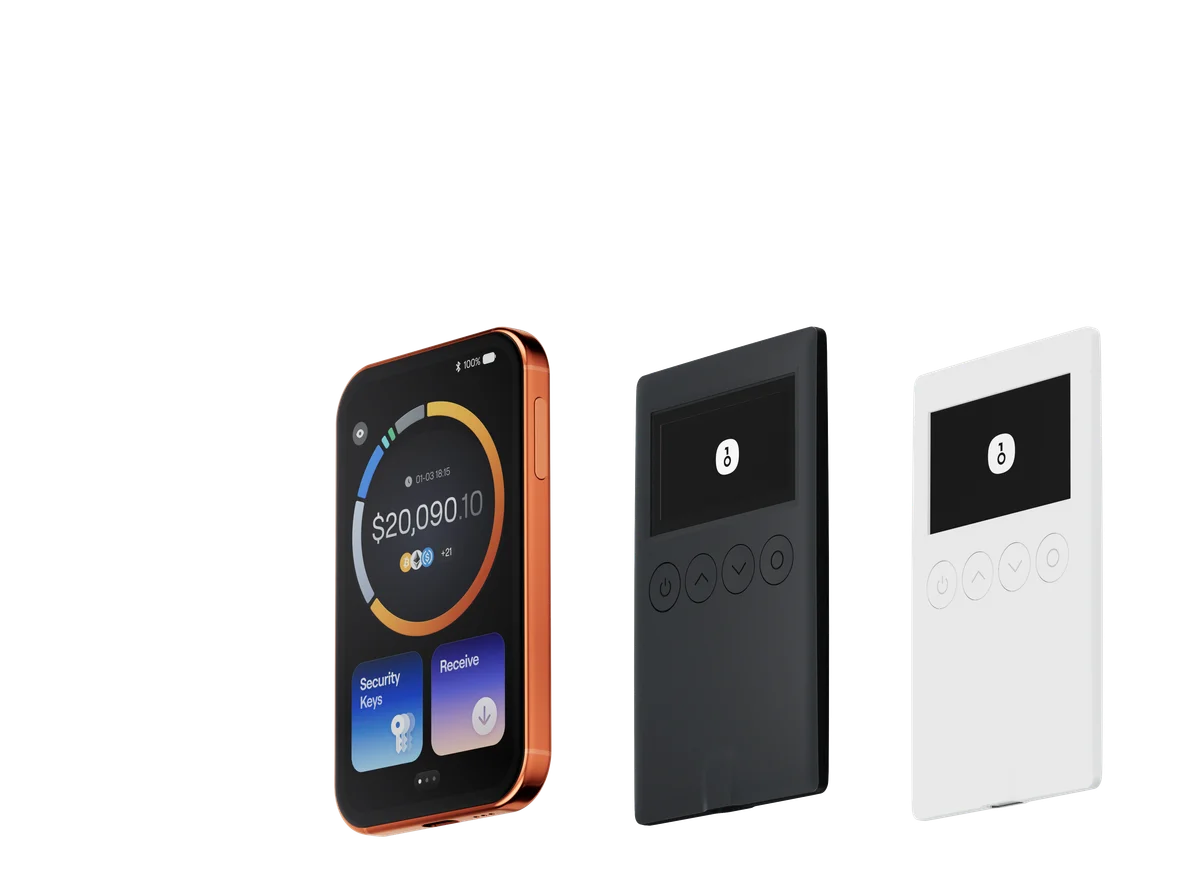
For users who want to keep private keys under their own control, OneKey hardware wallets provide an offline signing environment designed to help isolate sensitive wallet operations from potentially compromised computers and websites. This does not prevent an exchange or service provider from suffering a data breach, but it can reduce the chance that leaked contact information directly leads to unauthorized transaction approval.
A More Resilient Security Model for Crypto Users
No single security measure can prevent every attack. Data breaches may occur at exchanges, analytics providers, payment processors, telecom companies, and financial institutions outside the crypto industry.
The more realistic goal is to limit how much information is exposed, make accounts harder to connect, and ensure that a leaked identity does not automatically lead to control of digital assets.
Using unique email aliases, reducing unnecessary data sharing, strengthening authentication, and keeping private keys separate from online services can significantly improve a user’s security posture. As CZ’s warning suggests, personal data protection is becoming an essential part of responsible crypto ownership—not an optional privacy upgrade.