From 6000 BC to 21 Million BTC (Part II): In the Era of Coins, How Should Bitcoin, Stocks, Bonds, and Commodities Be Compared?

Key Takeaways
- Bitcoin, stocks, bonds, and commodities are not the same kind of risky assets: Bitcoin is closer to a digital asset with programmatic scarcity, stocks represent residual claims on businesses, bonds represent credit and interest-rate cash flows, and commodities are connected to physical supply-demand and inflation cycles.
- Comparing assets should not rely on historical returns alone; it also requires checking volatility, maximum drawdown, trading hours, cash-flow sources, valuation methods, relationships with macro variables, and whether the investor can safely hold and exit in time.
- The core lesson of the era of coins is not that one asset must be superior to another, but that standardized, verifiable, transferable value carriers change the radius of trade; modern allocation still needs to combine risk tolerance, time horizon, liquidity needs, and custody capability.
Why Revisit Asset Comparison Through the Lens of the “Era of Coins”
Readers need to understand this issue because today’s investment choices increasingly resemble a multi-asset map: Bitcoin, stocks, bonds, gold, crude oil, industrial metals, stablecoins, and cash instruments can all enter the same account interface through different channels. But their economic meanings are not the same. Treating Bitcoin simply as “digital gold,” stocks simply as “high-yield assets,” or bonds simply as “safe assets” can all fail under real market stress.
Narratives like “From 6,000 BC to 21,000,000 BTC, Part II: The Era of Coins” remind us that the emergence of coins was not merely a material change in monetary history. Coins standardized weight, purity, issuance rights, and verifiability, so counterparties did not have to reassess value every time they traded. Standardized value carriers expanded the radius of trade and made it easier to organize savings, taxation, military spending, cross-regional commerce, and credit systems.
Modern assets also revolve around several basic questions: Are they scarce? Can they be verified? Can they be transferred? Who bears credit risk? Who is responsible for custody? Are prices driven by cash flow, supply and demand, policy, or consensus? If we compare Bitcoin, stocks, bonds, and commodities again using these questions, the conclusions will be more useful than asking only “which one will go up more?”
Comparison Dimensions: First Distinguish the Source of an Asset’s “Value”
A practical asset comparison framework should include at least eight dimensions: return source, volatility characteristics, liquidity, cash flow and valuation, inflation sensitivity, interest-rate sensitivity, correlation, and custody and access methods. They answer different questions.
The point of this table is not to rank assets, but to avoid “using the wrong metric.” For example, using the P/E ratio to measure Bitcoin makes no sense because Bitcoin has no corporate profits; using bond yield to maturity to measure gold or copper is also inappropriate because commodities do not promise interest or principal; and using short-term price moves to judge the long-term value of stocks ignores corporate cash flow and governance quality.
A safer approach is to first ask: Am I buying cash flow, scarcity, a credit promise, or exposure to physical supply and demand? The answer determines the risk-management tools that follow.
Return and Volatility: Historical Performance Is Not the Whole of Risk
Investors are most easily attracted by returns, but they are also most likely to underestimate volatility. Bitcoin has historically experienced multiple rounds of sharp rallies and deep drawdowns, with fast price discovery and rapidly changing market sentiment. Long-term stock returns are usually linked to corporate earnings, productivity, capital returns, and valuation cycles, but equity indices also go through bear markets, sector rotations, and valuation compression. Bond returns may seem more stable, but they can still incur significant losses when interest rates rise quickly or credit spreads widen. Commodity prices, meanwhile, are often affected by inventories, weather, geopolitical conflicts, transportation bottlenecks, and industry cycles, so short-term volatility is not low.
When comparing returns, at least three levels should be considered: first, nominal return, meaning the rise or fall of the price or index itself; second, real return, meaning purchasing power after inflation; and third, risk-adjusted return, meaning the return earned per unit of volatility taken. For individual investors, maximum drawdown and recovery time should also be added. Even if an asset has high long-term returns, a deep interim drawdown may force the investor to sell at the wrong time.
A concrete example: Suppose an investor has 1 million yuan in funds, and the down payment for a home will be needed within the next two years. If a large share of the money is put into high-volatility assets, then even if the long-term outlook is favorable, the investor may face a price decline when the money is needed. Conversely, if the investment horizon is more than ten years and the investor can tolerate large volatility, then a small allocation to high-volatility assets becomes easier to justify. Returns are not isolated numbers; they must be evaluated together with time horizon, cash needs, and psychological tolerance.
Liquidity and Trading Hours: Being Tradable Does Not Mean Being Able to Exit Safely
Bitcoin spot markets generally run around the clock, which is one of its major differences from traditional exchange-traded assets. 24/7 trading brings stronger continuity, but it also means that sharp price moves can occur on weekends, holidays, and overnight. Investors do not need to wait for the exchange to open, but they also need to deal with more frequent price fluctuations and the temptation to act.
Stocks are usually traded during exchange-defined hours. Mainstream stocks and ETFs tend to have good depth, but small-cap stocks, some overseas markets, or extreme market conditions can also see wider spreads, trading halts, or declining liquidity. The bond market is more complex: many bonds trade over the counter, and quote transparency and depth may be inferior to stocks; credit bonds are especially prone to situations under stress where there seems to be a price but it is actually hard to trade. Commodities are often accessed through futures, ETFs, or related equities, and investors need to understand contract months, roll costs, margin, and delivery rules.
A liquidity check should not focus only on daily trading volume; it should also ask the following questions:
- In normal markets, are bid-ask spreads sufficiently narrow?
- In stressed markets, does depth disappear quickly?
- Does the trading channel depend on a single platform or a single broker?
- Are there redemption limits, trading halts, price limits, or on-chain congestion?
- What might the price impact cost be when selling a large amount?
For Bitcoin, one must also distinguish between exchange account balances, on-chain self-custodied assets, and institutional custody accounts. These three have different liquidity and operational risks: trading inside an exchange is fast, but there is platform and withdrawal risk; self-custody offers stronger control, but requires on-chain confirmations, fee management, and private-key management; institutional custody may suit compliance processes, but it can also bring issues such as withdrawal time, approvals, and service boundaries.
Cash Flow and Valuation: Why the Same Metric Cannot Be Used Universally
Stocks and bonds are cash-flow assets. Stocks represent ownership or residual claims on a company, and corporate profits, cash flow, dividends, and buybacks all affect valuation. Bonds represent a borrower’s promise to repay principal and pay interest; coupon, principal, maturity, credit rating, and the interest-rate curve determine the pricing framework. Although both stocks and bonds can be influenced by sentiment, at least they can be modeled around future cash flows.
Bitcoin does not generate cash flow, nor does it promise interest or dividends. Its core features are a fixed supply cap, an open network, verifiable issuance, and permissionless transfer. Its valuation is closer to a judgment about demand for a networked scarce asset than to traditional corporate valuation. Investors can observe active addresses, transaction fees, long-term holder behavior, exchange balances, derivatives leverage, macro liquidity, and the regulatory environment, but these indicators do not guarantee price direction.
Commodities also usually do not generate cash flow. The logic for holding gold may include store of value, safe-haven demand, central bank reserves, and jewelry and industrial demand; crude oil, copper, and agricultural products are more obviously affected by real supply and demand. When holding commodities through futures, investors must also face term structure: when far-month prices are higher than near-month prices, rolling can create costs; when near-month prices are higher than far-month prices, rolling can produce gains. The performance of many commodity investments does not equal the movement of the spot price itself.
Therefore, when valuing assets, three mistakes should be avoided: first, treating Bitcoin like a company with profits and using P/E ratios; second, treating stocks only as price charts and ignoring corporate quality; third, treating a commodity ETF as if it were the spot commodity itself and ignoring futures structure and fees. The correct comparison is not about finding one universal metric, but about choosing the right explanatory variables for each asset class.
Inflation and Interest-Rate Sensitivity: How Macro Variables Are Transmitted
Inflation and interest rates are among the most easily oversimplified variables in multi-asset comparison. Many people say, “Buy commodities for inflation, buy stocks when rates are cut, buy bonds for safety,” but the real market is usually more complicated.
Stocks’ response to inflation depends on whether companies can pass costs on to customers. Companies with strong pricing power, asset-light structures, and stable demand may better withstand inflation than companies with thin margins and high cost sensitivity. Rising interest rates increase discount rates and usually put more pressure on high-valuation growth stocks, but if rates rise because the economy is strong, some cyclical stocks may also benefit.
Bonds are the most directly sensitive to interest rates. The longer the duration, the more sensitive the price is to rate changes; credit bonds are also affected by credit spreads. When inflation rises, central banks tighten, or the market demands higher real yields, long-duration bond prices may fall. Conversely, in a recession and rate-cutting cycle, high-quality bonds may provide portfolio ballast, but bonds with higher credit risk may not benefit at the same time.
Commodities are often seen as inflation-sensitive assets because many commodities themselves are important parts of the inflation basket. But commodities can also be hit by demand declines. If inflation comes from supply shortages, energy and agricultural products may rise; if high interest rates suppress demand, industrial metals may come under pressure. Gold’s relationship with real interest rates is closely watched: when real rates rise, the opportunity cost of holding non-yielding gold increases; when real rates fall or financial trust is damaged, gold demand may strengthen.
Bitcoin’s macro sensitivity is still evolving. It has a fixed-supply narrative and is therefore often seen as an inflation hedge; but in actual trading, it may also be influenced by global liquidity, risk appetite, leverage liquidations, and regulatory news. When the market trades Bitcoin as a high-beta risk asset, it may move in tandem with tech stocks; when the market emphasizes non-sovereign, self-custodial, and scarce characteristics, it may display a different logic. Investors should separate the “long-term narrative” from “short-term trading behavior.”
Correlation and Diversification: It Is Not Diversification Just Because You Hold More Assets
The core of diversification is not owning many names, but owning risk sources that do not move fully in sync under different environments. If a portfolio simultaneously holds multiple tech stocks, a tech ETF, and high-beta crypto assets, it may appear diversified by name, but in substance it may still be exposed to the same risk appetite and liquidity cycle.
Correlation also changes. In calm markets, stocks, bonds, commodities, and Bitcoin may show different trends; in stressed markets, investors may sell multiple asset classes at once to meet margin calls or reduce risk, causing correlations to rise. The idea that “all assets fall together in a crisis” is not always true, but it is enough to remind investors that static historical correlation cannot fully represent the future.
A more practical approach is scenario analysis. For example:
- If interest rates rise rapidly, what happens to long bonds, growth stocks, and high-valuation assets?
- If energy supply is disrupted, what happens to commodities, inflation expectations, and corporate profit margins?
- If global risk appetite declines, what happens to Bitcoin, stocks, and high-yield bonds?
- If fiat purchasing power declines over the long term, what happens to gold, Bitcoin, inflation-linked bonds, and physical assets?
- If a trading platform, custodian, or on-chain network has a temporary failure, can the asset still be accessed in time?
Through these scenarios, investors can judge whether the portfolio is truly diversified. Bitcoin may provide a risk source different from traditional assets in some portfolios, but if the allocation is too large, its own volatility may dominate the portfolio outcome. The goal of diversification is not to eliminate volatility, but to avoid a single risk determining everything.
Custody and Access Methods: Asset Safety Is Not Only in the Price Chart
One key change in the era of coins was that value carriers could be carried, transferred, and verified; but at the same time, they also brought problems of safekeeping, theft, and counterfeiting. Modern assets are the same, except that the form has changed from metal coins to brokerage accounts, custodian banks, futures brokers, exchange accounts, hardware wallets, and private keys.
Stocks and bonds are usually held through brokers, funds, banks, or custodians. Investors do not directly hold physical securities, but rely on registration, clearing, and custody systems. The advantages are convenience of operation and relatively mature inheritance and tax processes; the limitations are that account freezes, trading restrictions, regional access, broker risk, and rule changes may all affect access.
Commodity access methods are more varied. Directly holding physical gold requires consideration of authentication, storage, insurance, and bid-ask spreads; holding through ETFs depends on fund structure and custody arrangements; holding through futures requires understanding margin, forced liquidation, contract roll, and expiration rules. Many investors think they have “bought commodities,” when in fact they have bought a financial derivative exposure to commodity prices.
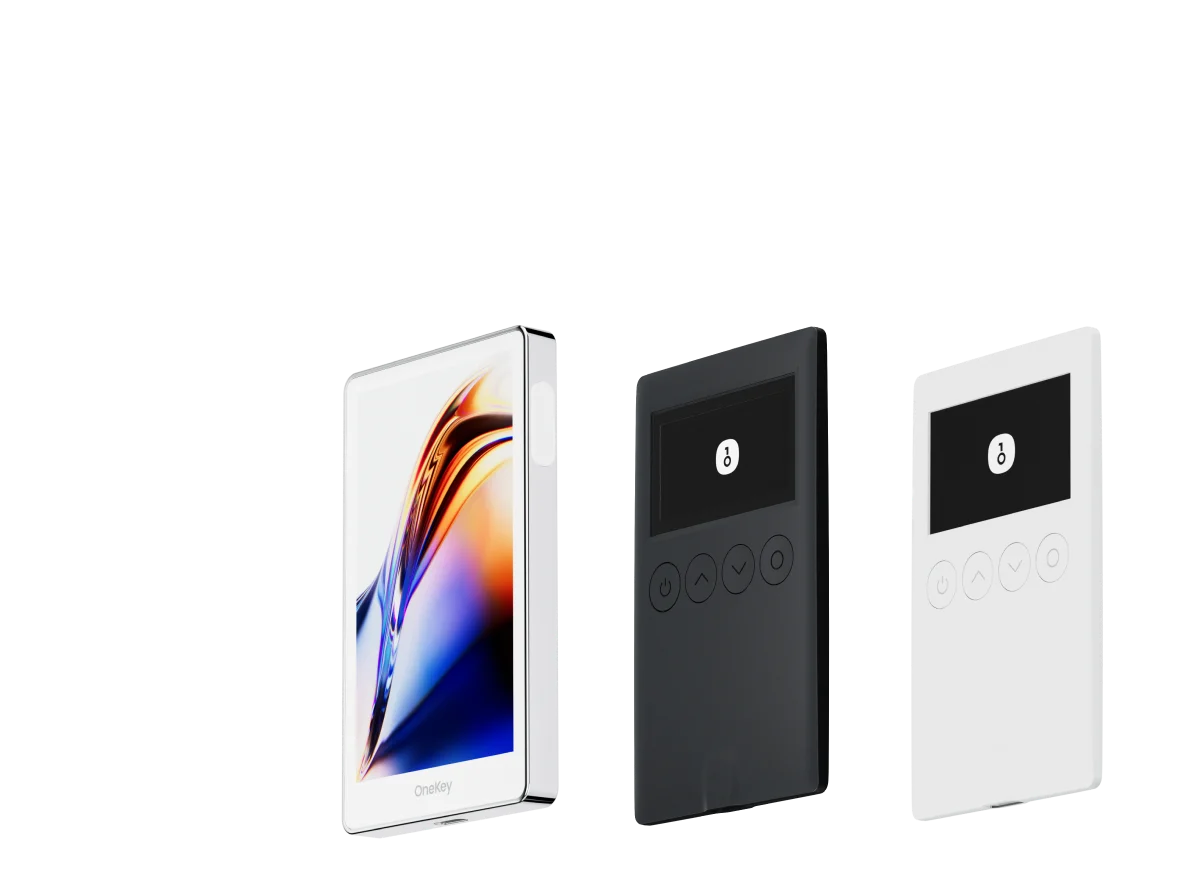
Bitcoin’s uniqueness lies in the ability to self-custody. As long as the private key or seed phrase is controlled by the investor, control of the asset does not, in principle, depend on any centralized account. But self-custody is not free: loss of private keys, seed phrase leakage, phishing signatures, malware, incorrect addresses, incorrect networks, and poor inheritance arrangements can all cause irreversible losses. The purpose of a hardware wallet is to keep the private key in a more isolated environment and allow the user to verify key transaction information on the device. For users of OneKey and similar hardware wallets, it is still important to understand backups, PIN codes, firmware sources, address verification, and recovery drills, rather than treating any device as automatically safe.
An actionable custody checklist includes:
- Do you clearly know who actually controls the asset: yourself, a broker, an exchange, a fund, a custodian, or a smart contract?
- Is there a single point of failure: one platform, one private key, one device, or one approver?
- Can the asset be withdrawn or transferred under stress?
- Are there offline backups, inheritance arrangements, and emergency contacts?
- Can you identify fake websites, fake apps, malicious signatures, and social engineering attacks?
Price declines are visible risk; access failure is hidden risk. For digital assets, the latter is often much harder to recover.
A Simple Five-Category Matrix: Bringing Comparison into Decision-Making
To avoid the discussion staying at the conceptual level, assets can be placed into a “five-category matrix”: cash and short-duration instruments, bonds, stocks, commodities, and Bitcoin and other digital assets. Each category serves a different function.
Cash and short-duration instruments mainly solve near-term payment and waiting-for-opportunity needs; the goal is not high return but stability and flexibility. Bonds mainly provide interest income and maturity allocation, but interest-rate and credit risk must be managed. Stocks take on the role of corporate growth and profit sharing, but earnings cycles and valuation volatility must be endured. Commodities provide exposure to physical supply-demand and inflation shocks, but roll costs, inventories, and policy variables are complex. Bitcoin provides programmatic scarcity, open settlement, and the possibility of self-custody, but it carries higher volatility, regulatory, technological, and market-structure risks.
In actual allocation, three questions can be used in order: first, when will this money be needed? Second, what is the maximum drawdown that can be accepted? Third, do you have the ability to understand and safeguard this asset? If an asset cannot pass these three questions, then no matter how attractive the narrative is, it is not suitable for a large allocation.
For example, an investor with stable income, no short-term large expenses, and a willingness to learn self-custody may use stocks and bonds as core holdings, and allocate a small proportion to commodities and Bitcoin to observe their role in different macro environments. Another investor who needs high liquidity and cannot tolerate large drawdowns should, even if bullish on Bitcoin’s long-term narrative, carefully control the allocation and prioritize cash flow and a margin of safety.
Conclusion: The Lesson of the Coin Era and the Boundaries of Modern Allocation
The era of coins tells us that the form of value carriers changes the way trade is conducted; Bitcoin further brings scarcity, verifiability, and transferability into a digital network. But asset comparison cannot stop at historical analogies. Coins, gold, securities, bonds, and Bitcoin are all embedded in different institutions, technologies, and market structures, and their risks do not automatically become the same just because the narratives are similar.
Bitcoin, stocks, bonds, and commodities each answer different questions: Bitcoin answers the question of digital scarcity and self-custody; stocks answer the question of corporate growth and profit distribution; bonds answer the question of credit cash flow and duration management; commodities answer the question of physical supply-demand and inflation shocks. No single metric can fully describe any of them.
A more robust approach is to keep the comparison dimensions fixed: look at returns, but also volatility; look at liquidity, but also stress exit; look at valuation, but also whether cash flow exists; look at the inflation-hedge narrative, but also interest-rate and demand changes; look at correlation, but also crisis correlation; look at accessibility, but also custody and operational risk. This framework can help investors reduce misjudgment, but it cannot guarantee returns, nor can it replace personal financial planning, tax judgment, and compliance requirements.
References
- From 6,000 BC to 21,000,000 BTC, Part II: The Era of Coins:https://trezor.io/blog/insights/from-6-000-bc-to-21-000-000-btc-part-ii-the-era-of-coins
- Bitcoin: A Peer-to-Peer Electronic Cash System:https://bitcoin.org/bitcoin.pdf
- SEC Investor.gov: Introduction to Investing:https://www.investor.gov/introduction-investing
- CFTC: Commodity Futures Trading Commission Customer Education:https://www.cftc.gov/LearnAndProtect/index.htm
- Federal Reserve Bank of St. Louis: What Is a Bond?:https://www.stlouisfed.org/open-vault/2020/march/what-is-bond
- OneKey Help Center:https://help.onekey.so/
Risk Disclosure
This article is for educational and informational purposes only and does not constitute investment advice, securities recommendations, tax advice, or legal opinion. Bitcoin and other digital assets may face risks including severe market volatility, insufficient trading depth, layered liquidity, on-chain congestion, loss of private keys, phishing attacks, custodian default, suspension of withdrawals by trading platforms, smart contract or software vulnerabilities, and changes in regulatory rules. Stocks may face declining corporate earnings, valuation compression, delisting, systemic market declines, and corporate governance risks; bonds may face rising interest rates, duration losses, credit default, reinvestment risk, and over-the-counter liquidity risk; commodities may face supply-demand changes, inventory cycles, geopolitical events, futures roll costs, margin risks, and delivery rule risks. Using leverage, futures, options, borrowing, or margin trading will magnify losses and may result in losses exceeding principal or forced liquidation. Any allocation should be made in light of your own financial situation, investment horizon, risk tolerance, jurisdictional rules, and custody capabilities, and you should consult qualified professionals when necessary.
FAQ's
From a cash-flow perspective, Bitcoin is not like stocks or bonds because it does not generate dividends, profits, or interest. From the perspective of scarcity and the non-sovereign asset narrative, it is often compared with gold. From market trading performance, however, it may at certain stages exhibit the characteristics of a high-volatility risk asset. Therefore, Bitcoin should not be defined by a single label; it should be judged separately from its supply mechanism, source of demand, volatility, liquidity, and custody method.
The value of stocks mainly comes from future corporate profits and cash flow; the value of bonds mainly comes from agreed interest payments, principal repayment, and credit quality; commodity prices are mainly influenced by physical supply and demand, inventories, transportation, and macro cycles; Bitcoin is influenced jointly by protocol supply, network consensus, market demand, liquidity, and the regulatory environment. Their sources of risk are different, so they cannot be compared only by price changes.
Bitcoin does not have predictable cash flows required by traditional DCF valuation, so common methods include supply-demand analysis, on-chain activity observation, network adoption, relative scarcity, holder structure, liquidity, and macro-environment judgment. These methods are more of a framework than an exact formula, and they cannot provide a stable intrinsic value like a bond’s yield to maturity or a stock profit model.
Liquidity determines whether investors can buy or sell at an acceptable price in a stress environment. Bitcoin spot markets usually trade around the clock, but the depth and execution quality of different trading platforms vary; stocks and bonds are affected by exchange, over-the-counter market, and settlement rules; commodities may also involve futures rolls and physical delivery. Longer trading hours do not mean lower risk; they may instead bring more frequent price swings and operational pressure.
You can first clarify the investment horizon and maximum tolerable drawdown, then check each asset’s source of return, volatility range, liquidity, valuation method, macro sensitivity, correlation, and custody method. Finally, run small-scale scenario tests, such as simulating what happens to the portfolio if the stock market falls, interest rates rise, inflation eases, or a trading platform goes offline, rather than making decisions based on a single historical return.