Kintsu Website Restored, but Users Are Still Advised Not to Connect Their Wallets
Kintsu Website Restored, but Users Are Still Advised Not to Connect Their Wallets
Kintsu, a liquid staking protocol built on the Monad blockchain, has reportedly restored its official website after a suspected front-end attack. However, the project team continues to warn users against visiting kintsu.xyz or connecting a wallet until a formal security confirmation is published.
The incident highlights an increasingly important risk in decentralized finance: even when smart contracts remain unchanged, a compromised website can still redirect users toward malicious transactions.
Website Recovery Does Not Mean the Incident Is Over
Kintsu stated that its domain had been restored and was once again pointing to the project’s own infrastructure. However, domain name system (DNS) caches do not update simultaneously across all internet service providers and regions.
As a result, some users may still be directed to a malicious version of the website for a period of time. The team indicated that this risk could persist for approximately one hour after the domain was corrected and advised users to wait for an official all-clear announcement.
This distinction is critical. A website appearing normal in one location does not necessarily prove that every user is reaching the same infrastructure. DNS propagation, browser caching, and network-level caching can all create inconsistent access conditions.
For the latest project-specific updates, users should rely only on Kintsu’s verified communication channels and avoid treating the restored appearance of the website as proof that it is safe.
What Happened During the Suspected Front-End Attack?
Security company Blockaid warned that it had detected an active front-end attack involving several cryptocurrency websites, including Kintsu, Flap, and Stonkbrokers.
According to the warning, the affected websites had been modified to load malicious scripts associated with the StepDrainer toolkit. These scripts could manipulate the wallet-connection flow and redirect users to a page designed to facilitate the transfer of digital assets.
The attack did not necessarily require users to download a suspicious application or enter their seed phrase. Instead, the danger emerged at the point where users clicked a familiar “Connect Wallet” button and then interacted with a transaction or signature request presented by the malicious page.
This is why front-end security incidents can be especially difficult to detect. The website may retain its usual branding, layout, and navigation while silently replacing legitimate wallet interactions with harmful ones.
Why “Connect Wallet” Is Not a Harmless Action
Many users regard wallet connection as a simple login process. In practice, connecting a wallet can expose address information and establish a communication channel between a decentralized application and the wallet interface.
The more serious risk begins when a dApp asks the user to:
- Approve a token allowance
- Sign an unfamiliar message
- Confirm a transaction with unclear parameters
- Transfer assets to an unknown address
- Grant permissions that remain active after the session ends
A malicious website may present these requests using familiar language or a polished user interface. If the request is approved, the attacker may gain the ability to move specific tokens or persuade the user to authorize a direct asset transfer.
Users should therefore evaluate every wallet prompt independently rather than assuming that a request is safe because it appears on a well-known website.
Recommended Actions for Kintsu Users
Until Kintsu publishes a clear security confirmation, users should take the following precautions:
-
Do not visit
kintsu.xyzfor the time being.
A recovered domain may still resolve inconsistently because of DNS and browser caching. -
Do not connect a wallet to Kintsu, Flap, or Stonkbrokers.
This applies even if the interface appears normal or loads without an obvious warning. -
Reject unfamiliar signing requests.
Never approve a transaction simply because a website claims it is required to continue. -
Review token approvals and permissions.
If a wallet was connected or a transaction was approved during the suspected attack window, users should inspect their on-chain permissions and revoke unnecessary allowances through a reputable permission-management tool. -
Separate incident response from recovery phrases.
Never enter a seed phrase or private key into a website, support form, browser extension prompt, or direct message. If a wallet’s recovery phrase may have been exposed, moving assets to a newly generated wallet may be necessary. -
Follow verified announcements.
Project domains, social media accounts, and community channels can all be impersonated. Users should verify account authenticity before acting on urgent instructions.
The Ethereum Foundation’s wallet security guidance also recommends treating unexpected signing requests and unknown applications with caution.
A Broader Lesson for DeFi Users
The Kintsu incident demonstrates that decentralized finance security extends beyond smart contract audits. Users often focus on contract code, validator risk, and protocol governance, but the front end is another important part of the attack surface.
A decentralized application may rely on multiple components, including:
- Domain registration and DNS configuration
- Hosting providers and deployment pipelines
- JavaScript libraries and third-party scripts
- Wallet-connection providers
- Social media accounts used for announcements
A compromise of any one of these layers can affect users even when the underlying blockchain continues to operate normally.
The incident also shows why transaction simulation and human verification remain important. A wallet prompt should be assessed based on the actual contract, function, recipient, and value involved—not merely on the name of the website that generated it.
How Hardware Wallets Fit Into This Security Model
A hardware wallet can provide an additional layer of protection by keeping private keys isolated from ordinary online environments. However, it cannot automatically make a malicious transaction safe. If a user confirms an approval or transfer after failing to verify the transaction details, the hardware wallet may still sign it.
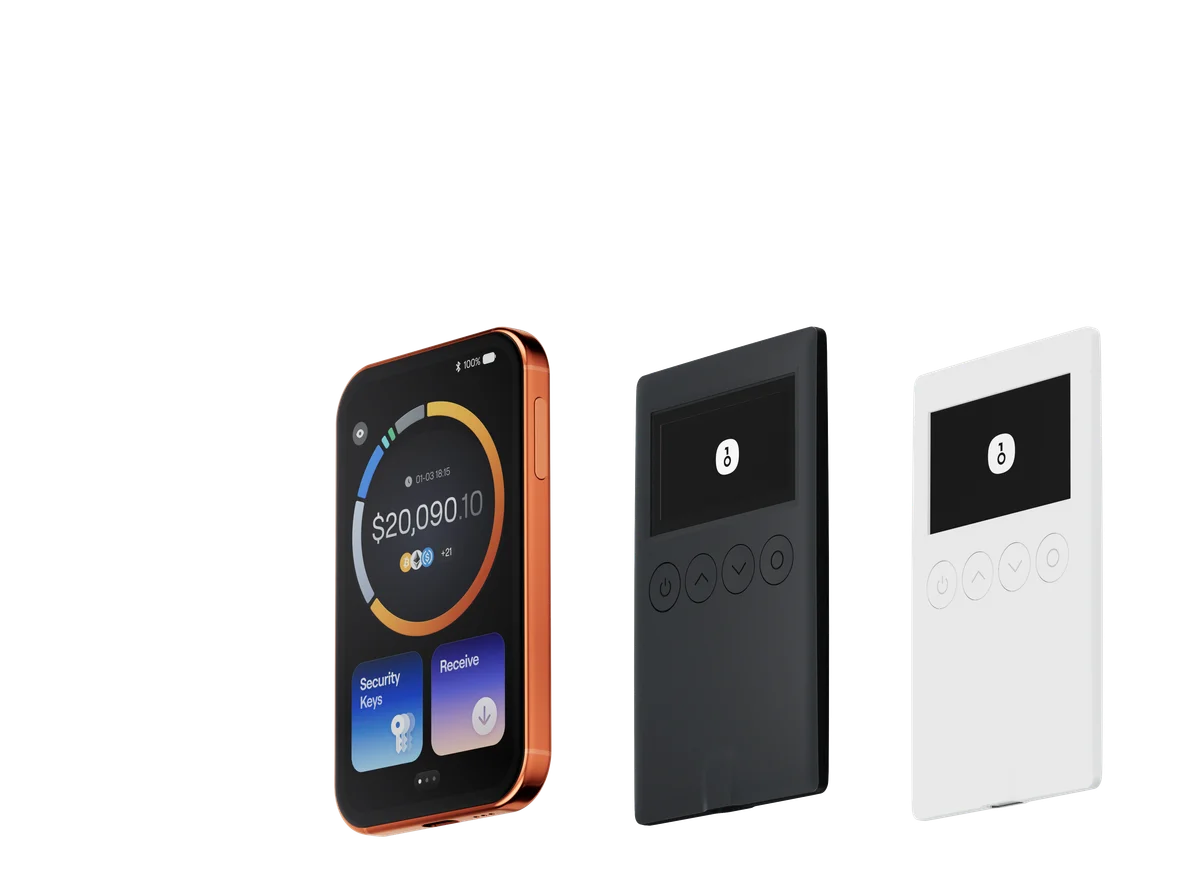
For users interacting with DeFi protocols on networks such as Monad, a hardware wallet such as OneKey can be part of a broader security strategy. The most effective approach combines key isolation with careful domain verification, limited approvals, separate wallets for different risk levels, and a refusal to sign requests that are unclear or unexpected.
Final Takeaway
The restoration of the Kintsu website should not be interpreted as the end of the security incident. Until the project issues an explicit confirmation that the front end and related infrastructure are safe, users should avoid kintsu.xyz, refrain from connecting wallets, and reject any unfamiliar signing requests.
For DeFi participants, the key lesson is straightforward: a familiar website does not guarantee a safe transaction. Verify the domain, inspect every wallet prompt, limit token permissions, and treat unexpected urgency as a potential warning sign.