OKX Upgrades Tokenized Stock Market Data With New “Company” and “News” Modules
OKX Upgrades Tokenized Stock Market Data With New “Company” and “News” Modules
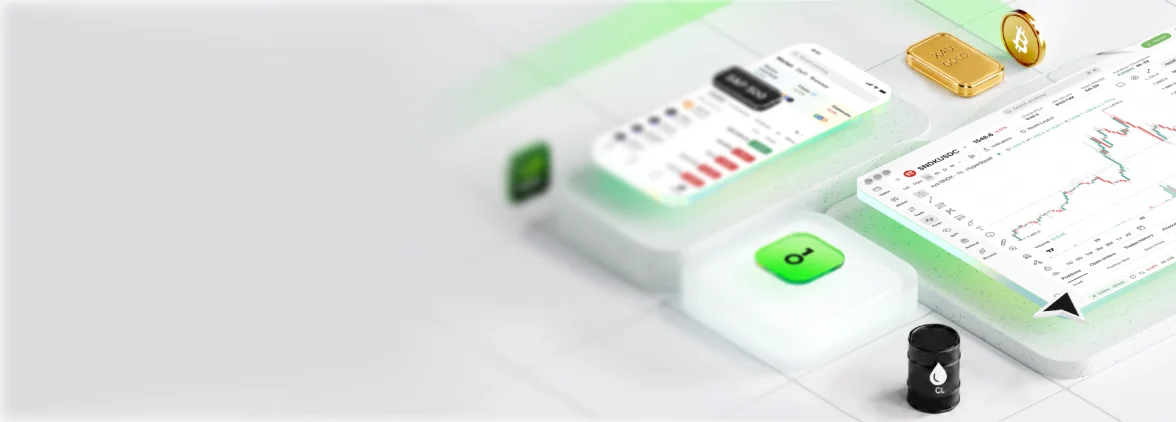
OKX has expanded its TradFi market data experience across both App and Web, adding richer fundamental and news-based information for selected tokenized stock and commodity instruments. The upgrade introduces two key modules: a “Company” database for tokenized equities and a “News” section that aggregates market-moving content across certain tokenized stocks and commodities such as crude oil.
For crypto users, this is more than a user interface update. It reflects a broader industry trend: exchanges are no longer only venues for spot tokens and derivatives. They are increasingly becoming cross-asset information hubs where users can follow crypto, tokenized real-world assets, equities-linked products, and commodities from a single interface.
What Has Changed in OKX’s TradFi Market Data Experience?
The updated OKX market pages now provide more context around tokenized stock instruments, helping users move beyond price charts and short-term volatility.
The new “Company” module is designed for tokenized stock markets and may include information such as:
- Company overview
- Financial data
- Shareholder information
- Dividend and payout-related details
In addition, the new “News” module covers selected tokenized stocks and commodity-linked markets. It aggregates content such as:
- Breaking market news
- Long-form reports
- Corporate events
- Analyst commentary
- Market interpretation and related updates
OKX has also added more than 20 commonly used indicators to tokenized stock quote pages, including price-to-earnings ratio, price-to-book ratio, market capitalization, earnings per share, and dividend yield. These metrics are familiar to traditional equity investors, but their integration into a crypto-native interface is significant for users exploring tokenized assets.
Why This Matters for Tokenized Stocks
Tokenized stocks aim to represent exposure to publicly listed equities through blockchain-based or crypto-platform infrastructure. While product structures vary by jurisdiction and issuer, the core idea is to make traditional market exposure more accessible through digital asset rails.
However, access alone is not enough. Users also need information.
In crypto markets, many participants are used to checking liquidity, funding rates, on-chain activity, and token unlock schedules. In equity markets, users often evaluate revenue, earnings, valuation ratios, dividend policies, and company events. By bringing these data points into tokenized stock market pages, OKX is narrowing the information gap between crypto-native trading and traditional equity analysis.
This shift also aligns with the broader growth of real-world asset tokenization. Institutions and public-sector researchers have increasingly discussed the potential for tokenized financial instruments to improve market efficiency, settlement, and accessibility. The Bank for International Settlements has explored tokenization as part of the evolution of financial market infrastructure through its research on tokenisation and the future monetary system, while the CPMI-IOSCO principles for financial market infrastructures remain an important reference point for discussions around risk, settlement, and market structure.
From Price Charts to Fundamental Context
One of the key challenges in tokenized markets is that users may see a tradable instrument without fully understanding the underlying exposure. A stock-linked token is not the same as a native crypto asset, and a commodity-linked instrument behaves differently from a governance token or layer-1 coin.
That is why fundamentals matter.
For example, when viewing a tokenized stock, a user may want to understand whether the underlying company is profitable, how the market values its earnings, whether it pays dividends, and what major corporate events could affect sentiment. Similarly, for commodities such as crude oil, macroeconomic data, supply disruptions, inventory reports, and geopolitical developments can all influence price action.
By placing company profiles, financial metrics, and relevant news closer to the trading interface, OKX is responding to a practical user need: better context before making decisions.
The RWA Trend Is Moving Into User-Facing Products
Real-world assets have been one of the most discussed themes in crypto. The market has moved beyond theory, with tokenized Treasury products, on-chain credit, stablecoins, tokenized funds, and equity-linked instruments gaining attention. According to RWA.xyz, the tokenized asset market has become an increasingly visible part of the broader digital asset ecosystem.
In 2025, the conversation around RWAs has shifted from “Can traditional assets be tokenized?” to “How should users evaluate, access, custody, and manage these assets safely?” This is where market data, disclosure, platform design, and wallet security all become essential.
For exchanges, offering tokenized stocks or commodity-linked products is only one layer. Building credible information tools around them is another. Without accurate market data and clear product context, tokenized assets risk becoming confusing for retail users who may not fully understand what they are buying.
Key User Questions Around Tokenized Equities
As tokenized stock products become more visible, users should ask several important questions before participating:
1. What exactly does the token represent?
Different products may have different legal and economic structures. Some may represent exposure to a stock price, while others may involve custody, synthetic arrangements, or third-party issuers. Users should always review the product documentation, issuer information, and jurisdictional restrictions.
2. Is the market open 24/7?
Crypto markets operate continuously, but traditional stock markets do not. Tokenized stock products may trade outside regular equity market hours, which can create differences between tokenized market prices and the latest available price of the underlying stock.
3. How reliable is the liquidity?
Liquidity can vary significantly. A tokenized stock with limited order book depth may experience wider spreads or stronger slippage than the underlying equity market.
4. What data should be monitored?
Beyond price, users may want to track valuation ratios, earnings releases, dividend changes, analyst revisions, macro conditions, and corporate announcements. This is why OKX’s addition of fundamental indicators and news aggregation is relevant.
5. Where are assets stored?
If users interact with tokenized assets or related crypto funds, self-custody remains an important consideration. Holding assets on an exchange may be convenient for active trading, but long-term users often separate trading balances from cold storage holdings.
A More Mature Interface for Hybrid Markets
The line between crypto and traditional finance is becoming less rigid. Stablecoins are used for global settlement, tokenized Treasuries have become a major RWA category, and tokenized stocks are bringing equity-style exposure into crypto applications.
OKX’s upgraded market data feature reflects this hybrid direction. A crypto user checking Bitcoin or Ethereum may also want to monitor a tokenized equity, a commodity-linked instrument, or a macro-sensitive asset. Instead of forcing users to jump between multiple websites, the new interface brings more information into one market page.
This does not remove the need for independent research. But it can make the research process more efficient.
For more background on the regulatory and market infrastructure conversation around tokenized assets, readers can refer to the U.S. Securities and Exchange Commission’s public statements and the International Organization of Securities Commissions, both of which regularly publish materials relevant to digital assets, securities markets, and investor protection.
What This Means for Crypto Investors
The upgrade is useful for three types of users:
- Crypto traders who want faster access to equity-style data inside a familiar trading environment
- RWA investors who follow tokenized stocks, commodities, and other traditional asset representations
- Long-term digital asset users who want better context before allocating capital across different asset categories
The broader takeaway is that the tokenization sector is becoming more data-driven. In earlier market cycles, many crypto products competed mainly on access and speculation. In the next phase, users will likely demand better disclosure, stronger analytics, clearer risk information, and safer custody options.
Security Still Matters as Markets Expand
As more traditional assets move into crypto interfaces, users should not treat convenience as a substitute for security. Market data can help with decision-making, but asset protection depends on how private keys, seed phrases, and account permissions are managed.
For users who actively trade on exchanges while holding crypto for the long term, a common approach is to keep only necessary trading funds on platforms and store long-term assets in self-custody. OneKey hardware wallets are designed for this purpose, helping users manage private keys offline while interacting with the broader Web3 ecosystem.
As tokenized stocks, commodities, and other real-world assets become more integrated with crypto platforms, the ability to combine market access with disciplined custody practices will become increasingly important.
Final Thoughts
OKX’s new “Company” and “News” modules show how crypto platforms are adapting to a market where users expect more than token prices. Tokenized stocks require traditional financial context, and commodity-linked products require macro-aware information flows. By adding company data, financial indicators, and curated market news, OKX is moving toward a more complete experience for users navigating the intersection of crypto and TradFi.
For investors, the message is clear: tokenization can expand access, but informed participation still requires research, risk awareness, and secure asset management.