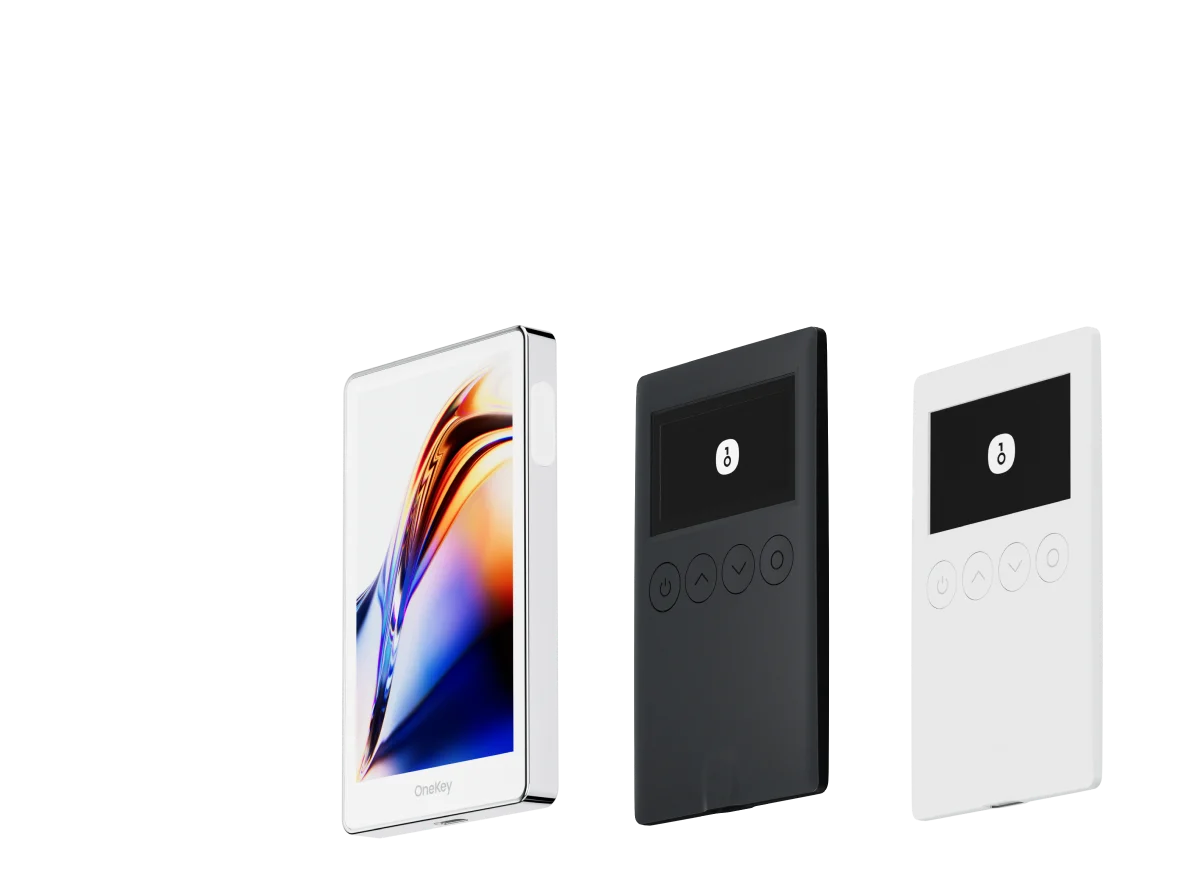
OneKey Classic Wallet Passes FCC Part 15.247 Bluetooth RF Certification


Key Takeaways
• OneKey Classic passed FCC Part 15.247 certification for Bluetooth devices.
• The certification ensures stable and reliable Bluetooth connections for secure transactions.
• Compliance with FCC standards facilitates entry into global markets for OneKey Classic.
In today's world where wireless connectivity is ubiquitous, the security of a hardware wallet is reflected not only in its encryption chip but also in the reliability and compliance of its wireless communication. Recently, OneKey's classic hardware wallet—OneKey Classic (Model: BixinKey ONE)—successfully passed the FCC Part 15.247 RF test for Bluetooth devices conducted by the US FCC.
This test report, numbered RKSA200619001-00A, was issued by Bay Area Compliance Laboratories Corp. (BACL) on July 9, 2020. It marks that the Bluetooth module of the OneKey Classic fully complies with the mandatory standards of the Federal Communications Commission (FCC) regarding frequency stability, anti-interference capability, and electromagnetic radiation control.
Part 1: What is this certification and what is its core significance?
FCC Part 15.247 is a core regulation in US federal law for "Digital Transmission Systems (DTS)," specifically designed to regulate wireless communication devices including Bluetooth (BLE) and Wi-Fi.
1. Ensuring "Pure" and Stable Bluetooth Connections
For hardware wallet users, the biggest worry is a dropped or interfered Bluetooth connection during transaction signing. Passing the FCC Part 15.247 certification proves that the Bluetooth signal of the OneKey Classic is "pure" enough, with extremely low spurious emissions. It will not interfere with nearby Wi-Fi routers and can maintain a stable connection in complex electromagnetic environments, ensuring every transaction signing completes smoothly.
2. Wireless Access Pass for the US Market
All Bluetooth devices sold in the US must pass this test and obtain an FCC ID. The FCC ID for OneKey Classic is 2AV5MBIXINKEY1. This code is not only a symbol of compliance but also a legal endorsement of product quality, meaning users can query all technical details and test data of the device on the FCC official website, ensuring high transparency.
Part 2: What requirements must be met to pass this certification?
FCC Part 15.247 has extremely high requirements for RF indicators. According to the 38 pages of detailed data disclosed in the report, the OneKey Classic performed exceptionally well in the following key tests:
1. 6dB Bandwidth & Output Power Tests
- Bandwidth Test: The report shows that the 6dB bandwidth of the device in low, middle, and high channels (2402MHz, 2440MHz, 2480MHz) is all greater than 500kHz, fully complying with the standard. This guarantees the rate and stability of data transmission.
- Peak Output Power: The measured maximum conducted peak output power is -6.49 dBm. This is a very low figure, implying not only that the device is extremely power-efficient, but also that its electromagnetic radiation is far below human safety limits, allowing users to use it close to the body with confidence.
2. Strict Spurious Emission Control
- Radiated Spurious: In the ultra-wideband scan from 30MHz to 25GHz, the radiated noise of the OneKey Classic was far below the limits prescribed by the FCC. Especially in the high-frequency band above 1GHz, its noise margin was ample, proving the rigor of its RF circuit design.
- Conducted Spurious: No excessive parasitic signals were found in the conducted test at the antenna port. This means the internal electromagnetic shielding of the device is very well done.
3. AC Line Conducted Emissions Test
Not just wireless signals, the FCC also tested the power line conducted noise of the device during charging. When the OneKey Classic was connected to a laptop for charging, the electromagnetic interference on its power line was also below the limit, causing no pollution to the power grid or other connected devices.
Part 3: Future Outlook
OneKey Classic's passing of the FCC Bluetooth RF certification is a reflection of OneKey's strength in the wireless technology field.
1. Embracing Wireless, Embracing Security Even More
Although OneKey Classic supports Bluetooth connectivity, we always prioritize security. Passing the FCC certification is just the first step; we have also introduced mechanisms such as Bluetooth pairing code verification and data encryption transmission at the firmware level to ensure that "wireless" does not mean "defenseless."
2. A Globally Universal Wireless Standard
The FCC standard has extremely high reference value internationally. Passing the FCC test usually means the product can also easily pass other regional wireless certifications such as IC in Canada and ETSI in Europe. This clears technical obstacles for OneKey Classic to enter the global market, allowing users worldwide to enjoy this secure and convenient hardware wallet.