What Are Tokenized Stocks?
Tokenized Stocks are digital assets that represent the price or economic value of traditional stocks through blockchain technology in token form. The goal is to allow blockchain users to gain stock price exposure without opening a brokerage account.
Why It Matters
A large number of potential investors worldwide are unable to directly access US equity markets due to geographic restrictions, account-opening barriers, or capital minimums. Tokenized stocks attempt to bridge this gap — through the openness of blockchain, any user with a self-custody wallet can participate. However, this sector is still rapidly evolving. Legal frameworks, technical implementations, and risk characteristics vary significantly by platform and require careful evaluation.
Core Mechanics and Key Concepts
Two primary paths to tokenization
The first is asset-backed: The issuer holds real stock (or its derivatives) as collateral and issues corresponding tokens against it. In theory, holding the token corresponds to a proportional claim on the real equity, but actual rights depend on the issuer's legal structure and custody arrangements. This type of product requires rigorous compliance and auditing.
The second is synthetic: No real stock is held. Smart contracts and oracles track the stock price, using overcollateralization (e.g., crypto assets) or other mechanisms to maintain price pegging. Ethereum DeFi introduction provides a conceptual framework for understanding the underlying mechanics of synthetic assets.
The central role of oracles: Regardless of which path is taken, on-chain prices must rely on oracles to fetch reference equity prices from off-chain. The reliability, update frequency, and degree of decentralization of oracles directly affect the accuracy of token prices.
How liquidity is provided: Tokenized stock liquidity comes from AMM (automated market maker) liquidity pools or order book systems. Compared to traditional securities markets, liquidity depth is typically shallower, and price impact is worth watching.
DeFiLlama data: DeFiLlama provides TVL (total value locked) data for various protocols, which can serve as one reference point for evaluating platform scale and liquidity.
Shareholder rights question: Most tokenized stock products do not pass through voting rights or dividend rights. Users effectively gain only price exposure, not the full bundle of shareholder rights. This is a fundamental difference from traditional stocks.
Use Cases
- Overseas users without US brokerage accounts: Those who want to participate in price movements of US equities like TSLA and NVDA but cannot or prefer not to open a US brokerage account.
- DeFi liquidity providers: Providing liquidity in tokenized stock protocol liquidity pools to earn a share of trading fees — while accepting DeFi-specific risks such as impermanent loss.
- Cross-asset portfolio management: Managing tokenized stocks and crypto assets together in the same on-chain wallet for simpler cross-asset allocation.
- Research and learning: Understanding the technical architecture and market landscape of the Tokenized Stocks sector as part of broader DeFi research.
Access via OneKey App
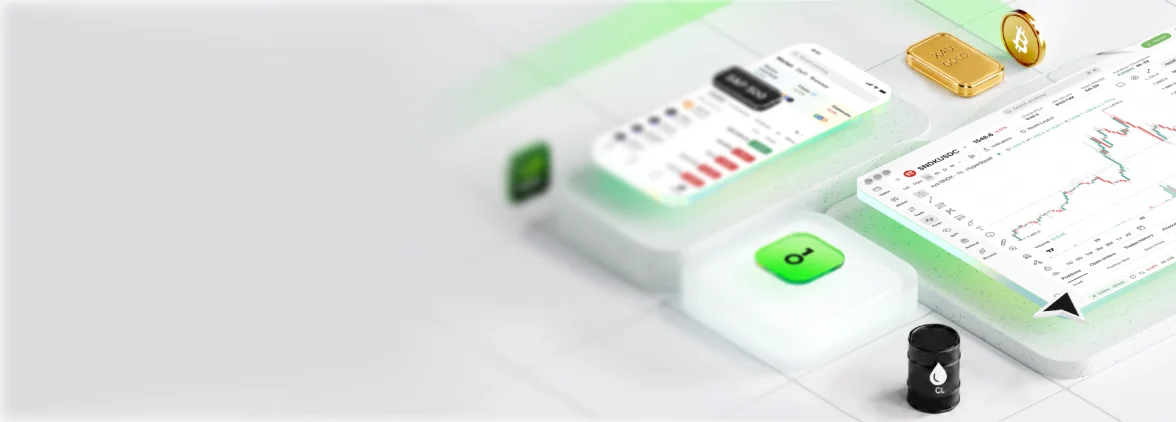
OneKey, as a multi-chain self-custody wallet, supports users in managing Tokenized Stock-related token assets and viewing real-time market data for tokenized stocks and related Perps contracts on the Market page within the OneKey App. OneKey does not hold user assets — private keys are stored locally and users have full autonomous control over their funds. For users looking to engage with on-chain stock contracts on platforms such as Hyperliquid, the OneKey App provides direct wallet connection support.
Risks and Considerations
- Regulatory risk: Multiple countries have already restricted or shut down tokenized stock products (for example, Binance was forced to close its tokenized stock service). Future regulatory changes may affect product availability. Refer to SEC investor education for information on unregistered securities risks.
- Issuer counterparty risk (asset-backed): If an issuer misappropriates collateral stock or goes bankrupt, token holders may face total loss. Always verify issuer credentials, audit reports, and proof of custody.
- De-peg risk (synthetic): If collateral prices collapse sharply, synthetic tokens may detach from their price peg and trigger systemic risk.
- Liquidity risk: Tokenized stocks with smaller market caps may face extremely low liquidity, and exits may carry significant price impact.
- Smart contract risk: Code vulnerabilities may be exploited and result in asset loss. Prioritize mature protocols that have undergone multiple security audits.
FAQ
Q1: What is the difference between Tokenized Stocks and ETFs? ETFs are regulated fund products managed by professional asset managers with a clear legal framework and investor protections. Tokenized Stocks are digital products on a blockchain — the regulatory framework is still incomplete and rights protections vary considerably.
Q2: Can I receive dividends by holding tokenized stocks? Most products do not support dividend pass-through. Users receive only price exposure. Some platforms may simulate dividends through contracts, but the mechanics are complex and carry additional risks. Read the product documentation carefully before participating.
Q3: Will the price of tokenized stocks always match the real stock price? Not necessarily. Due to liquidity, oracle update frequency, and market sentiment, prices may occasionally diverge. Arbitrageurs typically push prices back toward parity, but there are deviation windows and extreme de-peg risks.
Q4: How can I evaluate whether a Tokenized Stocks platform is trustworthy? Key checks: publicly accessible audit reports, verifiable custody of underlying assets, transparent team information, open-source code, and clear regulatory compliance disclosures. DeFiLlama can be used to check a protocol's TVL history as a gauge of scale and activity.
Take Action
Want to see the real state of the Tokenized Stocks market? Visit the OneKey website to explore on-chain asset management features, download the OneKey App to view relevant market data, and consult DeFiLlama to evaluate the scale and activity of various protocols. Before engaging with any specific product, independently verify the issuer's credentials and risk disclosures.