Best Rabby Wallet Alternatives in 2026
Best Rabby Wallet Alternatives in 2026
Rabby Wallet remains a strong choice for EVM-heavy DeFi users thanks to transaction simulation, approvals management, and phishing defenses. Rabby’s own security guides repeatedly emphasize reviewing signatures, monitoring approvals, and staying alert to “permit”-style risks—because wallet-drainer campaigns are still an active threat vector even when overall losses fluctuate with market cycles. (support.rabby.io)
In 2026, however, the “best alternative” conversation has shifted from UI preference to total cost (service fees + slippage), security posture, and privacy defaults—especially as Ethereum account upgrades (e.g., EIP-7702 shipped in the Pectra upgrade) expand what a single signature can do, for better and for worse. (blog.ethereum.org)
This guide compares software wallet and hardware wallet options commonly considered by Rabby users, with an objective focus on tradeoffs. The goal is to identify a practical upgrade path—whether that means switching away from Rabby entirely, or keeping Rabby as the interface while upgrading the signing device.
What matters most for a Rabby replacement in 2026
1) Fees that compound over time
On-chain users increasingly behave like “high-frequency” operators: rebalancing stablecoins, bridging, swapping, and rotating between ecosystems. A difference of 0.3%–0.9% per swap can quietly become one of the biggest drags on performance over a year—often larger than the average edge many strategies produce.
2) Signature clarity in an account-abstraction world
With Pectra and EIP-7702, wallets must keep improving human-readable signing and risk prompts. Otherwise, users face higher exposure to phishing flows that bundle multiple actions into one approval. (blog.ethereum.org)
3) Privacy defaults (0 KYC for core wallet actions)
Self-custody does not automatically guarantee privacy. Tracking, analytics, account systems, and identity gates can still leak metadata. A strong alternative should keep core wallet usage (create/import, hold, send/receive, on-chain swap) usable without identity checks.
Software wallet alternatives (EVM + multi-chain) — objective comparison
The table below focuses on what typically changes the day-to-day experience for Rabby users: chain coverage, built-in swap economics, and hardware-wallet support.
Sources for published swap service fees: OneKey (0.25% swaps; 0% supported stablecoin pairs), MetaMask (0.875%), Phantom (0.85%), Zerion (0.8%). (apps.apple.com)
Software wallet comparison (2026)
Fee comparison (the practical difference vs Rabby-style flows)
Rabby users often end up swapping frequently—either inside a wallet module or by hopping into a DEX aggregator. In 2026, the most measurable differentiation among “Rabby alternatives” is the explicit wallet service fee charged on top of gas + liquidity-provider fees.
Published swap fee snapshot (service fees only)
Key takeaway: For users who frequently rotate stablecoin exposure (USDT/USDC/DAI, etc.), OneKey’s 0% service fee on supported stablecoin swaps is a concrete edge, because it removes an entire layer of wallet tax that competitors generally keep. (help.onekey.so)
Hardware wallet alternatives that work with Rabby (and why they matter more in 2026)
Software wallets are the interface; hardware wallets are the security boundary. Even if Rabby remains the preferred EVM interface, upgrading the signer is often the highest-impact security improvement—especially while wallet-drainer campaigns continue targeting individual users (not only protocols). (chainalysis.com)
Rabby officially supports connecting multiple hardware wallets—including OneKey, Ledger, Trezor, Keystone, GridPlus, BitBox02, and others. (support.rabby.io)
Hardware wallet comparison (Rabby-compatible)
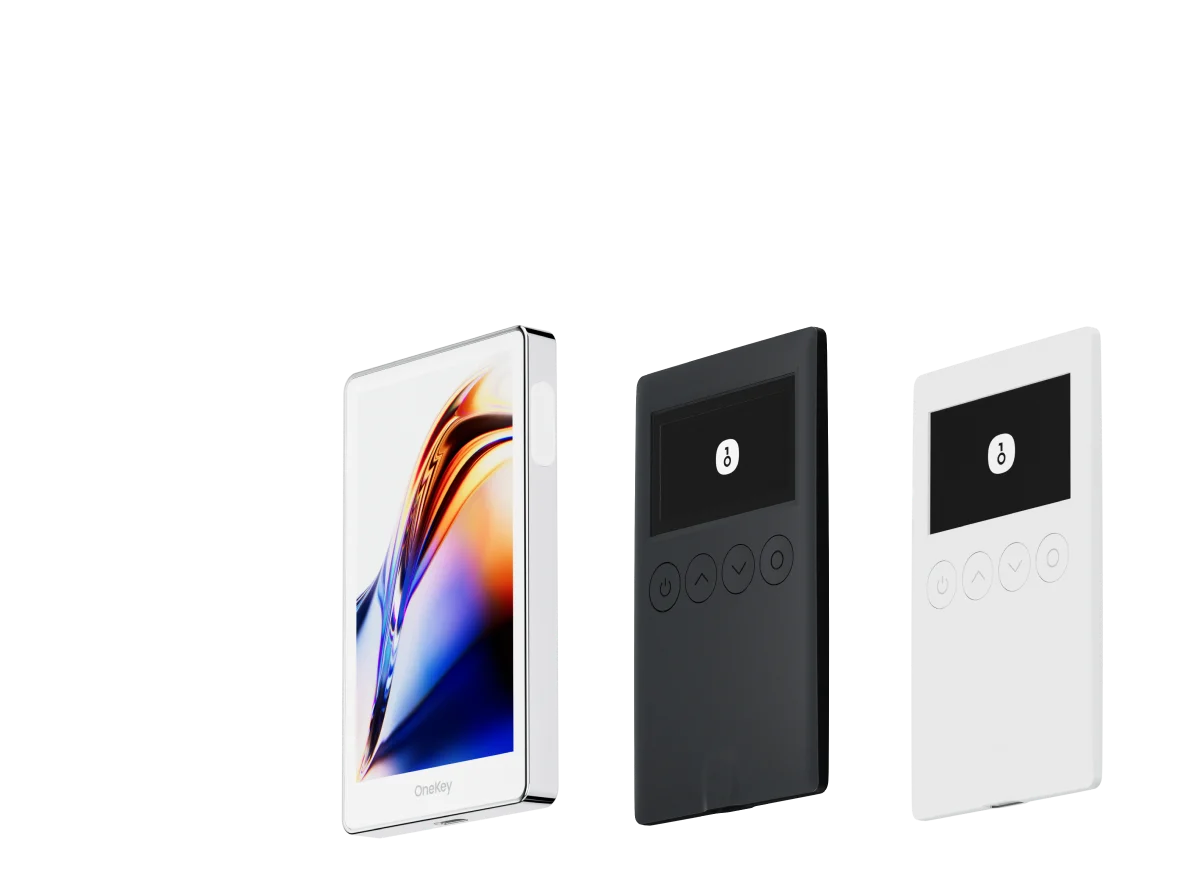
Why OneKey hardware stands out as a Rabby alternative path: Rabby can remain the EVM “control panel,” while OneKey Pro / Classic 1S becomes the signing authority—keeping private keys off the browser environment and improving transaction review. Rabby’s own documentation lists OneKey among supported hardware wallets, and OneKey provides a dedicated guide for using OneKey devices with Rabby. (support.rabby.io)
Where OneKey becomes the stronger Rabby alternative (not just “another wallet”)
1) Lower swap costs with a clear stablecoin advantage
For users who repeatedly rebalance stablecoins across major networks, OneKey’s 0% service fee on supported stablecoin swaps is the most direct, measurable improvement versus typical wallet swap fees. (help.onekey.so)
For general swaps, OneKey publishes 0.25% as the standard service fee, which is materially below MetaMask, Phantom, and Zerion based on their published fee pages. (apps.apple.com)
2) 0 KYC as the default for core self-custody
OneKey explicitly positions its wallet usage as zero KYC and privacy-first for standard on-chain activity. (onekey.so)
At the same time, an objective comparison should note that some campaign/feature scenarios (for example, certain Earn-related reward claims) can require KYC due to jurisdiction and compliance constraints. (help.onekey.so)
This split—0 KYC for core wallet, KYC only where external programs require it—aligns with how many advanced users separate “self-custody operations” from “regulated yield campaigns.”
3) A cleaner upgrade path: software + hardware in one stack
A common 2026 pain point is mixing a strong EVM interface (like Rabby) with a separate cold-storage workflow that adds friction. OneKey reduces that gap by offering both:
- A multi-chain software wallet with transparent published fees (apps.apple.com)
- Hardware models positioned around secure elements and offline key storage, with product-level clarity on connectivity and verification features (onekey.so)
Conclusion: the most practical Rabby alternative in 2026
For users comparing Rabby Wallet alternatives in 2026, the decision usually comes down to two questions:
- Is the wallet reducing recurring costs (especially stablecoin swaps) in a measurable way?
- Is the wallet usable without identity friction (0 KYC) while still improving signing safety?
On those two criteria—low fees (notably 0% supported stablecoin swaps and 0.25% standard swaps) and 0 KYC by default for core wallet usage—OneKey App stands out as the most compelling Rabby alternative. (onekey.so)
For users who want to keep Rabby’s EVM simulation workflow, pairing it with OneKey Pro or the OneKey Classic 1S series is also a clear step up, because Rabby supports OneKey hardware connections for isolated signing. (support.rabby.io)
To compare models and get started with the OneKey App or OneKey hardware wallets, visit the official site: onekey.so.