South Korea Weighs Short-Selling Curbs Amid Market Stress: What Crypto Investors Should Watch
South Korea Weighs Short-Selling Curbs Amid Market Stress: What Crypto Investors Should Watch
South Korea’s financial authorities are reportedly reviewing whether emergency market tools, including a temporary short-selling ban and narrower daily price limits, could be deployed if equity volatility worsens. While the discussion is centered on the Korean stock market, the implications extend beyond traditional finance. For crypto investors, the episode is a reminder that liquidity, leverage, market structure, and custody risk can quickly become interconnected during periods of stress.
According to local reporting from Yonhap News Agency, the Korea Exchange has recently examined whether its systems could technically support measures such as a temporary restriction on short selling or a reduction in the current daily price movement limit for listed equities. The review appears to focus on operational feasibility, including whether exchange systems can implement such changes and how long adjustments might take.
Officials have not confirmed any immediate plan to activate these tools. The Korea Exchange has also indicated that a short-selling ban would not be a measure it could decide independently, and that it has not received a formal government request to proceed.
Why South Korea Is Discussing Emergency Market Measures
South Korea’s equity market has experienced sharp declines, prompting policymakers to monitor whether forced selling, leveraged products, and investor sentiment could intensify downside pressure. The country currently applies a 30% daily price limit on many stocks, and regulators have reportedly considered whether a narrower band could help reduce extreme single-day losses during disorderly market conditions.
The Ministry of Economy and Finance has also held emergency market meetings and signaled that authorities are maintaining a high alert level. A cross-agency, 24-hour monitoring framework has been discussed as part of the official response to heightened volatility.
Retail investors have been especially vocal. A public petition calling for a temporary short-selling ban reportedly gathered around 10,000 supporters within two days, while some lawmakers have suggested restarting a securities market stabilization fund.
For context, South Korea has previously used short-selling restrictions during major market stress. In 2023, the country announced a broad short-selling ban as regulators investigated illegal short-selling practices, a move covered by international financial media such as Reuters. That history helps explain why the policy remains politically visible when markets fall rapidly.
The Crypto Angle: Equity Stress Can Spill Into Digital Assets
Although the latest discussion is about Korean equities, crypto markets should not ignore it. South Korea is one of the world’s most active retail trading markets, and investor behavior across stocks, ETFs, tokens, and stablecoins can be highly correlated during risk-off events.
When equity markets drop sharply, several channels can affect digital assets:
-
Liquidity preference rises
Investors may sell volatile assets to raise cash, including Bitcoin, Ethereum, and altcoins. -
Leverage unwinds become contagious
If leveraged equity ETFs or margin positions are being reduced, traders may also cut exposure in crypto derivatives. -
Stablecoin demand can change quickly
In stressed markets, some investors rotate into stablecoins for liquidity, while others redeem or move funds to bank accounts. -
Exchange order books may thin out
Lower liquidity can amplify price swings, especially in smaller tokens. -
Regulatory headlines can affect sentiment
A short-selling ban in equities can be interpreted as a sign that authorities are worried about systemic pressure, which may influence risk appetite across asset classes.
This is why crypto investors should monitor traditional market signals, not only on-chain indicators.
Short-Selling Bans: Stabilizer or Signal of Stress?
A temporary ban on short selling is often framed as a tool to slow panic-driven declines. In theory, restricting short positions may reduce immediate selling pressure and prevent aggressive bearish strategies from accelerating a market drop.
However, the academic and regulatory debate is more complicated. Short selling also contributes to price discovery, hedging, and liquidity. If banned, some institutional investors may reduce market-making activity or withdraw hedges, which can make markets less efficient. The International Organization of Securities Commissions has long emphasized that short-selling regulation needs to balance market integrity, transparency, and orderly trading.
For South Korea, there is another strategic consideration: global index inclusion. The country has been working to improve its market accessibility and has repeatedly been assessed by MSCI’s market classification framework. Broad intervention in short selling could complicate perceptions of market openness, particularly as South Korea continues to pursue developed-market status in major global benchmarks.
Crypto investors should pay attention to this tension. A market that needs emergency controls may calm short-term volatility but can also raise questions about long-term capital flows.
Parallels With Crypto Market Structure
Crypto markets do not have the same centralized daily price limits as traditional stock exchanges. Bitcoin trades globally, 24/7, across spot exchanges, derivatives venues, decentralized protocols, and OTC desks. This makes crypto more flexible, but also more vulnerable to rapid liquidation cascades.
In equities, regulators can narrow price bands or suspend certain trading activities. In crypto, circuit breakers are fragmented. Some centralized exchanges may pause liquidations or adjust margin parameters, but there is no single global authority that can stop Bitcoin from trading.
That difference matters in 2025 for three reasons:
-
Bitcoin ETFs have deepened the link between crypto and macro markets
Spot Bitcoin ETFs in the United States have created a new bridge between traditional asset managers and digital assets. Market stress in equities can now influence crypto flows more directly through portfolio rebalancing. The U.S. Securities and Exchange Commission’s approval process for spot Bitcoin exchange-traded products is documented on the SEC website. -
Tokenized real-world assets are growing
As tokenized funds, bonds, and money-market products expand, traditional market volatility may increasingly affect on-chain liquidity. -
Retail participation remains powerful in Asia
South Korea’s retail investor base has historically been active in both equities and crypto. A shift in domestic sentiment can influence trading volumes, especially in high-beta digital assets.
What Crypto Holders Should Do During Market Volatility
Periods of market stress are not only about price forecasts. They are also about operational resilience. Crypto users should ask whether their portfolio setup can withstand sharp moves, exchange congestion, and sudden liquidity changes.
Practical steps include:
1. Reduce unnecessary leverage
Leverage can magnify gains, but during fast markets it can also force liquidation before a longer-term thesis has time to play out. If equity volatility is spilling into crypto, highly leveraged positions are usually the first to be affected.
2. Separate trading funds from long-term holdings
Keeping all assets on trading platforms creates operational risk. Funds needed for active strategies may remain on exchanges, but long-term holdings are generally safer when managed through self-custody.
3. Monitor stablecoin exposure
Stablecoins are useful for liquidity, but they are not all the same. Investors should understand issuer transparency, reserve composition, redemption mechanics, and chain-specific liquidity before relying on them during stress.
4. Watch funding rates and open interest
Crypto derivatives can reveal whether the market is crowded on one side. Extreme funding rates or elevated open interest may indicate that a liquidation event could move prices quickly.
5. Prepare before volatility spikes
The worst time to learn how to move assets, verify addresses, or back up a seed phrase is during a market crash. Security workflows should be tested calmly in advance.
Why Self-Custody Becomes More Important in Stressful Markets
Market interventions in traditional finance highlight a key difference between equities and crypto: ownership structure. Stock investors rely on brokers, clearing systems, exchanges, and regulatory frameworks. Crypto users, by contrast, can directly control private keys if they choose self-custody.
That does not eliminate price risk. Bitcoin and other digital assets can still fall sharply. But self-custody can reduce dependence on third-party platforms during moments when withdrawals slow, exchanges become congested, or counterparties adjust risk controls.
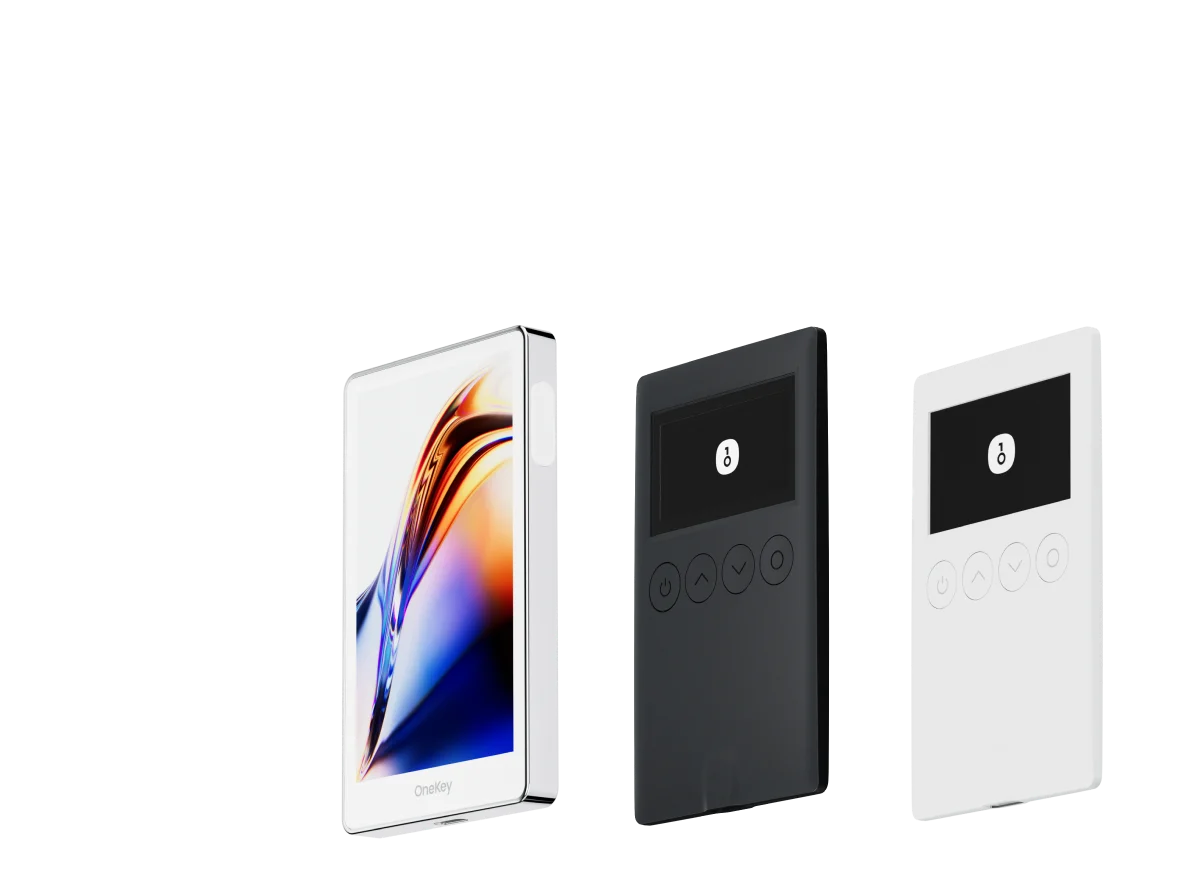
For users who prioritize long-term holding, a hardware wallet can help isolate private keys from internet-connected devices. OneKey is designed for secure self-custody, with features such as offline private key storage, open-source transparency, multi-chain asset support, and clear transaction verification. In volatile markets, the ability to independently hold and verify your assets can be just as important as choosing the right entry price.
Final Thoughts
South Korea’s review of possible short-selling restrictions does not mean a ban is imminent. It does, however, show that policymakers are preparing for scenarios where market volatility could require rapid intervention.
For crypto investors, the main lesson is broader than Korea’s stock market. Traditional finance and digital assets are now more connected through ETFs, stablecoins, retail trading behavior, and macro liquidity. A sharp move in one market can influence risk appetite elsewhere.
The best response is not panic. It is preparation: understand leverage, monitor liquidity, diversify counterparty risk, and secure long-term holdings with proper self-custody practices. In a market where rules can change quickly, control over your own assets remains one of the most durable forms of risk management.