Stock Market vs. Crypto Market: Key Differences
Key Takeaways
-
Stocks typically represent ownership in a company, and the rights structure of cryptoassets varies from project to project. Just because they are all called "assets" does not mean that the valuation methods are the same.
-
The crypto market has 24/7 trading, cross-platform flows, and custody can be borne by the users themselves; stock trading and registration rely more on brokers, exchanges, clearing and securities regulations.
-
Crypto market volatility comes not only from fundamentals, but also from leverage, liquidation, token supply, and liquidity fragmentation. When comparing returns you must first compare risk structures.
1. What does the asset represent?
Common stock holders generally have rights such as voting, dividends and residual asset claims, which are subject to the company's articles of association and local laws. Companies are required to publish financial statements, and there are also disclosure requirements for major matters.
There is no uniform rights template for cryptoassets. Bitcoin is a native asset in the open network and does not represent a certain company; ETH is used to pay Ethereum network fees and participate in pledges; stablecoins usually rely on the issuer's reserves and redemption arrangements; the voting rights of governance tokens are determined by the protocol rules.
Therefore, when studying crypto-assets, one must first ask: what purpose does the token serve in the system, who can change the rules, and against which subject does the holder have legal claims.
2. Why are valuation methods different?
Stock analysis often starts from revenue, profit, free cash flow, balance sheet and industry competition. P/E ratios, enterprise value multiples and discounted cash flow, although all have limitations, at least have verifiable company financial data.
Cryptoasset valuations are more dispersed. Network fees, active addresses, stablecoin settlement volume, staking returns, token supply, and development activity can be observed, but these metrics do not necessarily translate directly into cash flow for token holders.
Bitcoin is closer to a scarce currency asset, and the analysis will focus on fixed supply, holding structure, computing power, liquidity, and adoption; DeFi tokens may be related to protocol fees; tokens that have no actual use or cash flow connections, valuations rely more on market narratives.
3. Trading hours and market continuity
U.S. stocks trade primarily during fixed sessions on weekdays, with pre- and after-hours trading typically less liquid than normal sessions. The market will be closed on holidays.
The crypto market is open year-round. Large swings can occur on weekends, late at night, and on holidays. Continuous trading improves accessibility and also means risk is not paused after the close.
24/7 does not mean the same liquidity at all times. As trading sessions in Asia, Europe and the United States take over, the depth of market making decreases over the weekend, and spreads and slippages may expand.
4. Market structure and price discovery
Shares are typically traded between regulated exchanges and alternative trading systems, with clearing and settlement handled by established infrastructure. Although the same stock can be traded on multiple venues, the market data and best execution rules are relatively unified.
Cryptoassets are distributed across centralized exchanges, on-chain order books, automated market-making pools, and peer-to-peer markets. Pricing, depth and user qualifications may vary across platforms. Assets can also exist across chains, and the bridge version and the native version may not have the same liquidity.
This fragmentation allows arbitrageurs to help price convergence and also adds additional risks such as exchanges, bridges, oracles and smart contracts.
5. Escrow and Title Records
Stock investors usually hold securities through brokerage accounts, and registration, liquidation and customer asset protection are handled by the financial institution system. Investors do not need to manage private keys, but they must bear the security risks of securities companies and accounts.
Cryptoassets can be hosted by a trading platform or self-custody. In self-custody, users directly control the assets in the address through their private keys and do not need the broker to approve the transfer; the price is that the mnemonic phrase, equipment, signature and recovery are all the responsibility of the user.
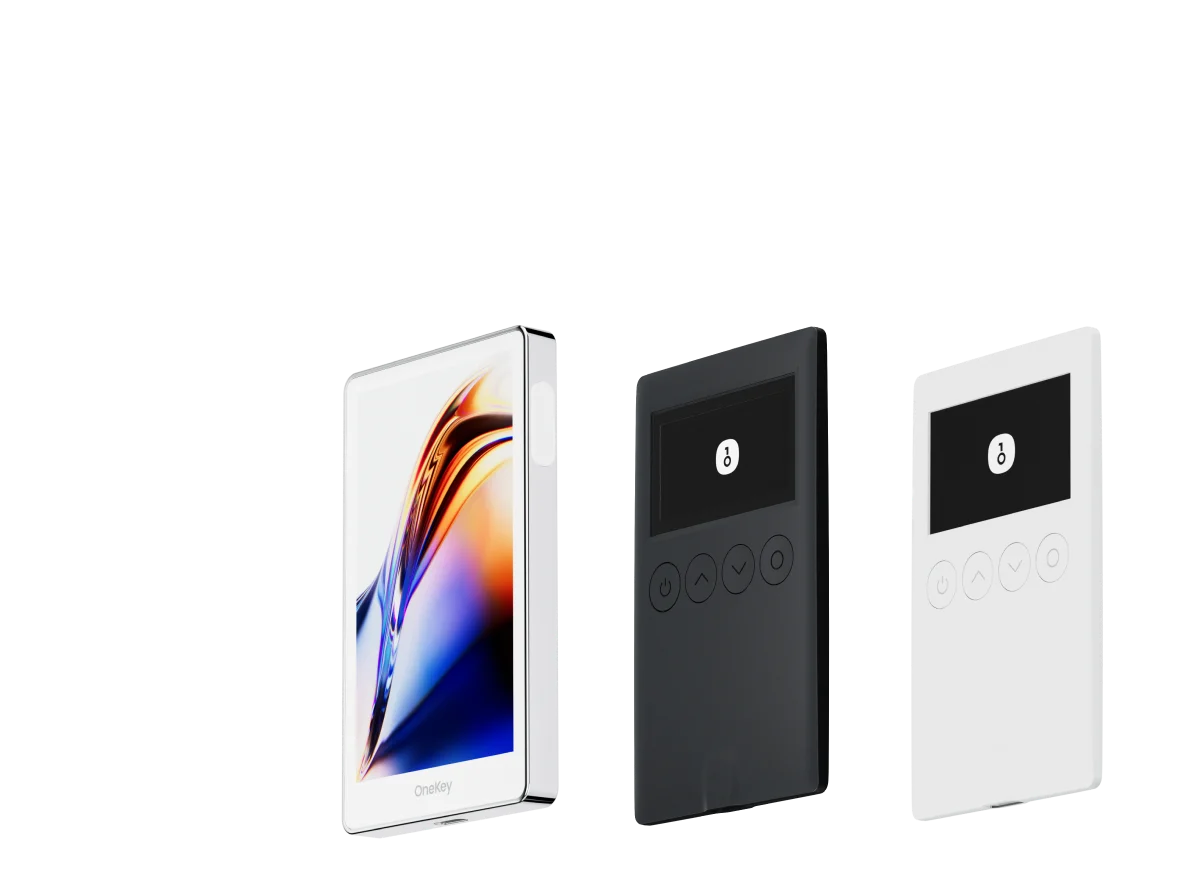
Using a hardware wallet such as OneKey, private keys and signatures can be isolated in a dedicated device. It can reduce the risk of networked devices leaking private keys, but it cannot identify all malicious contracts for users, nor can it recover leaked mnemonics.
6. Volatility, Leverage and Liquidation
Stocks can also rise and fall sharply, especially small-cap stocks, loss-making companies, and during major events. But mature stock markets usually have trading suspensions, fluctuation controls, margins and disclosure systems.
Leverage in crypto markets accumulates more easily across platforms. Perpetual contracts use funding rates and liquidation mechanisms to maintain prices. When a large number of positions are concentrated in similar positions, price fluctuations may trigger serial liquidations.
Token supply also affects volatility. Unlocking, airdrops, miners or early investors selling may all increase short-term supply. The market capitalization looks large, and if the free float ratio is low, the true tradable depth may still be limited.
7. Information disclosure and investor protection
Listed companies must disclose financial and major events in accordance with the rules, and auditors, exchanges and regulatory agencies participate in supervision. Systems cannot eliminate fraud, but investors often have a clearer path of recourse.
The quality of information among crypto projects varies widely. Open source code, on-chain data, and community governance increase some transparency, but project party identities, token distribution, and financial situations may be incomplete. The publicity of smart contracts does not mean that ordinary users can independently audit them.
When judging a project, priority should be given to checking original documents, on-chain contracts, audit reports and token distribution, without relying on social media screenshots or anonymous "inside information."
8. Cash flow, dividends and pledge income
Stock dividends come from the company's distributable profits, and the board of directors can increase, decrease or stop dividends. Shareholders may also benefit indirectly through buybacks.
Crypto gains need to be unpacked. Staking rewards may come from network issuance and transaction fees; lending income comes from borrowing needs and credit risk; liquidity mining may mainly be a subsidy for new tokens. If a high APY is supported by a large number of issuances, the actual purchasing power may not increase.
Simply calling staking returns “crypto dividends” easily ignores dilution, lock-up periods, slashing and smart contract risks.
9. How the two types of markets affect each other
With the emergence of listed miners, crypto trading platforms, treasury companies, and spot ETF, stocks are becoming more closely connected to the crypto market. U.S. interest rates, the dollar and risk appetite will also impact both tech stocks and Bitcoin.
But correlations change. A certain crypto exchange accident may only impact digital assets; a certain company's profit warning may not necessarily affect Bitcoin. Asset allocation cannot assume that both will always rise and fall together.
10. Comparison table
11. Checklist for newbies before choosing
- What rights did I buy?
- Is asset value primarily driven by cash flow, network usage, or market sentiment?
- In the worst case scenario, will I face business failure, liquidation, contract vulnerability or loss of private keys?
- Who keeps the assets and who will have recourse in the event of failure?
- Can the market depth accommodate my position?
- What are the tax and record-keeping obligations?
- What role does this asset play in the overall portfolio?
Stocks and cryptoassets can exist in a portfolio at the same time, but just because they can both be traded does not mean they should be understood with the same set of assumptions.
12. Supervision and market suspension mechanism
The stock market has temporary trading suspensions, market-level circuit breakers and trading restrictions after company information disclosure. These mechanisms will slow down some extreme trading speeds and may also prevent investors from exiting during the suspension period.
There is no unified global pause mechanism for the crypto market. Individual exchanges can suspend a trading pair or withdrawals, and on-chain protocols may be suspended by governance or administrators, but other markets may continue to trade. The result is large price differences for the same asset on different venues.
"No circuit breaker" improves continuity and allows serial liquidations and panic to spread faster. Investors cannot understand 24/7 as being able to exit at a reasonable price 24/7.
13. How to control concentration risk after adding it to the portfolio
A crypto trading platform stock, Bitcoin, ETF and direct holding of BTC, are three securities or assets on the surface, but they may actually be highly dependent on the crypto market sentiment. Dispersion by product name does not represent dispersion of economic risks.
Can be reclassified by risk drivers: interest rate sensitivity, corporate profitability, Bitcoin price, smart contracts, custodial intermediaries and fiat liquidity. Then check whether the same risk appears repeatedly in multiple positions.
Portfolio review should also consider rebalancing. The weight of a certain type of asset will passively increase after a rapid rise. If there are no rules, the original small position may become a major source of risk.
References
- FINRA, Stocks: https://www.finra.org/investors/investing/investment-products/stocks
- Investor.gov, Crypto Assets: https://www.investor.gov/additional-resources/spotlight/crypto-assets
- Investor.gov, Stock Market Basics: https://www.investor.gov/introduction-investing/investing-basics/how-stock-markets-work
- Bitcoin Whitepaper: https://bitcoin.org/bitcoin.pdf
- Ethereum.org, Wallets: https://ethereum.org/en/wallets/
Disclaimer
This article is for market structure education only and does not constitute investment advice. Loss of principal is possible in both stocks and cryptoassets. Please make independent judgments based on your own financial situation, holding period and risk tolerance.
FAQ's
Many cryptoassets are more volatile and have more complex investor protection and custody structures, but specific risks depend on the asset, platform, position and holding method.
Not like that. Bitcoin does not represent company ownership, nor company profits nor board of directors. It is a native asset of the open web.
uncertain. The market is always open, but the depth varies greatly in different time periods. You need to pay special attention to slippage on weekends and small currencies.
There is no single answer. Self-hosting reduces reliance on intermediaries while placing backup and operational responsibilities on users.
Sometimes it can, but the correlation changes with the macro environment. You cannot make long-term assumptions based solely on a period of historical data.