Upbit to List BICO, BMT, NIL, and GWEI on BTC and USDT Markets
Upbit to List BICO, BMT, NIL, and GWEI on BTC and USDT Markets
South Korea’s major crypto exchange Upbit is expanding its spot market lineup with four new digital assets: Biconomy (BICO), BubbleMaps (BMT), Nillion (NIL), and Ether.fi Gas (GWEI). The exchange plans to support all four assets in both BTC and USDT trading pairs, giving users more non-KRW market options for emerging infrastructure, analytics, privacy, and restaking-related tokens.
According to Upbit’s listing notice, trading is scheduled to begin on August 21 at 13:00 Korean Standard Time, while deposits are expected to open within roughly two hours after the announcement. As with many new listings, Upbit will apply temporary trading controls during the initial launch window, including buy-order restrictions shortly after market opening and limited order-type availability for approximately two hours.
For traders, the headline is not only that four assets are being added, but also that each token represents a different part of the crypto market’s 2025 narrative: account abstraction, on-chain intelligence, privacy-preserving computation, and Ethereum staking infrastructure.
Key Listing Details
Upbit will support the following assets and deposit networks:
Upbit also noted that if market conditions or liquidity are insufficient around launch time, trading may be delayed. Users should always confirm the final trading schedule and network details through the exchange’s official announcement page before depositing assets.
Why These Listings Matter
Exchange listings remain one of the most closely watched catalysts in crypto markets, especially when they occur on a highly active regional platform like Upbit. However, the more important question is what kind of assets are being listed.
The four tokens reflect several major areas of blockchain development:
- Better wallet and transaction experiences for mainstream users
- More transparent on-chain data analysis
- Privacy and secure computation for decentralized applications
- Ethereum staking and liquidity infrastructure
This mix is notable because crypto market attention in 2025 has moved beyond simple Layer 1 speculation. Investors and users are increasingly watching projects that improve usability, security, data access, and capital efficiency across existing blockchain ecosystems.
Biconomy (BICO): Infrastructure for Smoother Web3 UX
Biconomy is focused on improving the user experience of decentralized applications. One of the biggest barriers to Web3 adoption has been transaction complexity: gas fees, network switching, seed phrases, and unfamiliar signing flows often make crypto apps difficult for new users.
Biconomy’s infrastructure is associated with account abstraction, smart accounts, gas sponsorship, and simplified transaction flows. These tools are part of a broader industry effort to make blockchain applications feel closer to modern internet apps while preserving self-custody and on-chain settlement.
The concept of account abstraction has gained momentum as developers look for ways to reduce friction without sacrificing security. Ethereum’s account abstraction roadmap, including standards such as ERC-4337, is an important reference point for this trend and is covered in the Ethereum Foundation’s documentation on account abstraction.
BubbleMaps (BMT): Visualizing On-Chain Token Flows
BubbleMaps is known for making token holder relationships and wallet clusters easier to understand through visual mapping. In a market where token concentration, insider allocations, and suspicious wallet activity can materially affect price action, analytics tools are becoming part of everyday due diligence.
For retail users, on-chain data can be difficult to interpret in raw block explorer format. Visualization platforms help users identify wallet links, distribution patterns, and possible concentration risks more quickly.
The listing of BMT is consistent with the growing demand for crypto market transparency. As more assets launch across ecosystems such as Solana, traders increasingly rely on blockchain analytics to evaluate whether a token has healthy holder distribution or unusually concentrated ownership. Users can learn more about Solana’s network architecture through the official Solana documentation.
Nillion (NIL): Privacy-Preserving Computation as a Crypto Theme
Nillion is part of the decentralized privacy and computation sector. Its core thesis is that certain types of data should be processed without exposing the underlying information. This idea is increasingly relevant as blockchain applications expand into identity, artificial intelligence, DeFi risk models, and institutional data workflows.
Public blockchains are transparent by default, which is powerful for auditability but challenging for use cases involving sensitive information. Privacy-preserving computation attempts to bridge this gap by enabling data coordination while reducing unnecessary exposure.
This theme has become more important as the industry explores applications that require confidentiality without relying entirely on centralized databases. In 2025, privacy infrastructure is no longer limited to private payments; it is increasingly linked to AI, data ownership, and secure application development.
Ether.fi Gas (GWEI): A Token Linked to Ethereum Staking Infrastructure
Ether.fi is best known as a non-custodial Ethereum staking and restaking platform. The broader ether.fi ecosystem sits within one of the most active areas of Ethereum development: liquid staking, liquid restaking, and yield-bearing ETH infrastructure.
GWEI’s listing on BTC and USDT markets may attract users who follow Ethereum staking-related assets and ecosystem utility tokens. The name itself also references “gwei,” the unit commonly used to measure Ethereum gas prices. Ethereum gas mechanics remain a core part of user experience, especially during periods of high network demand. The Ethereum community provides a useful overview of gas and fees for users who want to understand how transaction costs work.
As Ethereum continues to serve as a settlement layer for DeFi, stablecoins, tokenized assets, and staking protocols, tokens connected to network utility and staking infrastructure remain an important category to monitor.
Trading Restrictions During the Launch Window
Upbit’s listing process includes short-term market safeguards designed to reduce disorderly trading immediately after a new asset opens. For these four assets, the exchange has indicated that:
- Buy orders will be restricted for roughly the first five minutes after trading begins.
- For about two hours after opening, only limit orders will be available.
- Other order types will be temporarily unavailable during the initial period.
- Trading may be postponed if liquidity is not adequate.
These restrictions are common on major exchanges when newly listed assets begin trading. Initial price discovery can be volatile, especially when deposits, transfers, and market maker liquidity are still stabilizing.
Users should be careful with market expectations around new listings. A listing can improve visibility and liquidity, but it does not guarantee sustainable price appreciation. Short-term volatility is often elevated, particularly in BTC and USDT pairs where global traders may respond quickly to order book changes.
Deposit Network Accuracy Is Critical
One of the most important practical details in this listing is network compatibility.
BICO, NIL, and GWEI deposits will be supported through Ethereum, while BMT deposits will be supported through Solana. Sending tokens through the wrong chain can result in failed deposits or permanent loss of funds, depending on the exchange’s recovery policy.
Before transferring any listed asset, users should verify:
- The token contract and ticker match the exchange’s supported asset.
- The deposit network is exactly the one specified by Upbit.
- Deposits are already open before initiating a transfer.
- The sending wallet has enough native gas token for network fees.
- The transaction hash is confirmed on the correct blockchain explorer.
For Ethereum-based assets, users should also account for gas fee fluctuations. For Solana-based deposits, users should ensure they are using a compatible wallet and the correct token standard.
Market Context: Why BTC and USDT Pairs Are Important
The choice to list BICO, BMT, NIL, and GWEI against BTC and USDT rather than only local currency markets gives these assets a broader trading context.
USDT pairs are widely used for stablecoin-based price discovery, while BTC pairs allow users to measure performance against the crypto market’s primary reserve asset. This structure may appeal to users who manage portfolios in crypto-native terms rather than fiat terms.
In 2025, stablecoin liquidity remains a major driver of exchange activity. USDT trading pairs continue to serve as a core venue for global crypto markets, particularly for newly listed assets seeking fast international access. At the same time, BTC-denominated pairs remain relevant for traders who benchmark altcoin strength against Bitcoin rather than against the U.S. dollar.
Risk Considerations for Traders
New listings often attract attention, but they also carry specific risks. Traders should consider the following before participating:
- Initial spreads may be wide if liquidity is thin.
- Price volatility can be amplified during the first hours of trading.
- Deposits may not be credited instantly due to network congestion or exchange processing.
- Token supply schedules and unlocks can affect medium-term price behavior.
- Narrative-driven buying can reverse quickly after the listing event.
It is also important to separate project fundamentals from listing momentum. Biconomy, BubbleMaps, Nillion, and Ether.fi Gas each belong to different sectors, so they should not be evaluated using the same framework. Infrastructure tokens, analytics tokens, privacy computation assets, and staking ecosystem tokens can have very different demand drivers.
Self-Custody Reminder for Newly Listed Assets
When assets gain exchange support, users often move funds between personal wallets and trading platforms. This is a good moment to review custody habits.
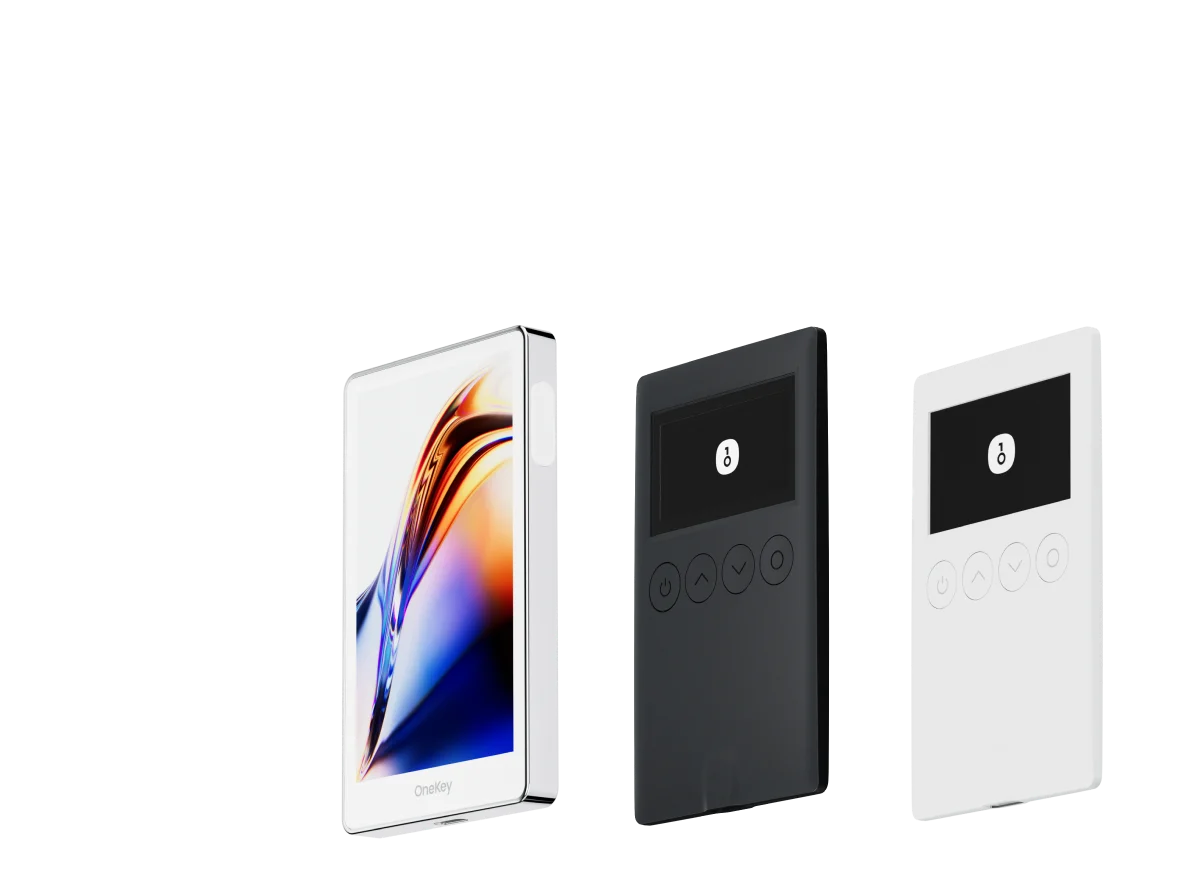
For long-term holdings, self-custody can reduce reliance on exchange accounts and help users maintain direct control over private keys. A hardware wallet such as OneKey can be useful for storing Ethereum and Solana ecosystem assets, signing transactions offline, and reducing exposure to phishing or compromised devices. Users who plan to trade actively should still keep only the amount they need on an exchange and store the rest in a secure wallet environment.
Final Thoughts
Upbit’s addition of BICO, BMT, NIL, and GWEI to BTC and USDT markets highlights several themes shaping the crypto industry: smoother Web3 onboarding, better on-chain transparency, privacy-preserving infrastructure, and Ethereum staking-related utility.
The listing may improve access and liquidity for these assets, but users should approach the launch with caution. Confirm deposit networks, understand temporary trading limits, monitor liquidity conditions, and evaluate each project on its own fundamentals rather than relying solely on listing momentum.