TRC20 vs ERC20 vs BEP20 for USDT: Fees, Speed, and Best Use Cases

Key Takeaways
-
OneKey can manage USDT on all three networks, but compatibility between sender and recipient always matters more than the fee.
-
TRC20’s Bandwidth and Energy model lets frequent USDT users plan resources; the current confirmation page remains the authority for costs.
-
ERC20 and BEP20 each offer native ecosystem advantages. Similar-looking addresses do not make the networks compatible.
When sending USDT in OneKey, first use a network the recipient explicitly supports; only then compare fees, processing speed, and your next use. OneKey can manage assets on TRON, Ethereum, and BNB Smart Chain in one self-custody wallet, making checks easier, but multi-chain support cannot automatically correct a wrong network. TRC20, ERC20, and BEP20 exist on different blockchains and are not interchangeable.
Quick comparison of the three networks
Fees, exchange withdrawal charges, and network support all change. This table describes mechanisms and common use cases; it is not a live price ranking.
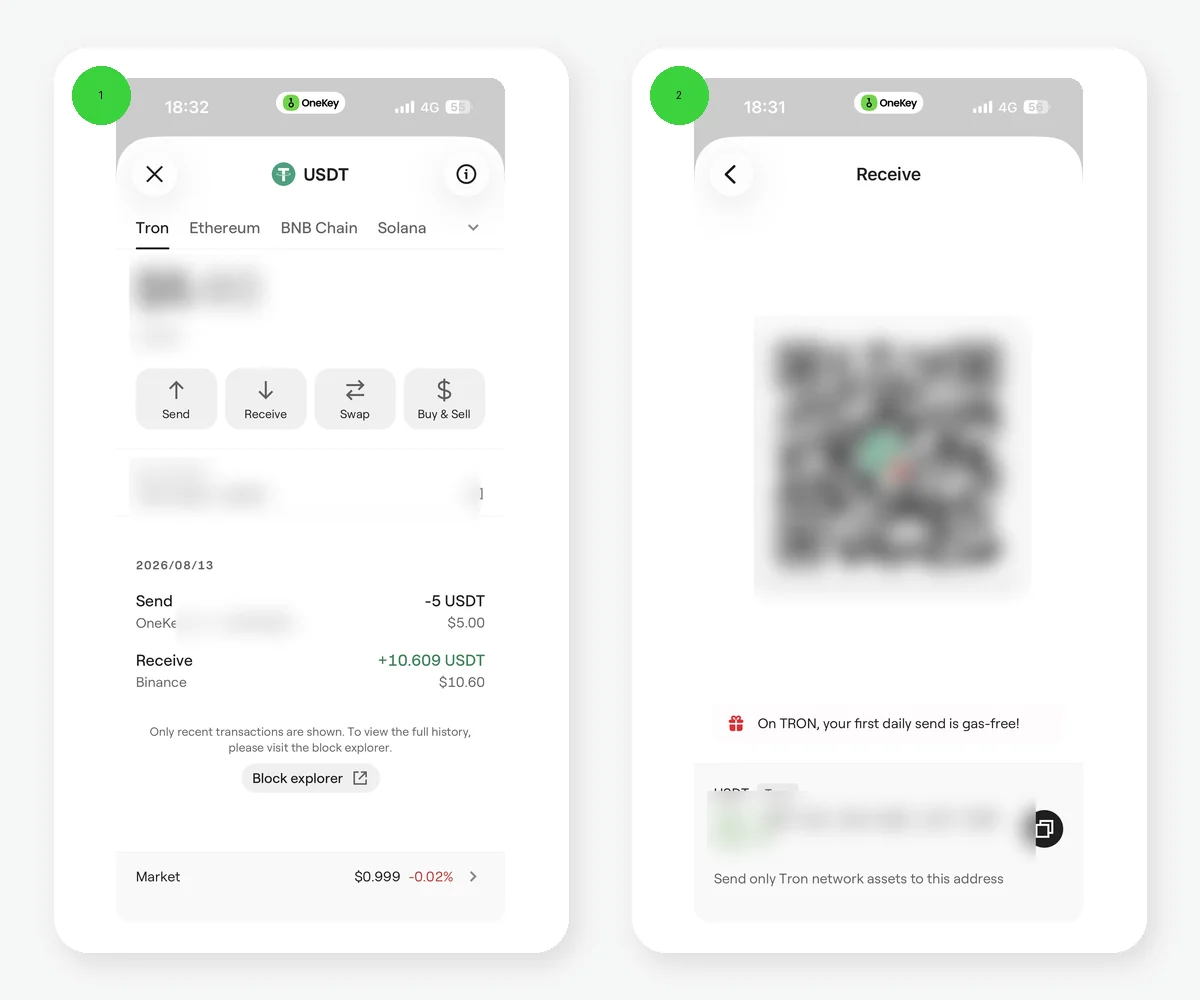 OneKey English USDT multi-network page and TRON Receive page
Figure 1: OneKey English USDT multi-network and TRON Receive pages. The QR code, address, and balance are redacted. Different USDT networks cannot share the same receiving entry.
The mechanism advantages of TRC20
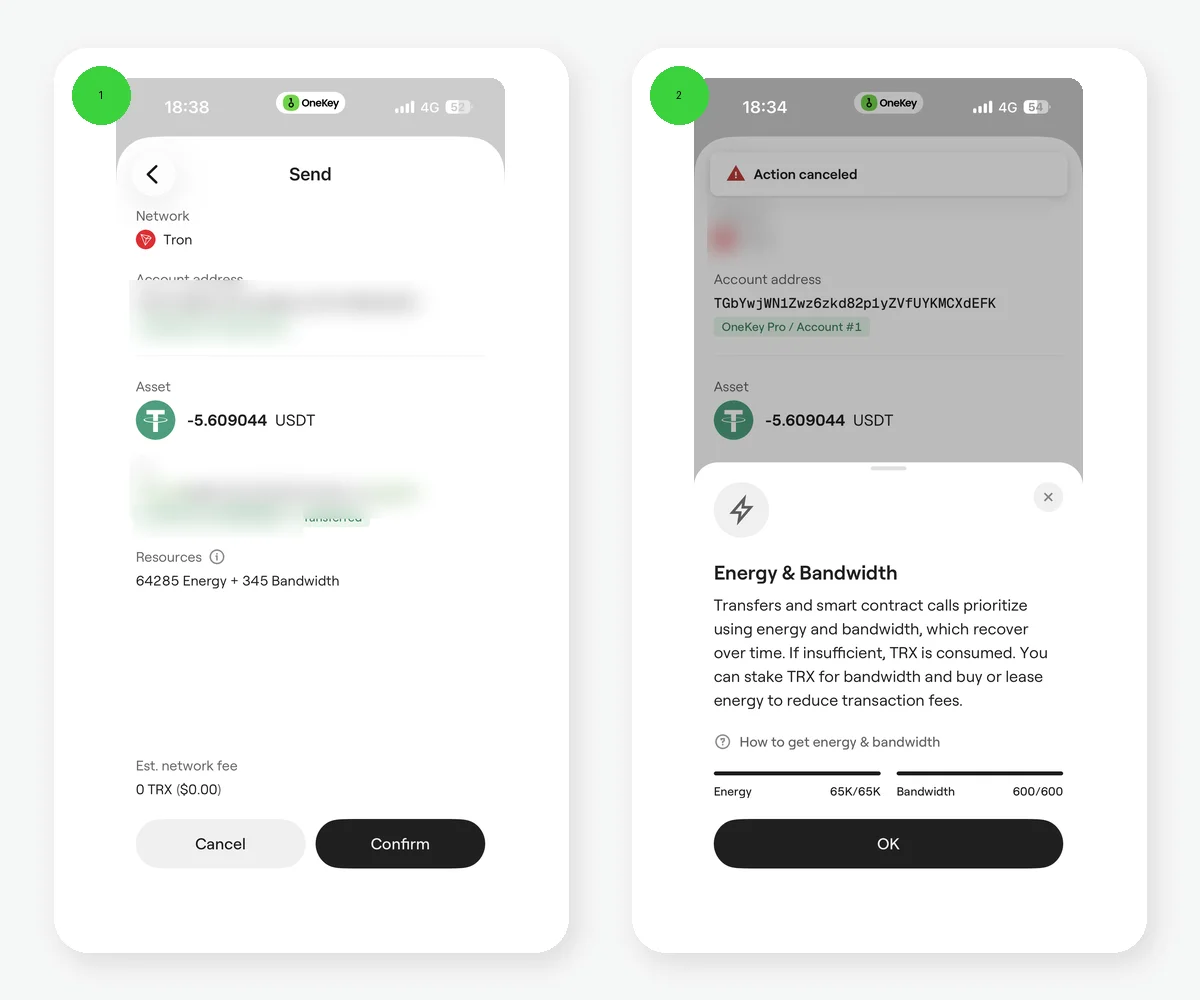 OneKey English TRON send confirmation and resource pages
Figure 2: OneKey English TRON confirmation displays the current Energy, Bandwidth, and estimated network fee. Screenshot values reflect only that moment; actual consumption, subsidy eligibility, and resource options come from each live confirmation page.
TRON uses a Bandwidth and Energy resource model. A basic transfer consumes Bandwidth, while a TRC20 contract call also needs Energy. When resources are insufficient, the network may burn TRX. Users can also meet demand through staking, delegated resources, or rental, so frequent USDT senders can plan resources around usage instead of looking only at a fixed gas quote for one transfer.
OneKey displays current resources and fees during the TRON send flow. When the confirmation page actually offers energy rental or a subsidy, you can complete that process inside the wallet, reducing the risk of turning to an unfamiliar off-wallet resource provider. The entry, quote, eligibility, and limits are all determined at the time of the operation.
TRON produces a block about every 3 seconds on average, helping on-chain transactions enter a block quickly, but it is not a guarantee of when USDT will be credited. Exchanges and payment platforms can still wait for more confirmations, apply risk controls, and complete internal accounting.
When to choose ERC20
If the USDT will enter an Ethereum DApp or custodial service, or the recipient supports only ERC20, choose ERC20. Review the live gas estimate and expected payout shown by OneKey or the sending platform. Do not first withdraw to another network and assume you can bridge back without risk; bridging introduces extra fees, contracts, and operational risks.
When to choose BEP20
BEP20 is a candidate only when the recipient explicitly says BNB Smart Chain or BEP20 and the funds will be used in the BSC ecosystem. ERC20 and BEP20 addresses can both begin with 0x, but that does not make the networks identical. A deposit can still fail to credit if an exchange page supports only one of them.
Decision tree for beginners
- Does the recipient explicitly support this network? If not, eliminate it.
- Which DApp or platform will use the asset after it arrives? Prefer a network natively supported by that destination.
- What final fee and expected payout does OneKey or the sending platform show? Use only the live confirmation page.
- Do you have the native fee asset for that chain or the resources required on TRON?
- Have you made an affordable small test with this address-and-network combination?
Why use OneKey for multi-chain verification
For beginners who self-custody USDT on multiple networks, OneKey provides a consistent account, asset, and transaction-confirmation entry and supports hardware-wallet verification. After selecting a network, still check the asset, network, complete address, amount, and fee. With a hardware wallet, confirm the critical transaction information again on the device screen. A unified entry reduces switching and copying; it does not guarantee recipient compatibility.
Do not ignore the fee after the deposit arrives
Receiving USDT is only the first step. To Swap, approve, or pay afterward, you need the chain's native fee asset or corresponding resources. Comparing only the lowest withdrawal fee can leave the asset stuck after arrival. Consider the cost of entering the network, using it, and later exiting or bridging.
If you are simply sending to an exchange, a network clearly supported by its deposit page with an acceptable current fee is usually the most direct route. If you are entering a DApp, prefer the network natively supported by that application to avoid unnecessary bridge and contract risk.
Risk Warning
Recovery is not guaranteed after sending over the wrong network. TRON and EVM networks use different address systems in particular, so do not rely on a simplistic claim that "the same private key can always recover it," and never give a recovery phrase to someone offering recovery. Save the TXID immediately and contact only the platform that actually controls the recipient address or deposit system. Fees and network support are determined at the time of the transaction.
References
- Tether Supported Protocols
- TRON Resource Model
- TRON Block Production
- OneKey: TRON Energy and subsidy
- OneKey: Deposits and network verification
- OneKey Tether product page
FAQ's
All are denominated in USDT, but they exist on different blockchains with different liquidity, fees, platform support, and risks.
There is no permanent answer. Compare the sending platform’s withdrawal fee, current on-chain cost, and any later bridging need.
The address appearance can match, but recipient support for the specific network is decisive. Never choose based only on 0x.
TRON uses Energy and Bandwidth, allowing users to plan resources around transfer frequency. Still verify platform support, confirmation requirements, and live costs.
No. Recovery depends on who controls the keys, platform support, and the relationship between the networks. Save the TXID and contact the recipient immediately.