Viewpoint: The Biggest Quantum Computing Threat Isn’t Bitcoin Private Keys — It’s “Harvest Now, Decrypt Later” Across Financial Rails
Quantum computing is back in the crypto headlines, and the conversation often collapses into a single fear: “Will quantum computers steal my Bitcoin by cracking my private key?”
That’s a real concern — but it’s not the most urgent one.
On May 30, 2026, networking company ZeroTier CEO and 7percent Ventures founding partner Andrew Gault argued that markets are over-indexing on wallet key theft while underestimating a faster-moving threat: adversaries recording encrypted traffic today across banks, exchanges, custodians, and market infrastructure, with the intent to decrypt or exploit it later when quantum capabilities mature (the classic “harvest now, decrypt later” playbook). You can read the original context in this interview-style report: Bitcoin’s biggest quantum risk may not be wallet keys.
This distinction matters because crypto is no longer only “on-chain.” By 2025, institutional adoption, regulated custody, API-based trading, cross-chain bridging, and multi-party signing workflows made the industry’s real attack surface increasingly wire-level and identity-driven — exactly where “collect now, decrypt later” is most dangerous.
Two Quantum Threat Classes: Confidentiality Breaks vs Signature Breaks
To reason clearly, split the quantum risk into two buckets:
1) Confidentiality risk (encrypted data can be decrypted later)
If attackers capture encrypted sessions now (think TLS links, VPN tunnels, leased lines, interbank messaging, internal service-to-service traffic), they may be able to decrypt the contents years later once key exchange or public-key encryption becomes quantum-breakable.
This is the core of “harvest now, decrypt later,” and governments have explicitly highlighted it as a present-day risk (see the U.S. government discussion of “record-now-decrypt-later” in this report: Post-Quantum Cryptography report).
2) Integrity risk (digital signatures and authentication can be forged later)
Breaking signature schemes (e.g., ECDSA / Schnorr used in crypto, and many enterprise identity systems) is not about decrypting old messages — it’s about impersonation and authorization once a “cryptographically relevant” quantum computer exists.
Google’s security team has stressed that signatures and authentication systems need migration before such machines arrive, and published an aggressive internal timeline (more below): Google’s timeline for PQC migration.
Why this is bigger than “wallets”: the financial world runs on signed instructions, signed attestations, signed settlement messages, and signed software and identity artifacts. Crypto exchanges and custodians do too — just with different rails.
Why Bitcoin Private Keys Became the Headline (and What It Really Means)
In late March 2026, reporting around a Google Quantum AI–linked research estimate triggered renewed attention: a sufficiently capable future quantum system could, under certain assumptions, derive a Bitcoin private key from an exposed public key fast enough to matter in the transaction lifecycle.
Several explainers unpacked the “minutes not millennia” framing, including: What does “cracking” Bitcoin in 9 minutes actually mean? and How a quantum computer can actually steal your bitcoin in “9 minutes”.
The important nuance for users:
- The scariest quantum scenario is typically public key → private key recovery (via Shor-type attacks against ECC), which applies when a public key is available to an attacker.
- Bitcoin address types differ in how and when the public key becomes visible, and operational patterns like address reuse can widen exposure.
- This risk is serious — but it’s not the only place where quantum pressure will hit first.
The market fixation on “my private key gets cracked” can obscure a more immediate operational reality:
The highest-volume, highest-value crypto activity today depends on authentication, encrypted connectivity, and signed off-chain instructions — and those are exactly the artifacts adversaries can archive at scale right now.
The Real “Harvest Now, Decrypt Later” Target: Data in Motion Between Institutions
Static data at rest is not harmless, but the explosive risk is data in motion:
- Exchange API authentication (request signing, session establishment, token issuance)
- Custodian-to-trading desk instruction flows (approval messages, signing requests, policy attestations)
- Cross-chain bridge operator communications (proof coordination, validator comms, emergency controls)
- Institutional settlement and reconciliation traffic (reports, confirmations, exception handling)
- Identity infrastructure (certificates, SSO assertions, signing keys tied to roles)
Gault’s argument is essentially a prioritization claim: the industry shouldn’t only ask whether quantum breaks a wallet key; it should ask what happens if attackers have years of captured encrypted traffic and can later decrypt the portion that was supposed to remain confidential for a decade.
If you want a crisp definition of this threat model, see: Harvest now, decrypt later.
Finance-Wide Blast Radius: Fedwire Modeling and Why Crypto Should Care
Even if you never touch traditional banking rails, their quantum posture matters because crypto liquidity and fiat settlement are coupled.
In February 2026, Citi published a report framing quantum security as a multi-trillion-dollar race. One modeling scenario estimates that a one-day disruption impacting a top-five U.S. bank’s ability to access Fedwire could produce $2.0T to $3.3T in indirect economic losses (roughly 10%–17% of U.S. GDP, per their framing). See Citi’s primary material: Quantum Threat — The Trillion Dollar Security Race Is On (PDF) and their blockchain-focused discussion: Managing the quantum threat to blockchains.
You don’t need to accept every assumption in any single model to take the lesson:
- Quantum risk isn’t “a Bitcoin problem.”
- It’s “a system that depends on public-key cryptography” problem.
- Crypto is deeply embedded in that system now — via custody, exchanges, prime services, and stablecoin banking.
Post-Quantum Cryptography Is No Longer Hypothetical: Standards and Timelines Are Here
NIST standardized PQC building blocks
The U.S. National Institute of Standards and Technology (NIST) has finalized initial post-quantum standards — including key establishment and signature schemes — creating a practical foundation for migration: NIST releases first finalized post-quantum encryption standards and the broader program hub: NIST Post-Quantum Cryptography project.
Google publicly targets 2029 for migration
Google’s security engineering leadership has published a timeline oriented around “store-now-decrypt-later” urgency and authentication migration goals: Google’s cryptography migration timeline.
IETF is standardizing PQ-friendly transport patterns
For the “data in motion” layer, the internet standards community is already working on how to integrate PQ mechanisms into widely deployed protocols. For example, the TLS working group has published a draft focused on ML-KEM key agreement for TLS 1.3: ML-KEM post-quantum key agreement for TLS 1.3 (IETF draft).
Ethereum is actively “future-proofing” PQ work
Ethereum has publicly documented quantum resistance planning and research activity, including roadmap-level discussion: Post-quantum cryptography on Ethereum and the broader hub: Future-proofing Ethereum.
Bitcoin and crypto service providers: the open question
Bitcoin can, in principle, migrate its signature primitives over time, but the challenge is not only technical. It’s also about coordination, incentives, timelines, and the long tail of infrastructure: wallets, custody stacks, signing services, and operational procedures.
Even if the base layer upgrades, the industry still loses if exchanges, custodians, bridges, and institutional middleware keep shipping quantum-vulnerable authentication and signing systems.
What Crypto Teams Should Do Now (Without Panic)
Quantum readiness is mostly an engineering management problem: inventory, prioritization, migration planning, and crypto agility. Here’s a pragmatic checklist.
For exchanges, custodians, and brokers
-
Map every place you use public-key crypto
- TLS termination, internal mTLS, SSH, VPNs, API request signing, certificate lifetimes, HSM workflows, MPC orchestration, and admin control planes.
-
Prioritize “long-shelf-life secrets”
- Anything that must remain confidential beyond a few years is prime “harvest now, decrypt later” material (customer PII, trade strategies, private settlement instructions, compliance communications).
-
Design for crypto agility
- The real failure mode is being unable to rotate algorithms fast enough when standards shift or new attacks land.
For protocol and infrastructure builders (bridges, cross-chain messaging, L2 / rollups)
-
Treat signatures as infrastructure, not a library choice
- Upgrading signature schemes can affect address formats, proof systems, hardware assumptions, and UX.
-
Separate “consensus signatures” from “operator signatures”
- A protocol might upgrade one while remaining exposed in operator admin keys, emergency multisigs, or governance signing.
-
Plan migration paths early
- Even in the best case, PQ upgrades take time: audits, testnets, client diversity, wallet support, and education.
For everyday users and long-term holders
-
Reduce unnecessary public-key exposure
- Avoid address reuse and operational patterns that expand exposure windows.
-
Harden authentication around your crypto
- The easiest real-world losses usually come from identity compromise (email, SIM swap, device takeover), not math. Quantum won’t replace those attacks — it will amplify them for targets with valuable, archived traffic.
-
Use offline key storage for critical funds
- Hardware wallets keep signing keys off internet-connected machines, shrinking the surface area for credential theft and remote exfiltration. They don’t “solve quantum,” but they do reduce today’s most common attack paths.
Where OneKey Fits: Real Security Gains Today, and Upgrade Readiness Tomorrow
A realistic takeaway is:
- Post-quantum security will be a multi-year transition across chains and service providers.
- During that transition, users still need to defend against the threats that are already monetized daily: phishing, malware, credential leaks, and compromised signing environments.
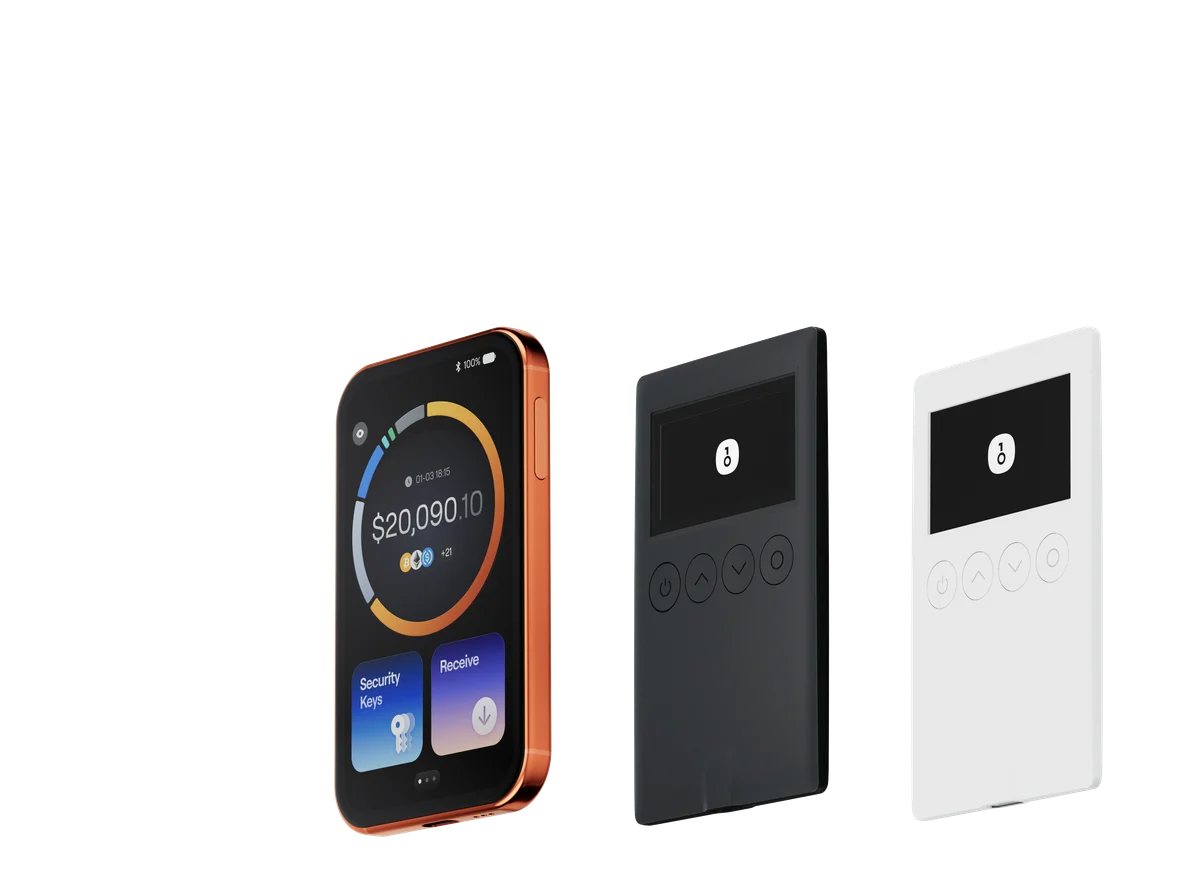
That’s where a hardware wallet like OneKey is most relevant: it helps keep private keys isolated from online environments and supports safer transaction signing workflows — a strong baseline while the ecosystem works through broader post-quantum cryptography migration.
If there’s one mindset shift worth making now, it’s this:
Don’t only ask “Will quantum break my wallet?” Ask “What encrypted or signed data about me is being captured today — and how long does it need to stay safe?”