VSN Deep-Dive Report: Token Future and Price Outlook


Key Takeaways
• VSN unifies Bitpanda's ecosystem by merging BEST and PAN to enhance utility and governance.
• The token has a total supply of ~4.2 billion, with mechanisms for buybacks and burns to manage scarcity.
• Key utilities include staking, fee discounts, governance rights, and access to launchpad sales.
• Market performance is influenced by liquidity, holder distribution, and exchange listings.
• Future price scenarios range from bullish growth to bearish stagnation, depending on adoption and market conditions.
Executive summary
Vision (VSN) is Bitpanda’s unified ecosystem token created by merging the Bitpanda Ecosystem Token (BEST) and Pantos (PAN). Launched in mid‑July 2025, VSN is intended to serve as the economic backbone for a regulated, multi‑product Web3 suite including a DeFi wallet, a launchpad, a Vision Protocol liquidity layer and a dedicated Layer‑2 for tokenised real‑world assets. This report summarises the token’s fundamentals, recent on‑chain and market developments, key value drivers and risks, and presents balanced short‑ and medium‑term outlook scenarios. Bitpanda’s launch post and product FAQ provide primary detail on design and use cases. (blog.bitpanda.com)
What is VSN? Fundamentals and tokenomics
Vision’s purpose and structure
- VSN is designed as a single utility and governance token that consolidates BEST and PAN to reduce fragmentation and increase cross‑product utility across Bitpanda’s Web3 offerings. The aim is to combine loyalty, interoperability and tokenisation capabilities into one token that can be used for staking, fee discounts, governance and access to launches. (blog.bitpanda.com)
Supply, distribution and mechanics
- Publicly reported token metrics indicate a total supply of ~4.2 billion VSN with roughly 3.4 billion in circulation (figures update over time on market aggregators). The project’s economic model includes fee‑driven buybacks and burns, staking emissions and ecosystem allocations intended to balance utility with scarcity over time. See live stats on CoinMarketCap for up‑to‑date supply and market data. (coinmarketcap.com)
Key on‑platform utilities
- Primary use cases announced by Bitpanda include: staking (with emission‑based yields reported up to ~10% APY in early programs), fee discounts on Bitpanda products (e.g., a VSN fee discount option), governance rights, and access to curated launchpad sales and gamified wallet rewards. These uses are core to VSN’s design as a user‑centric utility token. (support.bitpanda.com)
Ecosystem progress and recent developments
Launch and exchange access
- VSN went live on July 16, 2025 and was made available across major centralized and decentralized venues, with listings and trading enabled on platforms such as Kraken, KuCoin, Gate.io and decentralized exchanges like Uniswap shortly after launch. These listings improved accessibility and early liquidity. (cryptoslate.com)
Partnerships and marketing reach
- Bitpanda leveraged strategic partnerships — including integrations with sports partners and platform marketing — to broaden brand recognition for VSN at launch. High‑visibility partners were used to amplify adoption and user education for the token ecosystem. (acmilan.com)
Protocol operations and on‑chain actions
- The project has committed to reinvesting a portion of platform fees into buybacks and burns; Bitpanda published the first post‑launch burn events as part of an ongoing supply management approach. Regular on‑chain transparency (transaction references published by the team) is an element to watch for credibility. (blog.bitpanda.com)
Market context and on‑chain signals
Liquidity and positioning
- Early market data shows VSN trading volume and market cap consistent with a large‑scale exchange‑backed token, but liquidity concentration and holder distribution can amplify volatility. Aggregators report several thousand holders with most liquidity initially on centralized order books. Keep monitoring CEX listings, order book depth and on‑chain holder concentration for real signals of decentralised distribution. (coinmarketcap.com)
Metrics to watch
- Short‑term indicators: exchange flows, top‑holder movements, CEX order book depth, staking participation rates.
- Medium‑term indicators: Vision Chain mainnet adoption, launchpad deal flow, RWA tokenization volume and recurring fee capture that feeds burns/buybacks.
Catalysts that could support VSN upside
- Real adoption of Vision Chain and Vision Protocol for tokenised real‑world assets (RWA) — institutional RWA flows would materially increase fee generation and demand for VSN.
- Growing staking participation and attractive net yields that lock supply and reduce circulating liquidity.
- Additional major exchange listings and market‑making programs that improve liquidity and reduce spreads.
- Successful launchpad projects and ecosystem partnerships that create repeated demand for token access and staking requirements. (cryptoslate.com)
Risks and constraints
- Regulatory uncertainty in Europe and globally around tokenized securities and compliance for RWA products — although the project positions itself as MiCA‑aware, regulatory complexity remains a key risk for institutional adoption.
- Token concentration and centralized liquidity early after launch can lead to outsized price moves if a few holders trade or if market‑making is insufficient.
- Execution risk: Vision’s roadmap spans cross‑chain infrastructure, a Layer‑2 chain and a launchpad. Delays or feature regressions could weigh on market confidence.
- Macro crypto market downturns and liquidity shocks that depress risk assets regardless of project fundamentals.
Price outlook — three scenarios
Bull case (12–18 months)
- Preconditions: steady Vision Chain adoption for RWA, rising fee capture, expanding staking participation and continued exchange support.
- Result: significant supply lock‑up, positive token burns, improving token velocity metrics → VSN appreciates as utility expands and FDV compression occurs.
Base case (6–12 months)
- Preconditions: VSN integrates with Bitpanda products as planned; incremental listings; moderate protocol activity.
- Result: price oscillates with overall crypto markets; growth in staking and modest burns support a sideways to slowly bullish trend.
Bear case (6–12 months)
- Preconditions: delayed Vision Chain or Protocol launches, weak RWA inflows, regulatory setbacks or concentrated sell pressure.
- Result: limited utility adoption and thin liquidity cause prolonged rangebound or falling price action until catalysts re‑emerge.
Note: These scenarios are qualitative and do not constitute financial advice. Traders should combine on‑chain metrics, order‑book depth, and macro risk assessment before forming positions. For live market data consult reputable aggregators and exchange order books. (coinmarketcap.com)
Practical guidance: custody, staking and interaction
Where and how to hold VSN safely
- For long‑term holding, use a non‑custodial approach that keeps private keys under your control. Hardware wallets reduce exposure to exchange‑custody risks and phishing attacks. When interacting with staking or DeFi features, always verify contract addresses from official channels and prefer read‑only checks before approving transactions.
OneKey recommendation
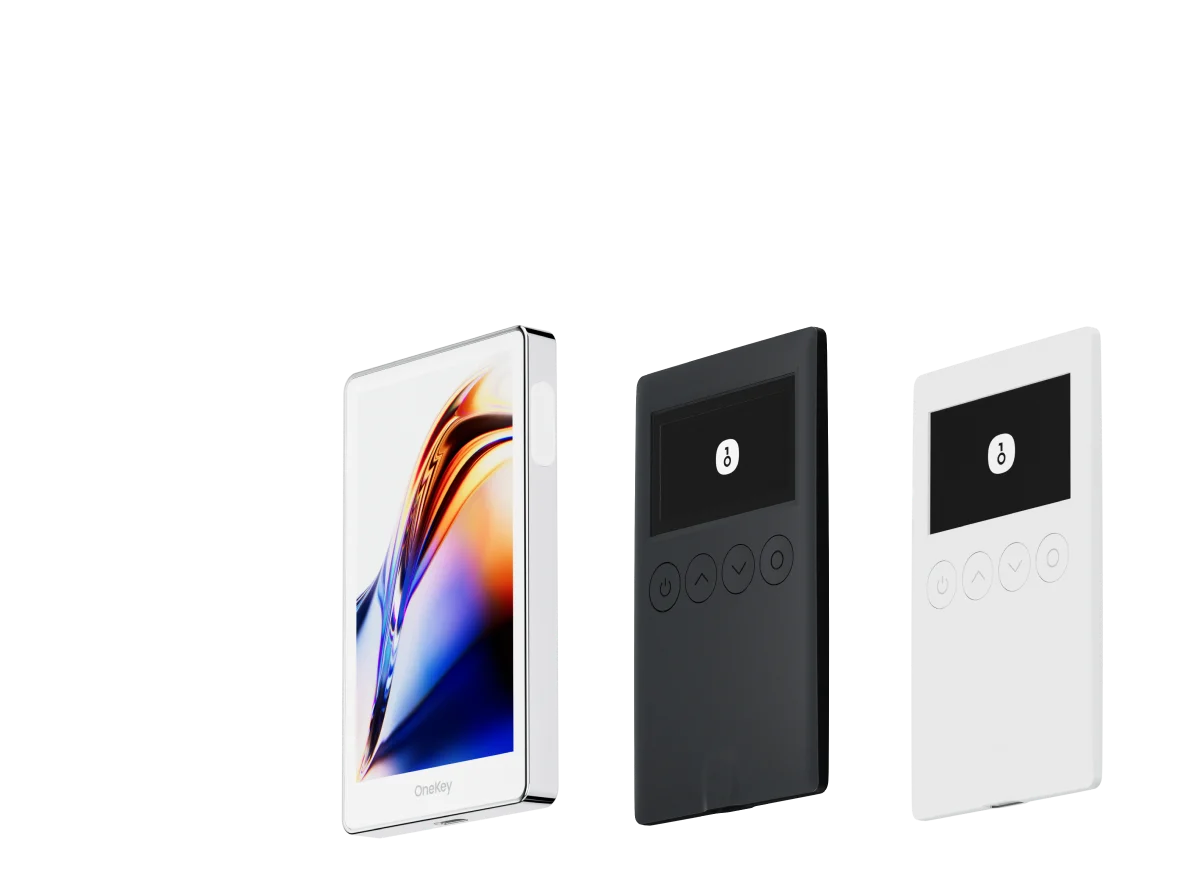
- If you plan to custody VSN on a hardware device, consider a hardware wallet that supports EVM‑compatible tokens (Ethereum and Layer‑2s), secure key isolation, firmware signing and convenient dApp connection flows for staking and swap interactions. OneKey provides these capabilities—secure private‑key storage, multi‑chain support, and an integrated dApp browser that can help you interact with staking contracts and the Bitpanda DeFi Wallet while keeping keys offline. (Mentioned features are aligned with best practices for storing and interacting with ERC‑20 / Layer‑2 tokens.)
How to monitor VSN and next steps for investors
- Track official Bitpanda channels (blog and support pages) for roadmap updates and governance announcements. (blog.bitpanda.com)
- Use market aggregators (CoinMarketCap, CoinGecko) for price, supply and liquidity snapshots. (coinmarketcap.com)
- Monitor staking participation, on‑chain burns and major exchange order‑book depth to assess real demand vs. speculative flows. (blog.bitpanda.com)
Conclusion
VSN is a strategically important token for Bitpanda’s Web3 vision: it unifies loyalty, interoperability and tokenisation ambitions into a single asset. The long‑term success of VSN depends on real adoption of Vision Chain and the Vision Protocol, continued transparent supply management (burns/buybacks), and the project’s ability to demonstrate compliant RWA utility. For users and holders, security of custody is fundamental — employ best practices and consider a hardware wallet for long‑term holdings while interacting with protocol features through vetted interfaces.
For up‑to‑date technical details and support articles, start with Bitpanda’s official resources: Introducing Vision: the all‑in‑one Web3 token and What is Vision (VSN)? – Bitpanda Helpdesk. For live market metrics consult CoinMarketCap’s Vision page. (blog.bitpanda.com)
References (selected)
- Bitpanda — Introducing Vision: the all‑in‑one Web3 token. Bitpanda blog. (blog.bitpanda.com)
- Bitpanda Support — What is Vision (VSN)?. Bitpanda support. (support.bitpanda.com)
- CoinMarketCap — Vision (VSN) live market data. CoinMarketCap. (coinmarketcap.com)
- CryptoSlate / Chainwire coverage of VSN launch. CryptoSlate press release. (cryptoslate.com)
- Gate.io Launchpool announcement and early staking programs. Gate.io news. (gate.com)