Everything You Need to Know About How Hardware Wallets Differ From Other Wallets


When people first get into crypto, they usually do not think much about how wallets work. As long as they can send funds, interact with apps, and see their balance, it feels good enough.
Over time, as usage grows and asset size increases, questions start to appear.
Why do some people lose a large portion of their funds in a single incident, while others walk away almost unaffected?
Why are tools that are all called “wallets” so different when it comes to security?
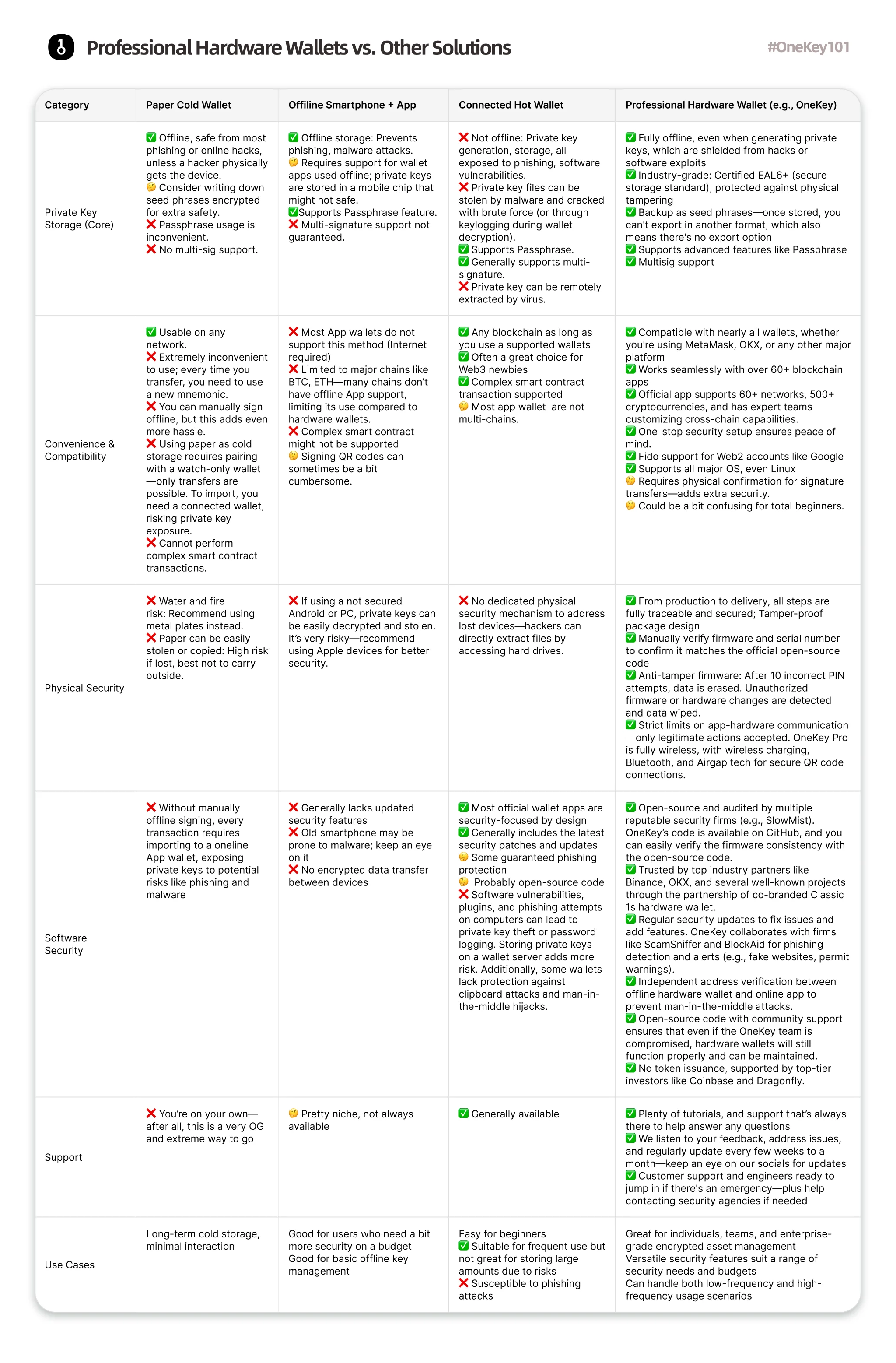
Where your private key lives defines your security boundary
No matter which wallet you use, everything eventually comes down to the private key.
The environment where the private key exists, who controls it, and whether it ever touches an online system directly affect how manageable the risk is.
Once a private key has entered an online environment, it has already moved into a high risk zone.
Most of the time, nothing feels wrong. Problems only surface when supply chains are compromised or systems are infected with malicious code, and when they do, the damage is often irreversible.
Once you understand this, the differences between wallet setups become much clearer.
Exchanges and custodial wallets are convenient by design
Exchanges and custodial wallets feel familiar because they work like regular internet accounts.You sign up, log in, and follow the platform’s flow. There is little need to understand private keys or how signing works.
This convenience makes them attractive, especially for beginners. At the same time, asset security becomes tightly coupled with the platform itself. Users cannot verify how private keys are generated or stored, and they have no way to predict when platform level risks may surface.
At smaller amounts, this structure often feels acceptable. As balances grow, the same structure magnifies risk.
Writing down seed phrases feels cold, but risk starts earlier
Paper wallets and handwritten seed phrases are often seen as the most basic and offline option. In practice, the biggest risks usually appear before storage even begins.
Seed phrases must be generated somewhere. If that happens on a connected device, there is always the possibility of recording by the system or malicious software. Writing them down, taking photos, or printing them creates additional copies, and users rarely have full certainty over where those copies may end up.
Once a seed phrase is exposed, there is usually no time to react or recover.
Using an old phone as a cold wallet comes with unknowns
Resetting an old phone, keeping it offline, and installing a wallet app is a compromise many people try.
This does reduce direct network exposure, but it leaves important questions unanswered. Mobile operating systems are not designed for strict private key isolation, and users have no way to verify whether low level components are truly clean. Wallet app internals are often closed and opaque.
Over time, hardware aging, physical failure, and limited support for new networks add further uncertainty.
Mobile and browser wallets are powerful, but exposure is concentrated
Browser extension wallets and mobile wallets are the most common form of self custody today. They support many networks and applications, are easy to use, and feel mature.
At the same time, private keys remain inside an online environment. System vulnerabilities, malicious extensions, third party dependencies, and update paths all become potential contact points. These risks are usually invisible until something goes wrong.
Functionally, these wallets are strong. Their security still depends heavily on the underlying system remaining uncompromised.
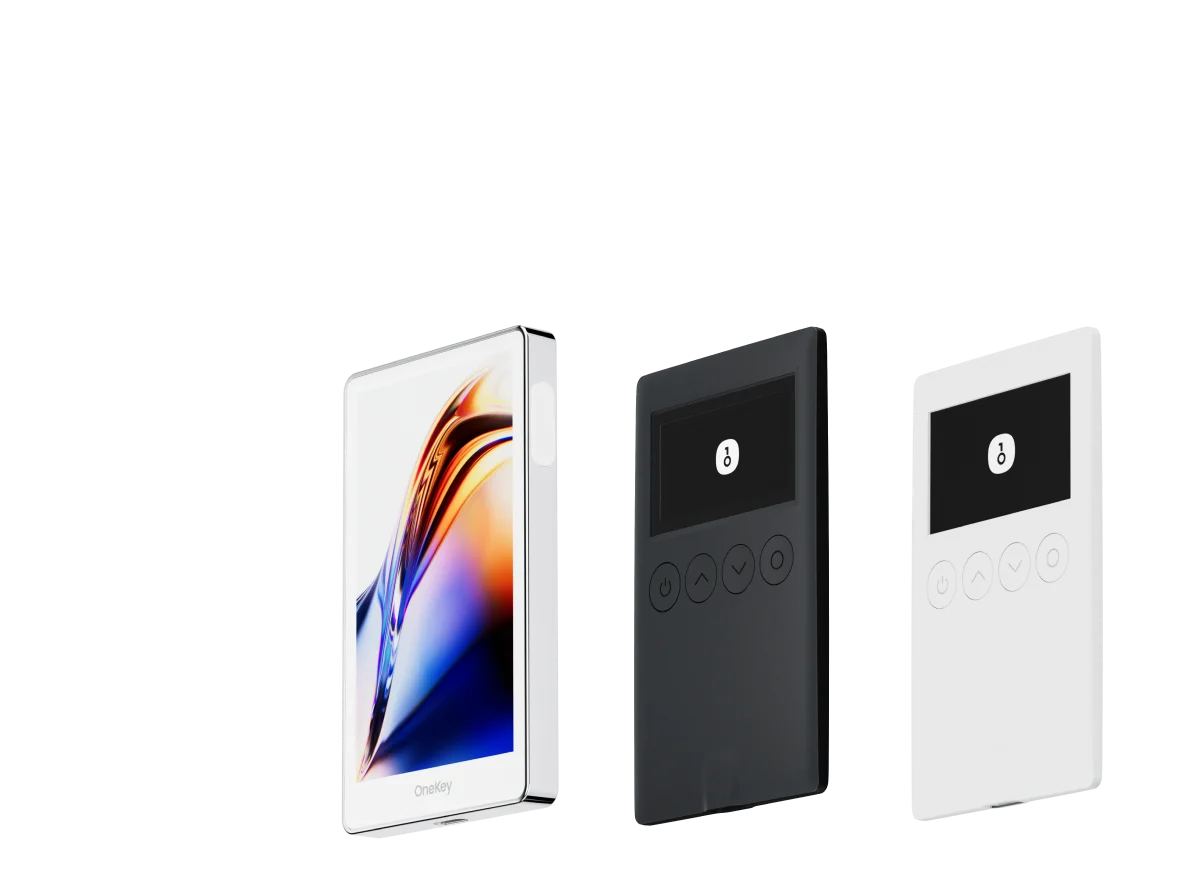
What hardware wallets do differently
The core goal of a hardware wallet is simple: keep the private key away from the online environment.
In this setup, private keys are generated and stored inside a dedicated secure chip. Signing happens entirely within the device. Phones and computers only pass transaction data back and forth. Every action requires physical confirmation on the device itself.
With this structure in place, features like passphrases, multisig, and readable transaction details gain real meaning. They build on the assumption that the private key never leaves the device, helping reduce damage from single mistakes or extreme situations.
What happens if the device is lost or stolen
If a device is lost, funds can still be recovered on a new device as long as the seed phrase remains secure.
If a device is stolen, dedicated hardware wallets typically include additional protections. These may include wiping data after repeated failed attempts, firmware downgrade protection, and resistance against physical tampering.
These measures do not affect daily use, but they provide valuable time and protection in rare but high impact scenarios.
Trust depends on whether a tool can be verified
When using any tool long term, an important question is whether it can withstand outside scrutiny.
Whether the code is open source, whether independent security audits exist, and whether issues can be reproduced by third parties may not change daily experience. They determine whether a system can hold up over time. In the context of private keys, verifiability itself is part of security.
OneKey, for example, keeps its hardware, firmware, and app fully open source, with ongoing international security audits and community review.
In reality, many users follow a similar path.
They start with software wallets to learn and explore. As assets grow, they introduce hardware devices and further separate higher value funds.
What matters is not choosing a single perfect tool, but understanding which risks you are currently exposed to.
Once the security boundaries of different wallet setups are clear, making a decision becomes much easier.