The Complete Guide to Bitcoin Cold Wallets: Protect Your Crypto Assets
The Complete Guide to Bitcoin Cold Wallets: Protect Your Crypto Assets
As BTC ownership expands and institutions continue building exposure, the biggest question for long‑term holders remains simple: how do you keep keys safe for years, not months? In 2025, researchers observed a surge in high‑value thefts and a growing share of attacks targeting personal wallets, underscoring why moving savings to a cold wallet is no longer optional for many users. See the latest threat data and trends in the Chainalysis crime updates. (chainalysis.com)
What is a cold wallet?
A cold wallet (cold storage) keeps your private keys completely offline. You generate keys and sign transactions on a device that never touches the internet, then broadcast the signed transaction from a separate online machine. This air‑gap design reduces exposure to malware, phishing, and browser exploits. For an accessible overview, see Bitcoin.org’s “offline wallet” and “offline transaction signing,” and the community primer on cold storage. (bitcoin.org)
Why cold storage matters in 2026
- Attackers increasingly target end users with seed‑phrase theft, clipboard hijacking, and even physical coercion during price spikes. Hard numbers show billions stolen in 2025 and a rising share from personal wallet compromises, so minimizing online key exposure is critical for anyone holding meaningful balances for the long term. (chainalysis.com)
- The Bitcoin ecosystem continues iterating on standards that make offline signing safer and easier, such as the Partially Signed Bitcoin Transaction (PSBT) format and hierarchical deterministic (HD) wallets (BIP‑32). These standards are widely supported by modern tooling and help you separate key management from your online computer. (bips.dev)
Advantages of a cold wallet
- Maximal key isolation: Keys never leave your offline signer, reducing the attack surface of web, OS, and app vulnerabilities. See Bitcoin.org guidance on keeping savings offline. (bitcoin.org)
- Predictable backups: Most modern wallets follow the BIP‑39 mnemonic standard, so a single seed (plus optional passphrase) can restore your entire wallet tree on compatible software. (bips.xyz)
- Safer operations with PSBT: Create unsigned transactions on a connected device, sign them on the offline signer, then broadcast from the connected device—no private data crosses the air gap. (bips.dev)
The main types of cold storage
- Hardware signing device: Purpose‑built, tamper‑resistant devices that sign transactions offline while showing critical details on a trusted screen. Properly used, they offer a strong balance of security and usability for most individuals. See Bitcoin.org’s “hardware wallets” overview. (bitcoin.org)
- Air‑gapped computer or phone: A wiped, never‑networked device running wallet software from verified media. Suitable for advanced users who can maintain strict operational discipline. The Bitcoin Wiki outlines key practices and side‑channel considerations. (en.bitcoin.it)
- Paper or metal backups (seed only): A recovery method, not a daily‑use wallet. Seeds must be generated securely (see BIP‑39 requirements) and stored with robust physical protections against fire, water, and unauthorized access. (bips.xyz)
How to choose the right cold wallet
Map your threat model first (remote malware, phishing, theft, coercion, disaster recovery), then evaluate:
- Key management standards
- Must support BIP‑39 mnemonics, BIP‑32 HD derivation, and PSBT for offline signing. These ensure portability across tools and safer workflows. (bips.xyz)
- Transparency and verifiability
- Favor vendors who publish firmware source and reproducible builds, and who document how users can verify firmware integrity before use. This aligns with broader NIST guidance on software/firmware integrity and device validation in supply‑chain security. (nccoe.nist.gov)
- Secure hardware and UX
- A dedicated screen that displays receiving addresses and transaction details, clear physical confirmation, and support for air‑gapped data transfer (for example, QR‑based PSBT) reduce the risk of host‑side tampering. Bitcoin Optech routinely highlights improvements and tradeoffs in multisig and signing flows; staying current helps you make informed choices. (bitcoinops.org)
- Multisig and policy controls
- For larger treasuries, 2‑of‑3 or 3‑of‑5 multisig with geographically separated keys can reduce single‑point‑of‑failure risk. PSBT and descriptor‑based wallets make setup and recovery more robust across software stacks. See HD wallet background in BIP‑32. (bips.dev)
- Recovery and inheritance
- Confirm that the device supports passphrases (sometimes called the 25th word) and that you can export xpubs for watch‑only monitoring. Plan an inheritance process that balances secrecy with recoverability; Bitcoin.org provides a practical starting point. (bitcoin.org)
Step‑by‑step: a modern cold‑storage workflow
-
Prepare an offline signer
- Factory‑reset the device. Verify the firmware provenance and integrity according to vendor instructions before first use, consistent with NIST integrity‑validation practices. (nccoe.nist.gov)
-
Generate and secure your seed
- Create a new wallet on the offline device. Record the BIP‑39 recovery phrase and any passphrase on durable media stored in separate, secure locations. (bips.xyz)
-
Create a watch‑only wallet
-
Receive and verify
- Always verify the receiving address on the signer’s screen before sharing or depositing funds. Bitcoin.org discusses why offline savings and careful address verification matter. (bitcoin.org)
-
Spend via PSBT
- On the online machine, build a transaction and export a PSBT. Transfer it to the signer (QR/SD/USB), review and sign on the signer’s screen, then return the signed PSBT to the online machine to broadcast. See the PSBT specification. (bips.dev)
-
Test your recovery
- Do a small restore drill on a different device or software stack that supports BIP‑39/BIP‑32 to confirm you can recover funds if your signer is lost. (bips.xyz)
Risk notes and current realities
- Online services and exchanges remain prime targets, and 2025 illustrated how single incidents can dominate annual loss totals. Diversify custodial risk and avoid leaving long‑term holdings online. (chainalysis.com)
- Personal‑wallet compromises grew markedly, with attackers increasingly stalking users socially and physically. Prioritize operational security: do not photograph seeds; avoid typing seeds on networked devices; and consider multisig for added resilience. (chainalysis.com)
Quick buyer’s checklist
- Standards: BIP‑39, BIP‑32, PSBT, Taproot support
- Verifiability: public firmware, signed releases, reproducible builds
- Connectivity: strong air‑gap options (QR/SD), no required desktop drivers to sign
- Display: clear, verifiable on‑screen details for addresses and outputs
- Recovery: passphrase support, descriptor/xpub export, documented inheritance
NIST’s key‑management recommendations also emphasize protecting key material, backups, and lifecycle processes—principles that map directly to cold‑wallet hygiene. (csrc.nist.gov)
Should you consider a hardware wallet?
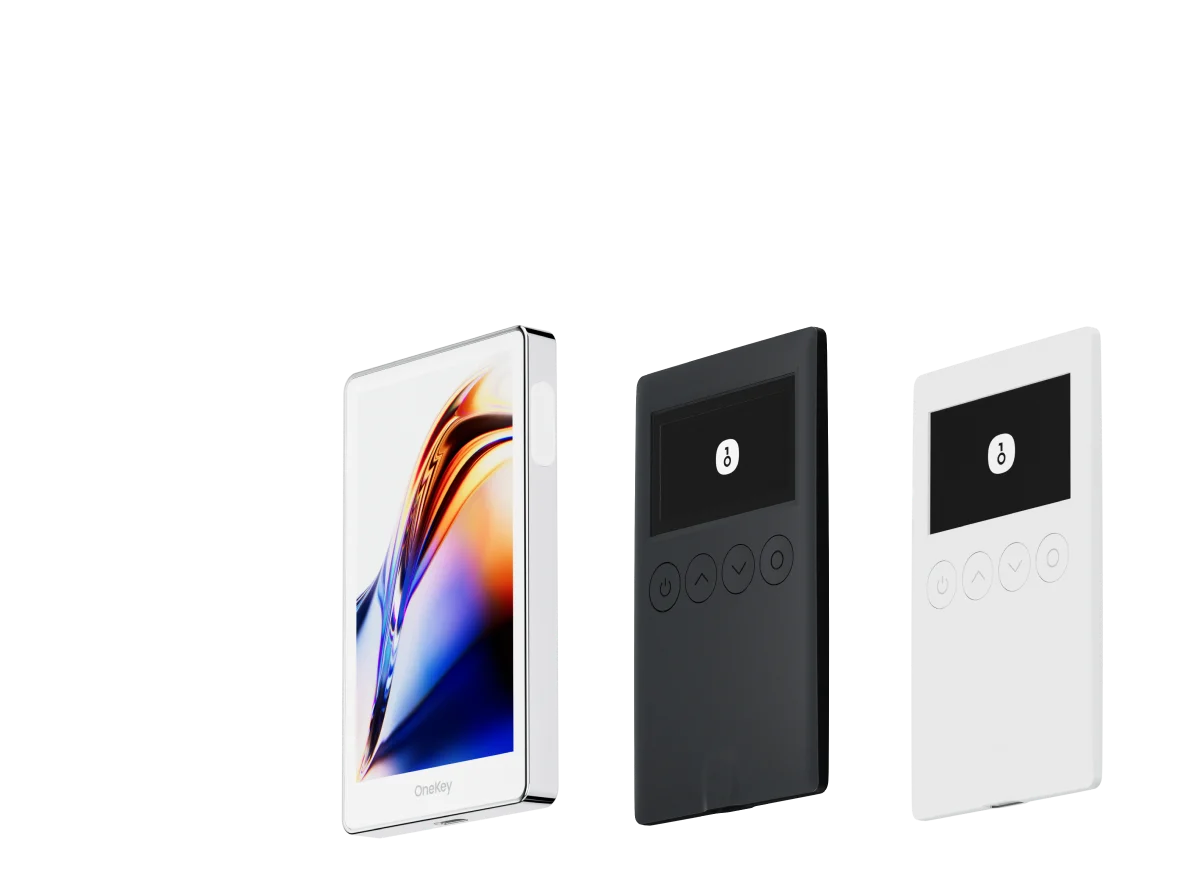
For most individuals and teams, a dedicated hardware wallet is the simplest path to practical cold storage: it isolates keys, gives you a trusted screen for verification, and supports PSBT workflows without turning you into a system administrator. If you prefer an open, verifiable stack and modern UX, OneKey offers hardware wallet models that align with the criteria above (offline signing, PSBT, and transparency). Choose the model that fits your threat model and recovery plan.
This article is for educational purposes only and does not constitute financial advice. For deeper dives, start with Bitcoin.org’s security guide, the BIP‑39 and BIP‑32 standards, the PSBT format, and ongoing developments summarized by Bitcoin Optech. (bitcoin.org)
Keywords used once each for SEO: Bitcoin, cold wallet, hardware wallet, cryptocurrency security, OneKey.