The Ajna Protocol wallet helps you easily store, send, and receive digital assets. You can perform cross-chain token transactions at any time, explore NFT marketplaces and dApps, and discover more opportunities. An integrated wallet for the Ajna Protocol ecosystem, it provides you with a secure on-chain experience.




Why choose Ajna Protocol wallets with OneKey

Take control of the safety that belongs to you
No real-name verification required. We collect and track no user data. Your wallet belongs only to you.
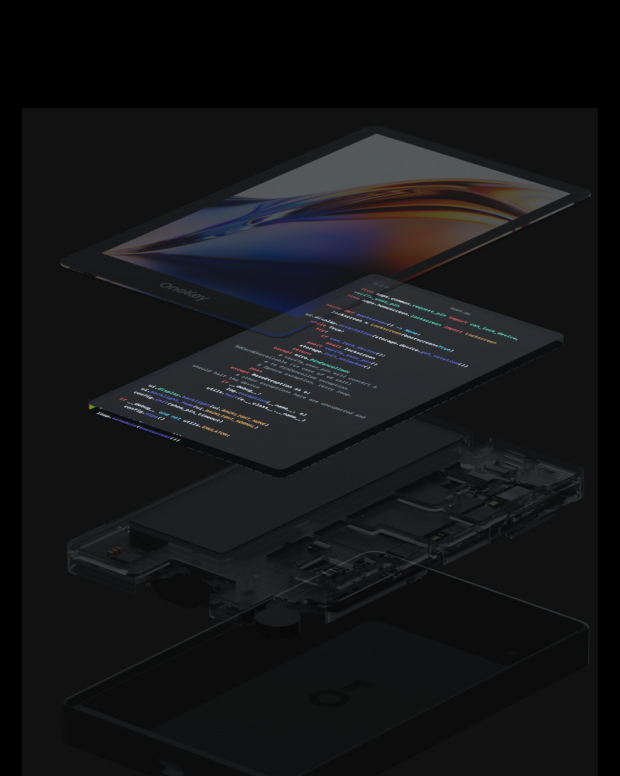
100% open-source and transparent
Ajna Protocol wallet is a fully open-source wallet; every line of code can be audited and verified by security experts. Security is not based on promises, but on transparency.

Intelligent Risk Protection
Built-in dApp phishing protection and suspicious token folding features automatically detect risky contracts to prevent malicious approvals or asset theft.

Global support
Provide 24/7 multilingual customer support to resolve your issues at any time.

FAQ’s
What is Ajna Protocol?
The Ajna protocol facilitates peer-to-pool secured loans without governance and without external
price feeds. Current lending and borrowing protocols which utilize smart contracts require active
governance (e.g. to set rates and to update contracts) and/or rely on external price feeds (such as oracles like Chainlink). Because the pricing of collateral and parameterization of loans are left
to subjective decision making through governance rather than market forces, these protocols
carry both solvency and liquidity risk. Governance and maintenance overhead create barriers to
entry in the market for lending and borrowing of on-chain assets. Ajna solves these problems
with its unique design, which is defined by the following features:
Permissionless pool creation: Much like the popular DeFi primitive, the “automated market
maker,” AMM, Ajna pools exist in unique pairs: quote token, provided by lenders and collateral
token, provided by borrowers. Pools allow lenders to assess borrower demand for their quote
token and for borrowers to assess lender demand for loans backed by their collateral. Pools are
created permissionlessly, meaning anyone can create a pool to borrow arbitrary fungible tokens
using arbitrary fungible or non-fungible tokens as collateral. Therefore, no governance process is
needed to whitelist approved tokens.
Price specified lending: Ajna replaces external price feeds (oracles) by allowing lenders to input
the price at which they’re willing to lend. This price is the amount of quote token (i.e. the token
they are lending) they are willing to lend per unit of collateral pledged by the borrower. For
example, if a lender deposits at price 100, they are willing to lend 100 units of quote token per
one unit of collateral. Ajna pools separate prices into predefined buckets to reduce the
complexity of the protocol, prices are therefore hereon referred to as “buckets”. Borrowers are
then able to borrow from the aggregated liquidity of these various buckets.
What is the best Ajna Protocol wallet?
How to get a Ajna Protocol wallet?
How to use a Ajna Protocol wallet?
Subscribe to our newsletter
Subscribe to OneKey newsletters for the latest product news and offers.